
Chemical safety management is a frontline defense against injuries, production downtime, and long-term liability.
When chemicals are mishandled, the impact reaches far beyond a single incident, affecting worker safety, operational continuity, and your organization’s credibility with regulators and clients alike.
In many workplaces, however, chemical safety still lives mostly on paper. Safety data sheet (SDS) binders sit on shelves, labels fade, and “completed” training does not always translate into competent, confident action in the field. The result is a dangerous gap between what your program says and what actually happens on the floor, in the lab, or on the jobsite.
Absolute risk control requires more than inventories, checklists, and sign-in sheets. It demands a structured, field-ready approach that links chemical identification, storage, handling, personal protective equipment (PPE), emergency response, and training into a cohesive, accountable system.
When this system is straightforward and practical, your teams are better equipped to recognize hazards early, respond correctly, and prevent minor issues from escalating.
This blog offers a practical framework for chemical safety management focused on hazard control and compliance.
What Is Chemical Safety Management?
Chemical safety management is a structured approach to controlling chemical hazards across the full lifecycle of work, from procurement to disposal. It goes beyond hazard lists and compliance manuals. It’s about building a system that embeds controls, training, and readiness into your daily operations.
That system includes identifying hazardous substances, evaluating the risks they pose, and implementing verified protections. Whether you’re working on a complex construction site, in a processing plant, or in a lab, the principles don’t change; it’s just the context.
A well-rounded chemical safety program covers:
- Live chemical inventory tracking with accessible SDSs
- Clear hazard communication aligned with the Occupational Safety Hazards Administration’s (OSHA’s) HazCom Standard
- Exposure controls tied to the hierarchy of controls
- Job-specific, role-based training built on actual hazards
- Proper storage, segregation, and handling protocols
- Spill control and site-specific emergency response
- Routine exposure monitoring and industrial hygiene assessments
- Full regulatory compliance (OSHA, EPA, NFPA)
Getting these elements in place on paper isn’t enough. You need visible field execution, site ownership, and the ability to respond in real time to changing conditions. Otherwise, your compliance plans won’t hold up when they’re most needed.
The EHS Risks of Ineffective Chemical Safety Management
Many organizations discover their chemical safety vulnerabilities only when something goes wrong—a costly spill, a chemical exposure, or a failed inspection. By then, the damage is already done.
Here’s what drives chemical safety failures:
- Using outdated or incomplete chemical inventories
- Field staff with a lack of specific training on the chemicals in use
- Improper labeling or unsafe chemical storage practices
- Ventilation or PPE that doesn’t match the hazard
- Absence of a practical spill response plan
- Overreliance on general awareness without proof of capability
Any one of these issues can derail operations or trigger enforcement. The OSHA consistently ranks hazard communication and chemical safety violations among its most cited infractions.
But these aren’t just compliance problems; they’re operational liabilities. Without a rigorous, real-world chemical safety strategy, your incident risk climbs, your insurance costs rise, and your workers remain exposed to avoidable health threats.
Robust chemical safety management closes those gaps by ensuring proper controls, competent personnel, and field-tested procedures, enabling your team to work confidently and compliantly.
How to Build an Effective Chemical Safety Management System
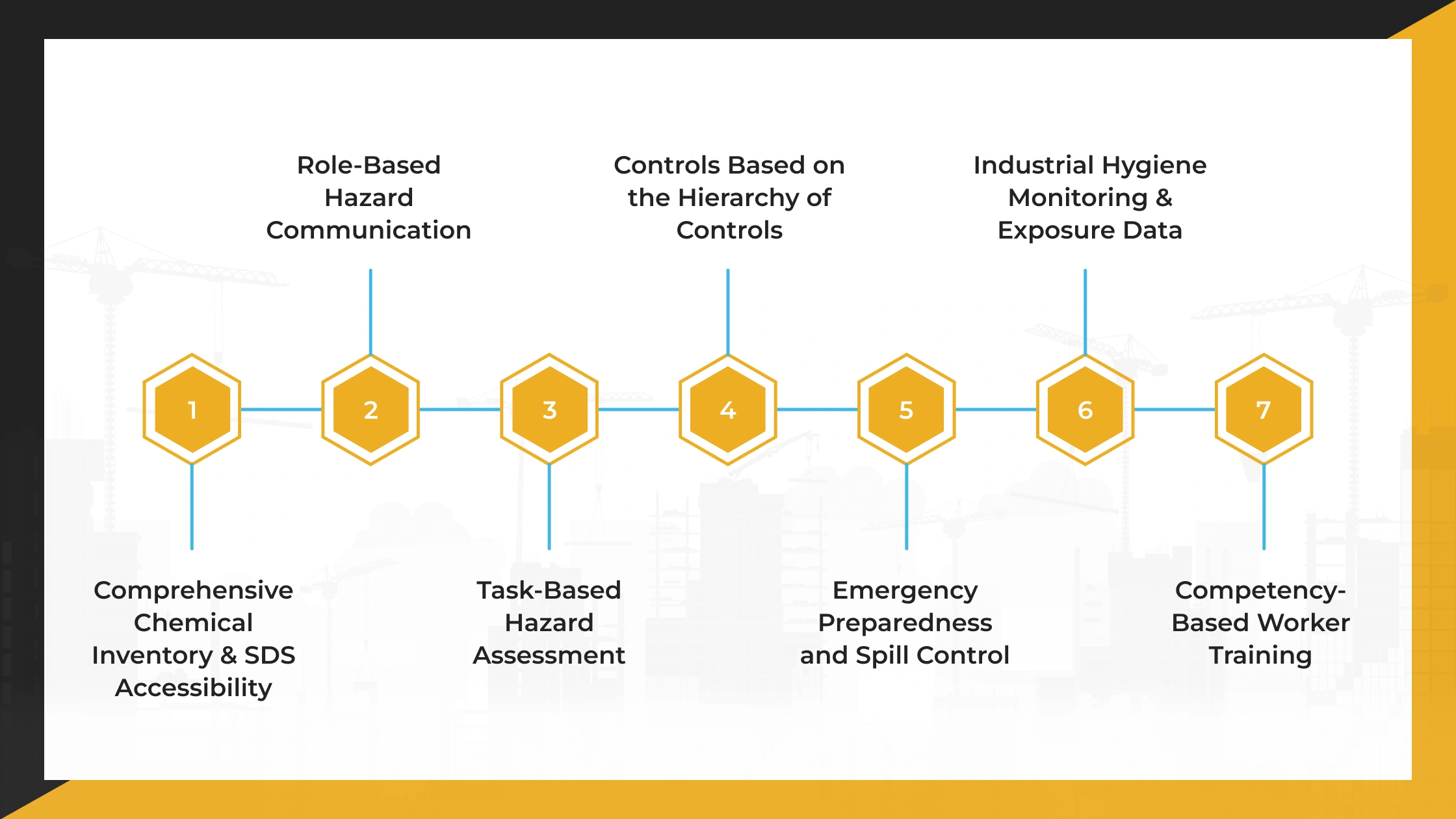
If you’re building chemical safety into your EHS program, or revamping an outdated process, start by focusing on how work is actually performed. A successful program is rooted in task-level control and top-to-bottom accountability. Here’s what your program should include:
Comprehensive Chemical Inventory and SDS Accessibility
Keep an active, centralized inventory of all chemicals on site, with updated SDSs available wherever the substances are stored or used. A static binder no one reads won’t cut it.
Role-Based Hazard Communication
Workers must receive hazard information that’s relevant to their job tasks, not just blanket training. Pair clear labeling and GHS standards with site-specific walkthroughs and hands-on sessions.
Task-Based Hazard Assessment
Not all chemical risks are created equal. Use job safety analyses and process hazard analyses to pinpoint exposures unique to each job function or work area. This is where risk control shifts from theory to reality.
Controls Based on the Hierarchy of Controls
Don’t fall back on PPE as your first line of defense. Explore substitution or engineering options first, then layer administrative and PPE requirements as needed.
Emergency Preparedness and Spill Control
Establish and test site-specific response plans. Assign clear roles, ensure decontamination equipment is present, and include field drills with your emergency procedures.
Industrial Hygiene Monitoring and Exposure Data
Routine exposure monitoring confirms whether your controls are working. Use this data to adjust protections and identify trends before they become problems.
Competency-Based Worker Training
Require hands-on proof that workers can handle chemicals safely. Training should be more than a slideshow; it should include real-world scenarios, supervisor observation, and revalidation after any job or chemical change.
Practical Examples to Strengthen Chemical Programs with Field Controls
Your chemical safety program should be felt in the field, not filed away in a back office. Here’s what strong controls look like where the work is happening:
Correct PPE Use for Corrosives or Volatile Solvents
- A trained worker inspects and properly dons chemical-resistant PPE before use.
- The wrong glove type is used, breaking down on contact and exposing skin.
This helps to reduce chemical burns, regulatory citations, and preventable medical cases.
Safe Labeling and Segregation of Hazardous Substances
- Every container is labeled immediately after transfer and then stored based on compatibility.
- Unlabeled bottles or incompatible items are placed side by side.
This reduces flammable reactions, environmental spills, and fire code violations.
Executing a Spill Response for Acids or Flammables
- Trained personnel isolate the area, contain the release, and wear correct PPE.
- Untrained employees attempt cleanup, spread contamination, or risk ignition.
This results in emergency response activation, environmental damage, and legal liability.
How to Implement or Improve Your Chemical Safety Program
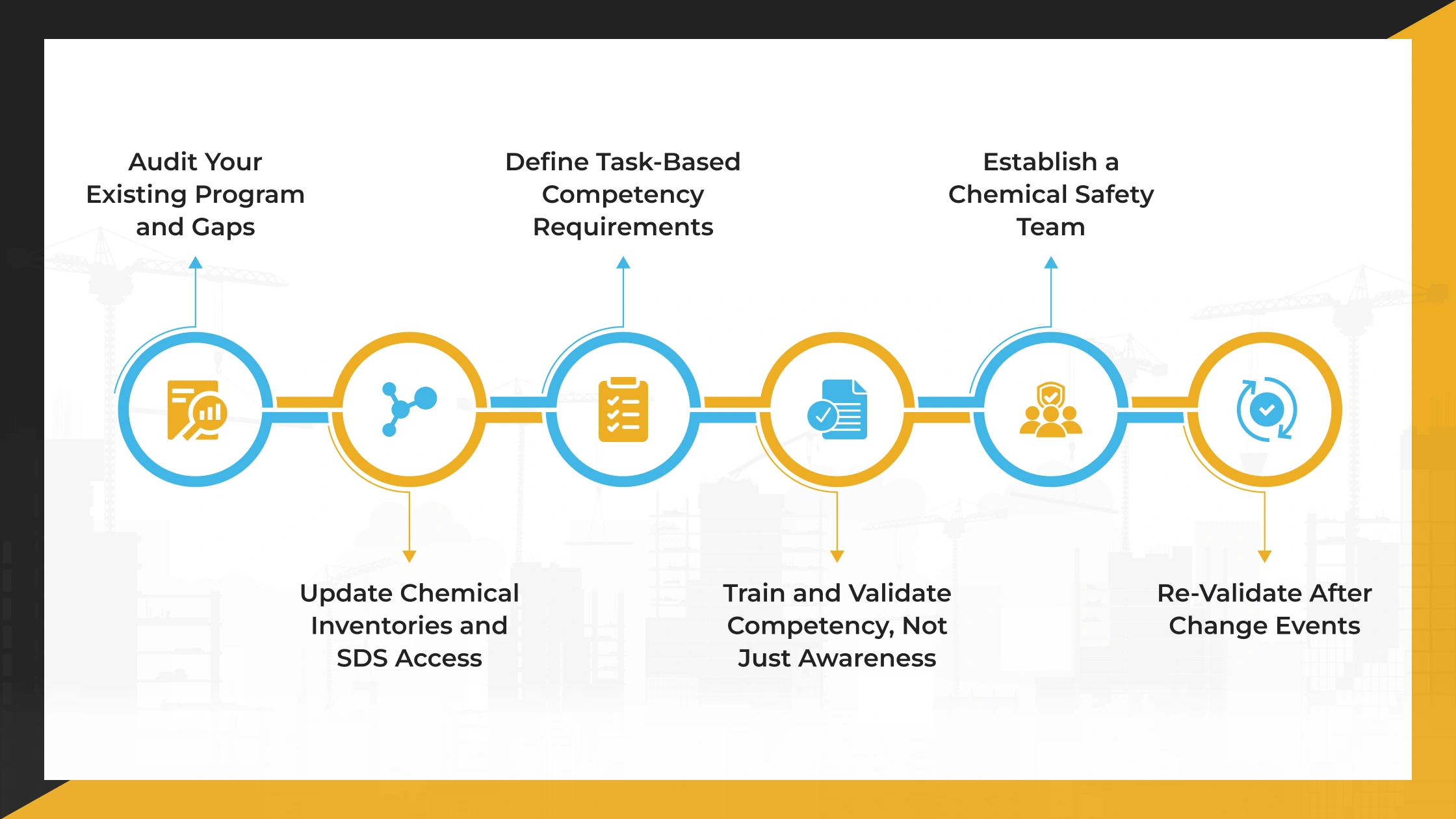
You don’t have to wipe the slate clean to strengthen your chemical safety program. But you do need structure, leadership, and a working plan that holds up on real jobsites. Here’s where to start:
Audit Your Existing Program and Gaps
Start by taking an honest look at how your current chemical safety program is actually working in the field. Use structured internal audits or bring in an external specialist to compare your practices against both regulatory requirements and your own operational standards.
The goal is to identify where procedures exist only on paper, where controls are weak, and where additional support or clarification is needed.
Update Chemical Inventories and SDS Access
Make sure your chemical inventory is accurate, up to date, and easy to maintain, ideally in a digital format rather than scattered spreadsheets or binders.
SDSs should be immediately accessible to anyone who works with or around chemicals, whether via a QR code, a shared drive, or a mobile app. When people can quickly see what they are dealing with, they can make safer, better-informed decisions.
Define Task-Based Competency Requirements
Instead of relying on generic “chemical safety” training, clearly outline what workers must know for the specific tasks they perform and the hazards they encounter.
This includes handling, mixing, transferring, storing, and responding to spills or exposures. Those requirements should be spelled out in your training materials, procedures, and role descriptions so expectations are clear and consistent.
Train and Validate Competency, Not Just Awareness
Move beyond slide decks and sign-in sheets. Use hands-on methods, such as demonstrations, drills, tabletop exercises, and supervised practice, to confirm that workers can safely perform tasks.
Documenting this competency, what was practiced, who participated, and how performance was evaluated helps ensure skills are fundamental, not assumed.
Establish a Chemical Safety Team
Assign a small cross-functional group to oversee chemical safety, rather than leaving it as an informal “extra” responsibility.
This team should coordinate inventories, review new chemicals, oversee training, track incidents and near misses, and support compliance audits. Clear ownership creates accountability and makes it easier to keep improvements moving.
Re-Validate After Change Events
Treat any change—new products, new processes, new equipment, or layout changes—as a trigger to revisit your controls.
When something changes, reassess the risks, update procedures and SDS access if necessary, and provide targeted refresher training. This helps prevent new hazards from slipping into the workplace unnoticed and keeps your program aligned with how work is actually done.
Why Competency-Based Training Is Essential for Chemical Work
Being aware of chemical hazards is not the same as being prepared to manage them. OSHA standards don’t just require hazard communication; they require that your team understand the risks and know how to act appropriately on the job. The difference between awareness and competency is action.
A competent worker can:
- Identify and interpret SDSs and hazard labels in real-world settings
- Select appropriate gloves, respirators, and protective gear for the chemical risk
- Store and transport substances in accordance with site protocols and legal requirements
- React appropriately to unexpected exposures or releases
- Recognize when to escalate or call for backup in emergencies
Competency-based training ensures all of this and more. It uses observations, practical testing, and supervisor sign-offs to verify skill. This approach dramatically improves field safety performance and audit readiness. At Safe T Professionals, we are committed to providing exceptional safety training, consulting, and staffing solutions.
Upgrade Your Workplace Safety Standards with Safe T Professionals

At Safe T Professionals, we are dedicated to elevating safety standards through our expert consulting and staffing services. By proactively addressing and preventing safety issues and equipping your workforce with the necessary knowledge and tools, we help create a safer work environment.
Partner with Safe T Professionals to enhance your company’s safety protocols and ensure compliance with industry standards. Whether you are looking to fill safety-specific roles or need expert consultation to mitigate workplace hazards, we are here to help.
Connect with us today!