
In high-risk workplaces, a single undetected hazard can be the difference between life and death. Smart PPE aims to catch it before it’s too late.
In today’s industrial environments, safety can no longer rely solely on hard hats and high-visibility vests. As industries grow more complex and the risks more dynamic, traditional personal protective equipment (PPE) falls short of providing real-time awareness or early warnings.
This gap has given rise to a new generation of safety gear, Smart PPE. Unlike conventional protective gear, Smart PPE is equipped with embedded sensors, communication modules, and data processing capabilities. These advanced systems monitor both the worker’s condition and the surrounding environment, delivering instant feedback and triggering alerts before hazards escalate.
The transition from passive protection to intelligent, connected safety systems marks a critical evolution in occupational health and safety practices. In this blog, we’ll explore what Smart PPE is, how it works, its core features, and why it’s becoming essential in today’s high-risk industries.
Understanding Smart PPE: What It Is and How It’s Changing Workplace Safety
Smart PPE is an advanced form of protective gear integrated with technologies such as sensors, microcontrollers, communication interfaces, and data analytics components. These enhancements enable the equipment to collect, transmit, and sometimes process data related to the user’s physiological state, environmental conditions, or mechanical impacts in real time.
Purpose of Smart PPE
Conventional PPE is developed to serve as a passive protective layer, shielding the user from physical, chemical, or biological hazards. In contrast, Smart PPE extends this function by actively monitoring various parameters and delivering real-time feedback to both the wearer and centralized safety systems.
This transforms PPE from a static barrier into an interactive safety tool that supports situational awareness, risk detection, and operational decision-making.
Core Functional Capabilities
Smart PPE is built to achieve one or more of the following objectives:
| Objective | Description |
| Monitoring | Continuously track user health metrics or surrounding environmental factors |
| Alerting | Notify users and supervisors when safety thresholds are breached |
| Data Logging | Store data for later analysis, incident investigation, or compliance documentation |
| Communication | Enable two-way communication or data transmission to central systems or emergency response teams |
Examples of Smart Personal Protective Equipment
1. Smart Helmets
Smart helmets are equipped with accelerometers, gyroscopes, GPS modules, impact sensors, and communication units that work together to enhance worker safety. These technologies enable the helmet to detect and record head impacts, send automatic alerts with precise GPS locations during falls or collisions, and support real-time communication in noisy or hazardous environments, ensuring immediate response and situational awareness.
2. Smart Vests
Smart vests integrate biometric sensors, temperature sensors, ECG modules, and wireless transmitters to monitor key health indicators, such as core body temperature, heart rate, and respiration. They help detect early signs of heat stress, fatigue, or physical overexertion and transmit real-time physiological data to centralized safety dashboards for continuous monitoring and rapid intervention.
3. Connected Safety Glasses (Smart Glasses)
Smart glasses are equipped with augmented reality display units, cameras, head-tracking sensors, and Wi-Fi/Bluetooth connectivity to enhance situational awareness. They can overlay visual safety alerts and task instructions in real time, stream live video feeds to supervisors for remote assistance or inspection, and record incidents from the worker’s perspective for post-event analysis and training.
How Smart PPE Works: The Technology Behind Intelligent Safety Gear
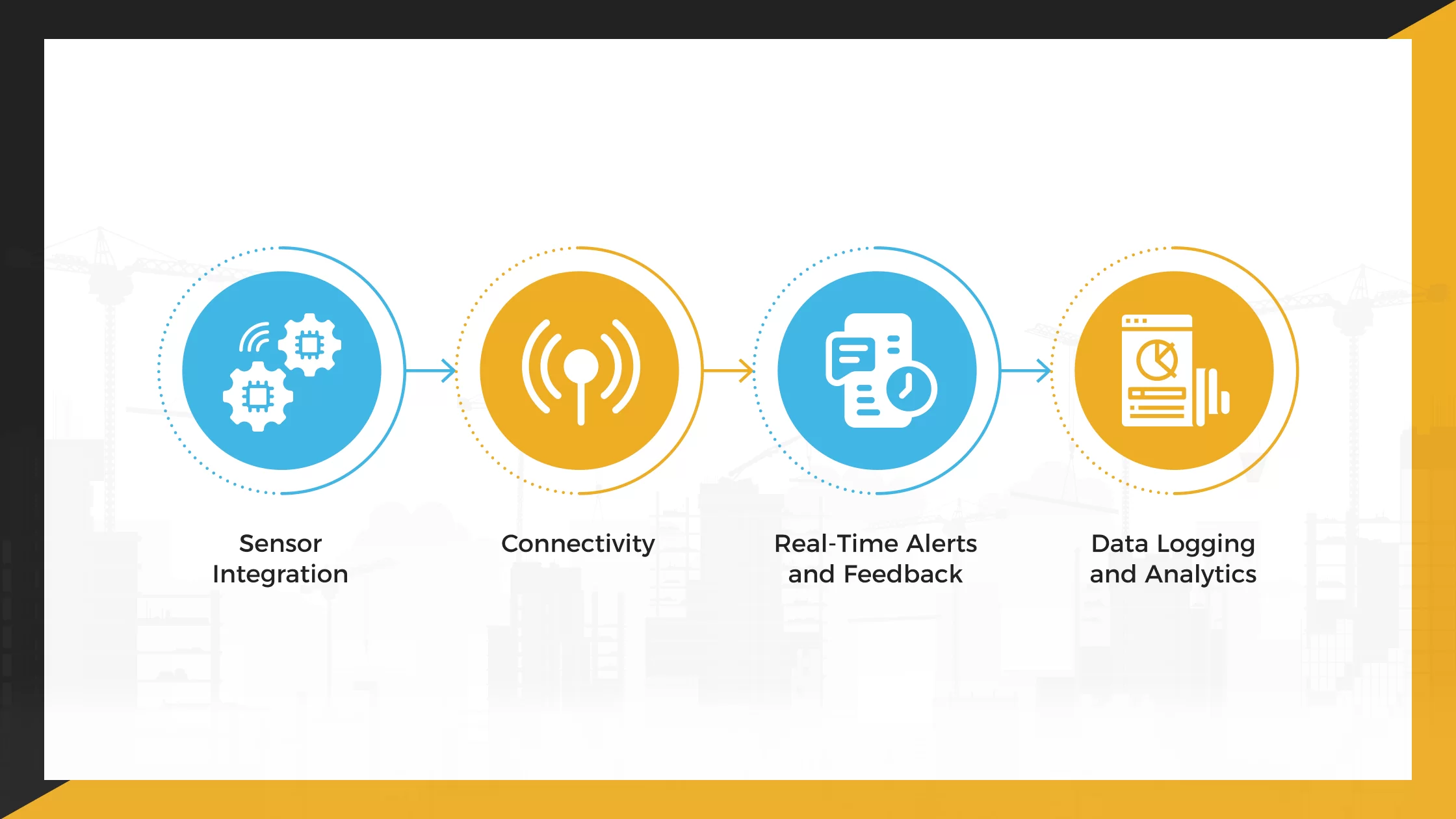
Smart PPE operates through an integrated system of sensors, communication modules, data processing units, and alert mechanisms. Here is how they work:
1. Sensor Integration
At the core of Smart PPE are embedded sensors that continuously collect data from both the environment and the wearer.
- Physiological sensors monitor vital parameters such as heart rate, body temperature, respiration rate, and oxygen saturation. These readings help identify signs of fatigue, heat stress, or other physiological risks before they escalate.
- Environmental sensors detect hazardous conditions, including gas leaks, poor air quality, excessive noise, or temperature fluctuations. This enables early detection of unsafe conditions in industrial or confined spaces.
- Motion and posture sensors, such as accelerometers and gyroscopes, track body movement, orientation, and posture. They can identify falls, prolonged strain, and improper lifting techniques, which is critical in preventing musculoskeletal injuries.
By combining these inputs, Smart PPE maintains a real-time situational profile of worker safety and environmental conditions.
2. Connectivity
The data captured by sensors is transmitted through communication technologies such as Bluetooth, Wi-Fi, Low Power Wide Area Networks, and 5G. This connectivity allows Smart PPE to interface with external devices, including smartphones, on-site gateways, and centralized safety management platforms.
Depending on the system configuration, data may be transmitted in real time for continuous monitoring or periodically synced for analysis. In connected environments, supervisors can track multiple workers simultaneously, receive alerts, and coordinate responses efficiently.
Secure communication protocols ensure data integrity and minimize transmission delays, which is essential in time-sensitive scenarios such as gas exposure or fall detection.
3. Real-Time Alerts and Feedback
Smart PPE systems use preset safety thresholds to trigger immediate warnings when anomalies are detected. When conditions such as elevated body temperature, gas concentration, or irregular motion are recorded, the system activates alerts through haptic vibration, audible alarms, or visual indicators.
For example, smart glasses may project a visual warning when the user enters a restricted zone, or a vest may vibrate if the worker shows signs of fatigue. Simultaneously, alerts can be transmitted to remote supervisors, enabling prompt intervention or evacuation if necessary. This feedback loop ensures that both workers and management can respond instantly to emerging hazards.
4. Data Logging and Analytics
In addition to real-time responses, Smart PPE maintains a record of all collected data for analysis and compliance purposes.
Stored datasets include physiological readings, environmental metrics, and incident logs. Over time, these records are analyzed to identify recurring risks, unsafe patterns, or areas where preventive measures can be improved.
Advanced systems employ machine learning algorithms to predict potential hazards—such as fatigue-related incidents or gas concentration build-up—allowing proactive maintenance and training adjustments.
The archived data also supports regulatory compliance by providing verifiable evidence of workplace safety monitoring and incident management.
Essential Features of Smart PPE in Construction Workplaces
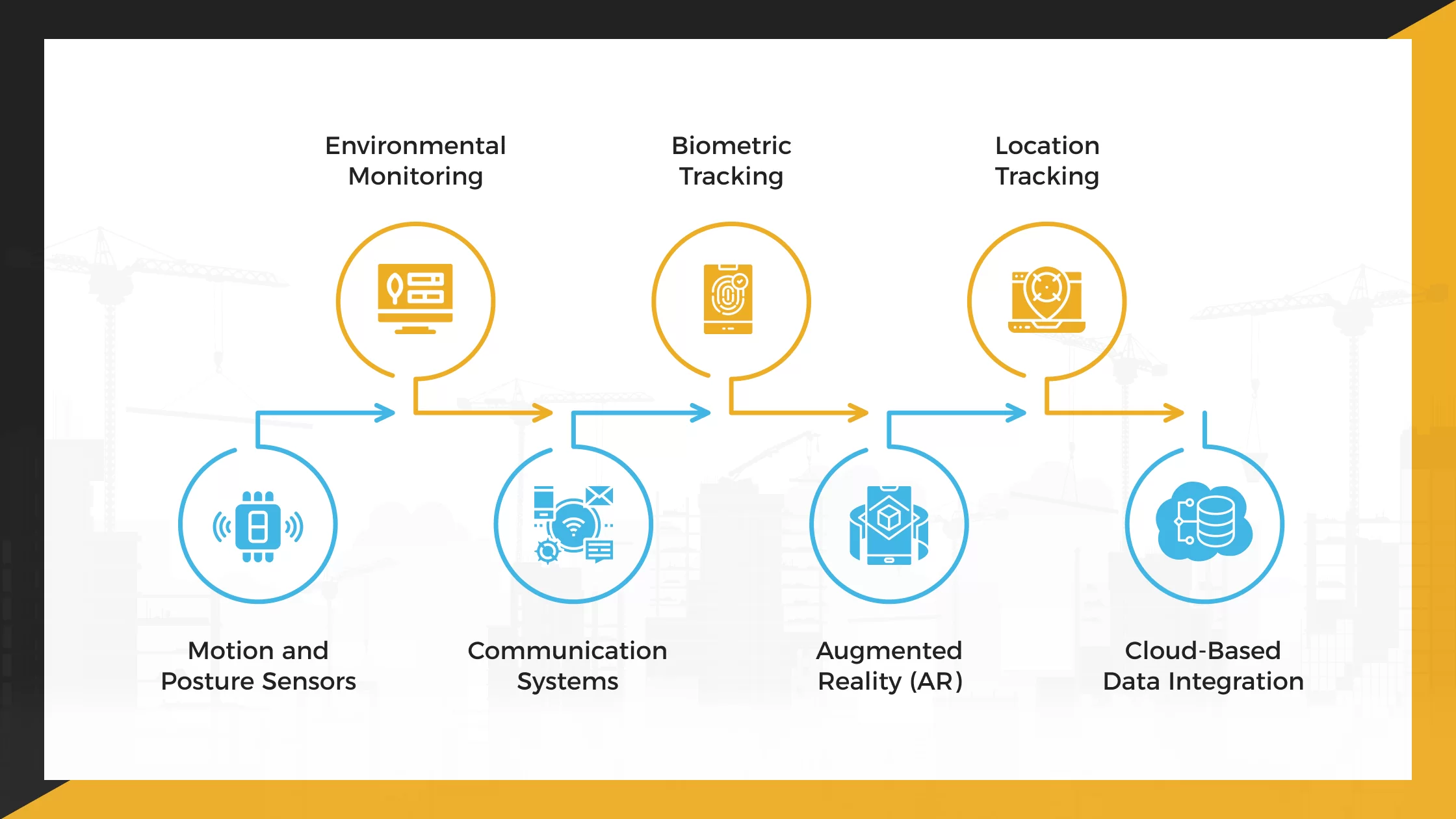
Why Smart PPE Is Critical for Modern Workplace Safety
The following points highlight the reasons behind its growing adoption.
1. Enhanced Worker Safety
Smart PPE significantly reduces the likelihood of accidents by enabling real-time hazard detection and response. When a safety threshold is breached, such as exposure to toxic gas, abnormal body temperature, or unsafe posture, alerts are triggered immediately, allowing intervention before harm occurs.
In high-risk sectors such as construction, oil and gas, and mining, continuous monitoring during operations ensures that employees work under safe physiological and environmental conditions.
2. Data-Driven Safety Culture
Smart PPE transforms workplace safety from reactive to proactive by collecting actionable data.
By analyzing biometric and environmental data trends, safety managers can identify recurring risk factors, such as heat stress in specific zones or repeated ergonomic issues.
Data enables organizations to implement targeted interventions, such as modifying workflows, improving ventilation, or scheduling breaks to reduce fatigue.
3. Regulatory Compliance
Regulatory bodies require thorough documentation of safety practices, and Smart PPE simplifies compliance through automated reporting.
Smart PPE assists in adhering to OSHA, ISO 45001, and industry-specific standards by ensuring conditions are monitored and logged continuously. Devices generate digital logs of exposure levels, physiological data, and alerts, reducing the administrative burden during inspections or investigations.
4. Productivity Gains
Beyond safety, Smart PPE supports workforce efficiency and operational continuity. Immediate detection of and response to risks can prevent work stoppages caused by injuries or unsafe conditions.
By tracking exertion levels and suggesting rest intervals, Smart PPE helps maintain worker performance throughout the shift.
5. Crisis and Emergency Support
In emergency scenarios, rapid detection and communication are critical, and Smart PPE facilitates faster response times. Falls, gas leaks, and abnormal vital signs are detected instantly and relayed to emergency response teams.
GPS-enabled equipment ensures that responders know exactly where the incident occurred, reducing the time required to reach the affected worker.
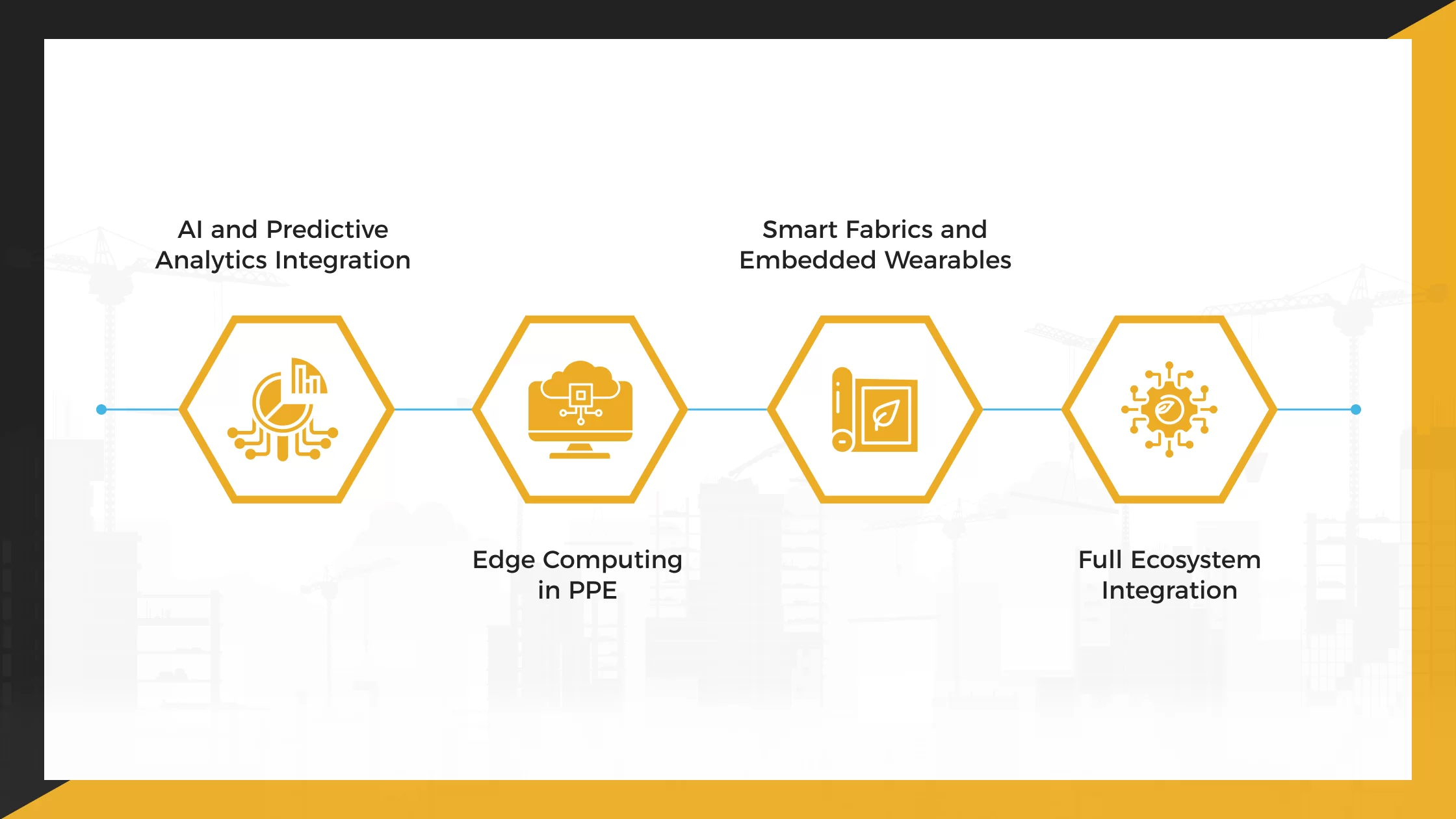
The evolution of Smart PPE is expected to accelerate over the coming years, driven by advancements in artificial intelligence (AI), embedded technologies, and industrial Internet of Things (IoT) ecosystems. The following developments outline where the industry is heading and how Smart PPE will evolve to meet future demands.
1. AI and Predictive Analytics Integration
Future Smart PPE systems will increasingly rely on AI to analyze real-time and historical data, enabling predictive safety capabilities. By continuously learning from user behavior and environmental trends, AI algorithms can forecast potential risks, such as fatigue, overheating, or exposure to harmful substances, before they manifest into actual incidents.
Self-learning systems will adapt to individual workers’ patterns, tailoring alerts and interventions based on personal risk profiles, job roles, and operating environments. This will move safety management from reactive protocols to proactive prevention.
2. Edge Computing in PPE
To reduce latency and dependency on cloud infrastructure, next-generation Smart PPE will incorporate edge computing capabilities. Processing data locally on the device, or on nearby edge gateways, allows for faster decision-making, especially in time-sensitive scenarios such as fall detection or toxic gas exposure.
This is particularly useful in environments with limited or intermittent connectivity, such as underground mines or offshore facilities. Edge computing also improves data privacy by minimizing the volume of sensitive information transmitted to the cloud.
3. Smart Fabrics and Embedded Wearables
The future of Smart PPE includes the integration of flexible, lightweight sensors directly into textiles through bright fabrics. These fabrics can monitor biometric signals, motion, and environmental conditions without relying on rigid hardware modules.
They are designed to be machine-washable, durable, and comfortable for extended use, addressing common limitations of current innovative gear in terms of bulk and maintenance. Such innovations will enable more seamless adoption in industries requiring mobility and long-duration wear, such as logistics, manufacturing, and emergency services.
4. Full Ecosystem Integration
Smart PPE will not function as standalone devices but as interconnected components within broader digital ecosystems. This includes integration with digital twins of industrial facilities, autonomous machinery, centralized control rooms, and enterprise safety platforms.
By acting as data-generating nodes in an industrial IoT mesh, Smart PPE will enhance system-wide situational awareness and enable synchronized response mechanisms across equipment, personnel, and infrastructure.
Elevate Your Safety Standards with Expert Support from Safe T Professionals

At Safe T Professionals, we are dedicated to elevating safety standards through our expert consulting and staffing services. By proactively addressing and preventing safety issues and equipping your workforce with the necessary knowledge and tools, we help create a safer work environment.
Partner with Safe T Professionals to enhance your company’s safety protocols and ensure compliance with industry standards. Whether you are looking to fill safety-specific roles or need expert consultation to mitigate workplace hazards, we are here to help.
Connect with us today!