
Workplace accidents rarely happen without warning; most occur because early warning signs were missed. In many cases, the hazard was visible, the risk was present, but no one recognized the danger in time to prevent it.
Workplace safety data consistently shows that human factors play a major role in incidents. According to the International Labour Organization, nearly 2.9 million workers die every year due to work-related accidents and diseases worldwide, while hundreds of millions more suffer non-fatal injuries. Similarly, the Occupational Safety and Health Administration notes that many workplace incidents are linked to preventable hazards, unsafe behaviors, and gaps in hazard recognition.
This is where situational awareness becomes critical.
Situational awareness is the ability to notice hazards, understand the risks they pose, and anticipate what could happen next. When employees maintain a strong awareness of their surroundings, they are far more likely to detect unsafe conditions early and take action before an incident occurs.
This blog outlines situational and safety awareness tips you can apply to your worksite to sharpen decision-making, prevent injuries, and maintain compliance.
Understanding Situational Awareness in Workplace Safety
If you want to prevent workplace incidents before they happen, you need more than safety rules and procedures. You need situational awareness. This is the ability to observe what is happening around you, understand what those conditions mean for safety, and anticipate what could happen next.
In practical terms, situational awareness helps you recognize risks early, make informed decisions in real time, and respond quickly when conditions change. Safety professionals often describe situational awareness using a three-level framework that explains how people perceive and process risk in a working environment.
How the Three Levels of Situational Awareness Work in Practice
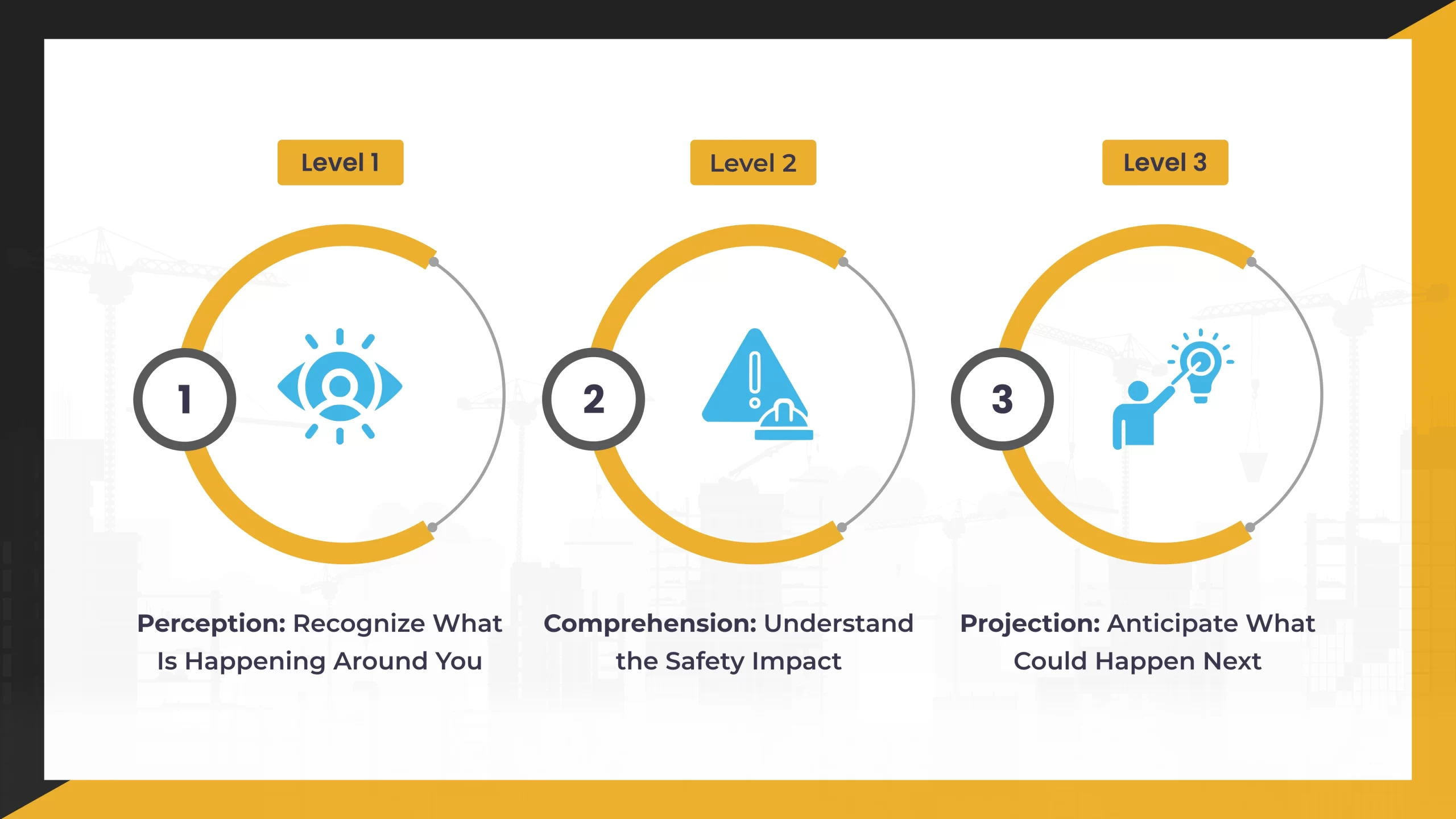
To strengthen workplace safety, you need to understand how situational awareness develops. It typically progresses through three levels: perception, comprehension, and projection. Each level builds on the previous one and plays a critical role in preventing incidents.
Level 1. Perception: Recognize What Is Happening Around You
At the first level, your focus is simple: noticing what is happening around you. You identify potential hazards, observe equipment movement, and recognize environmental risks that could affect safety.
In a workplace setting, this might include noticing:
- Moving machinery or vehicles
- Exposed wiring or damaged equipment
- Wet floors or obstructed walkways
- Workers operating in proximity to hazardous zones
- Sudden changes in weather or lighting conditions in outdoor environments
If hazards are not detected at this stage, they cannot be managed later. That is why hazard recognition training, routine inspections, and clear visual indicators are essential. They help you and your team consistently detect risks before they escalate.
Level 2. Comprehension: Understand the Safety Impact
Once a hazard is detected, the next step is understanding what it means for worker safety. This stage requires you to interpret the situation and assess the level of risk involved.
For example, identifying a forklift moving through a warehouse is a perceptual task. Understanding that the forklift is approaching a congested pedestrian area and could cause a collision is comprehension.
At this level, you evaluate questions such as:
- How serious is this hazard?
- Who could be affected?
- What could happen if the situation continues?
- Does immediate action need to be taken?
Comprehension allows you to connect observed conditions with potential consequences. Without this understanding, employees may notice hazards but fail to respond appropriately.
Level 3. Projection: Anticipate What Could Happen Next
The final level of situational awareness involves anticipating future outcomes based on the current situation. You assess how conditions may evolve and take steps to prevent incidents before they occur.
For instance, if you observe a worker operating equipment while distracted, projection helps you recognize that this behavior could lead to a serious accident. Acting early, by correcting the behavior or stopping the task, prevents the risk from escalating.
Projection allows you to:
- Predict potential incidents
- Intervene before hazards cause harm
- Adjust workflows or procedures to maintain safety
Organizations that emphasize this level of awareness create a proactive safety culture. Instead of reacting to incidents, you focus on preventing them.
Common Factors That Affect Situational Awareness in the Workplace
Even in organizations with strong safety programs, situational awareness can weaken over time. Here are several human and operational factors that can interfere with a worker’s ability to recognize and respond to hazards effectively.
1. Fatigue
Fatigue reduces concentration, slows reaction times, and limits a worker’s ability to detect hazards. Long shifts, physically demanding work, and insufficient rest can significantly reduce situational awareness. When employees are tired, they are more likely to overlook warning signs or misjudge risks.
2. Complacency
When tasks become routine, workers may begin to operate on autopilot. Familiar environments can create a false sense of security, causing employees to underestimate hazards. Over time, this complacency leads to reduced attention to safety procedures and warning signals.
3. Multitasking
Handling multiple responsibilities at once divides attention. When workers try to manage several tasks simultaneously, such as operating equipment while communicating or monitoring other activities, they may miss critical safety cues.
4. Cognitive Overload
Work environments that involve constant information processing, complex procedures, or high-pressure decision-making can overwhelm employees. When cognitive demands exceed a person’s capacity, their ability to maintain situational awareness declines.
5. Poor Communication
Situational awareness relies heavily on clear communication between workers, supervisors, and teams. If information about hazards, operational changes, or safety procedures is not communicated effectively, employees may lack the context needed to make safe decisions.
6. Inadequate Training
Without proper training, workers may not know what hazards to look for or how to interpret them. Training programs that focus only on rules, without building hazard recognition and decision-making skills, can leave employees unprepared to manage real-world risks.
8 Proven Tips to Improve Situational and Safety Awareness in the Workplace
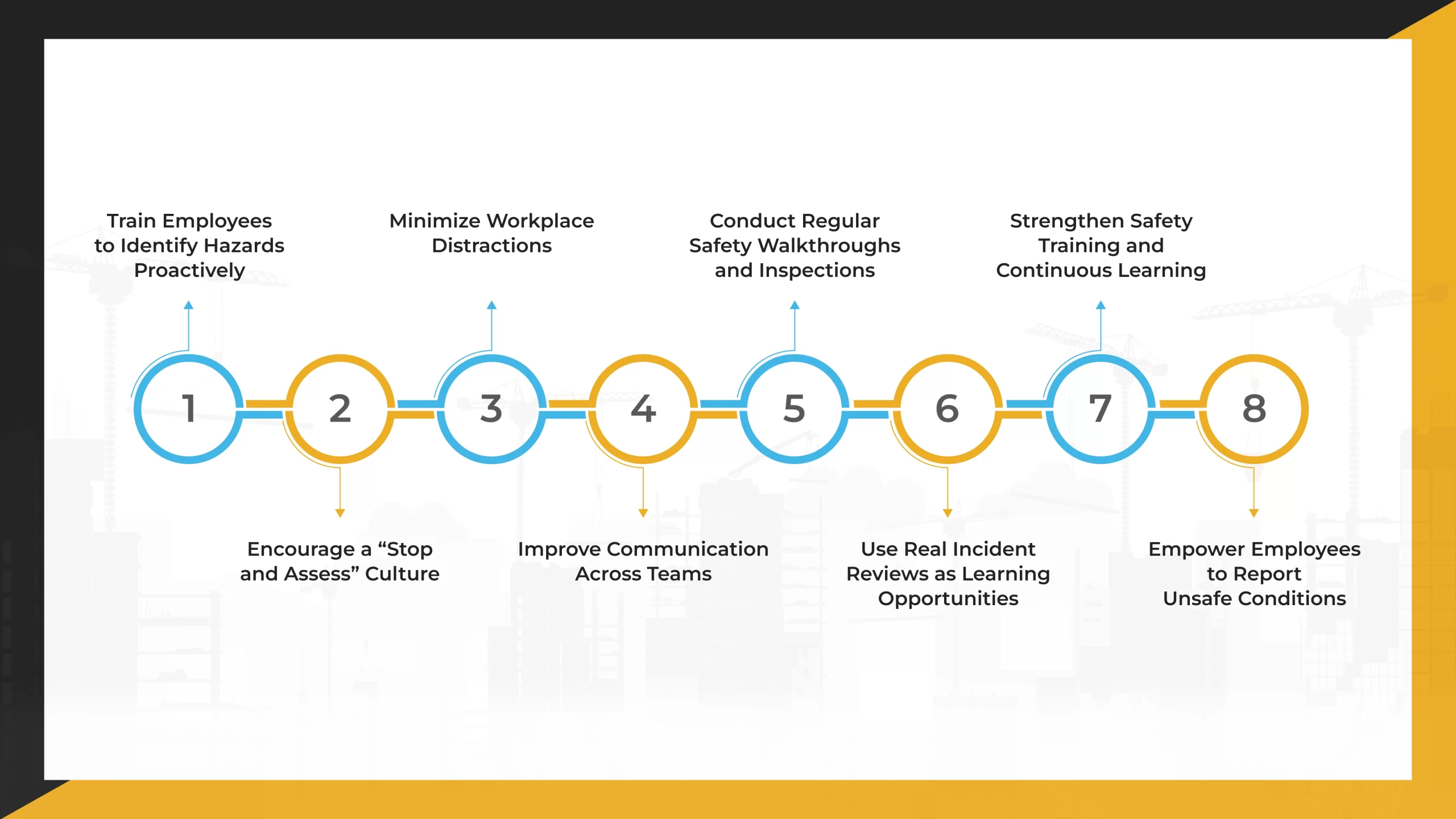
Below are eight practical tips you can implement to strengthen situational and safety awareness across your workplace.
1. Train Employees to Identify Hazards Proactively
If you want to strengthen workplace safety, start by improving hazard recognition. Many workplace incidents occur because risks are not identified early enough.
- Train employees to actively scan their surroundings and recognize unsafe conditions before work begins.
- Use structured approaches such as hazard identification training, daily safety briefings, and visual hazard recognition drills to reinforce this skill.
- Conduct job hazard analysis (JHA) for critical tasks to ensure workers understand the specific risks.
- Support detection by using safety checklists, digital inspection apps, and hazard reporting platforms to help teams document and address risks quickly.
2. Encourage a “Stop and Assess” Culture
When tasks become routine, employees may begin working on autopilot. This habit often leads to overlooked hazards and unsafe shortcuts.
- Promote a simple Stop–Think–Act approach.
- Encourage workers to pause before starting a task, identify potential risks, and choose the safest way to proceed.
- Reinforce this habit through programs such as Take-5 safety checks, last-minute risk assessments, and toolbox talks.
When employees consistently pause to assess risks, organizations experience fewer equipment incidents, fewer procedural errors, and safer decision-making during high-risk operations.
3. Minimize Workplace Distractions
Distractions reduce your team’s ability to detect hazards and respond quickly to changing conditions. Common workplace distractions include mobile phones, excessive background noise, multitasking, and time pressure. These factors can cause workers to miss warning signals, collide with equipment, or overlook environmental risks.
- To maintain awareness, create distraction-controlled work environments.
- Establish distraction-free zones in high-risk areas, implement clear mobile device policies, and divide complex work into focused tasks.
When employees can fully concentrate on their responsibilities, situational awareness improves, and incident risk decreases.
4. Improve Communication Across Teams
Situational awareness depends heavily on clear and consistent communication. When instructions are unclear, hazards go unreported, or shift handovers are incomplete, workers may lack the information needed to make safe decisions.
- Implement structured communication practices, such as standardized safety briefings, clear handover documentation, and reliable communication tools, such as radios or digital systems.
- Encourage supervisors to play a critical role by encouraging hazard reporting, clarifying work instructions, and reinforcing safety expectations.
Strong communication ensures that everyone understands current risks and can respond appropriately.
5. Conduct Regular Safety Walkthroughs and Inspections
Workplace conditions constantly change due to new equipment, temporary hazards, and environmental factors. Without routine monitoring, these changes can introduce risks that go unnoticed.
- Conduct regular safety walkthroughs to identify potential hazards before they cause incidents.
- Combine scheduled inspections with random safety audits to maintain consistent oversight. Involving employees in inspections also strengthens awareness and accountability.
- Use technology to further improve this process through digital inspection platforms, mobile reporting tools, and real-time safety dashboards, helping teams track hazards and corrective actions more efficiently.
6. Use Real Incident Reviews as Learning Opportunities
Every workplace incident provides valuable insights into underlying safety risks. When you review incidents carefully, you can uncover hidden hazards, procedural gaps, or system weaknesses that may otherwise remain unnoticed.
- Conduct structured incident reviews by identifying root causes, analyzing contributing factors, and implementing corrective actions.
- Focus on improving processes rather than assigning blame. A learning-focused approach encourages employees to share information openly and helps your organization prevent similar incidents in the future.
7. Strengthen Safety Training and Continuous Learning
Safety awareness cannot rely on a single training session. Without regular reinforcement, employees may forget procedures or become less attentive to risks.
- Maintain continuous safety education through scenario-based training, simulation exercises, and emergency response drills. These methods help workers practice recognizing hazards and responding to real-world situations.
- Focus training on practical topics such as hazard recognition, equipment safety, and emergency preparedness.
Ongoing learning improves reaction times, strengthens decision-making, and helps ensure employees consistently follow safety protocols.
8. Empower Employees to Report Unsafe Conditions
Employees often notice hazards before supervisors or management do. When workers feel comfortable reporting risks, organizations can address issues before they lead to incidents.
- Promote a reporting culture in which employees can share concerns without fear of punishment.
- Implement anonymous reporting channels, establish non-punitive policies, and respond quickly to submitted reports.
- Use digital tools such as mobile safety apps, automated incident tracking systems, and real-time alerts to make reporting easier and faster.
When employees actively report hazards, your organization gains better safety data and resolves risks more effectively.
Enhance Your Safety Standards with Expert Support from Gallagher Bassett
We’re dedicated to elevating safety standards through expert consulting and staffing services. By proactively addressing and preventing safety issues and equipping your workforce with the necessary knowledge and tools, we help create a safer work environment.
Partner with us to enhance your company’s safety protocols and ensure compliance with industry standards. Whether you’re looking to fill safety-specific roles or need expert consultation to mitigate workplace hazards, we’re here to help.