
Any work on a jobsite doesn’t start under perfect conditions. Crews arrive with equipment staged, permits in motion, and pressure to move quickly on Safety Training & Protection–driven tasks. Work is already lined up, and momentum often takes priority. In that environment, it’s easy to rely on assumptions, believing everyone understands the scope of work, the hazards involved, and the controls required.
That’s where problems begin. Hazards may be known in general, but they are not always reviewed for the specific task, location, and conditions of the day. A change in equipment, weather, or crew can introduce new risks that were not part of the original plan.
Many incidents don’t happen because safety systems are missing. They happen because work begins without clear alignment. Steps are not fully understood, hazards are not discussed, and controls are not confirmed before the task starts.
A pre-task plan (PTP) creates a structured moment to pause, review the work, and align your team before execution. Instead of relying on assumptions, it ensures that everyone understands what needs to be done, what could go wrong, and how the risks will be controlled.
In this blog, we’ll discuss what a PTP is, what it should include, and how you can use it to improve safety and consistency in daily operations.
What Is a PTP?
| A PTP is a structured process you complete before starting a task to review the work, identify hazards, and define the controls needed to perform the task safely. It helps ensure that everyone involved understands what needs to be done, what could go wrong, and how the risks will be managed. |
A PTP is not a generic safety document. It is specific to the task, the location, and the conditions at the time the work is being performed. Even if the same task is repeated daily, factors such as the environment, equipment, or crew can change, introducing new risks.
It’s important to distinguish a PTP from broader planning tools such as a job hazard analysis (JHA). A JHA identifies risks associated with a task in general. A PTP brings that information into the field and applies it to the actual conditions before work begins.
A strong PTP acts as a “pause point” before execution. It creates a clear opportunity to align your team, confirm responsibilities, and verify that controls are in place. When done properly, it shifts safety from assumption to active planning, helping reduce gaps that can lead to incidents.
Why Pre-Task Planning Is Critical in Daily Operations
Work conditions change constantly. Crews, equipment, environment, and site activity can all shift between tasks or even within the same shift. When work starts without reviewing those changes, you rely on assumptions instead of clear planning. In fact, studies show that over 70 to 90% of workplace incidents are linked to human factors.
Pre-task planning helps you stay ahead of these risks by creating a consistent process before work begins. It ensures your team is aligned, hazards are understood, and controls are in place.
Here’s why it’s important:
- Conditions change daily: Variations in weather, equipment, or crew can introduce new risks that were not present before.
- Familiar tasks still carry risk: Hazards may be known, but without reviewing them for the current situation, important details can be missed.
- Communication is improved across the team: Everyone understands the task, the risks involved, and their role before work begins.
- Reliance on assumptions is reduced: Instead of assuming controls are in place, you actively confirm them.
- Hazard awareness is increased: Discussing the task helps your team recognize risks early and respond before they escalate.
- It creates a consistent starting point for work: Each task begins with clear expectations, helping maintain control and reduce variability.
Without pre-task planning, even well-defined procedures can break down in practice. With it, you create a more controlled and predictable approach to daily operations. OSHA requires that a job briefing be conducted before each job, covering hazards, work procedures, precautions, and PPE.
What Should a PTP Include?
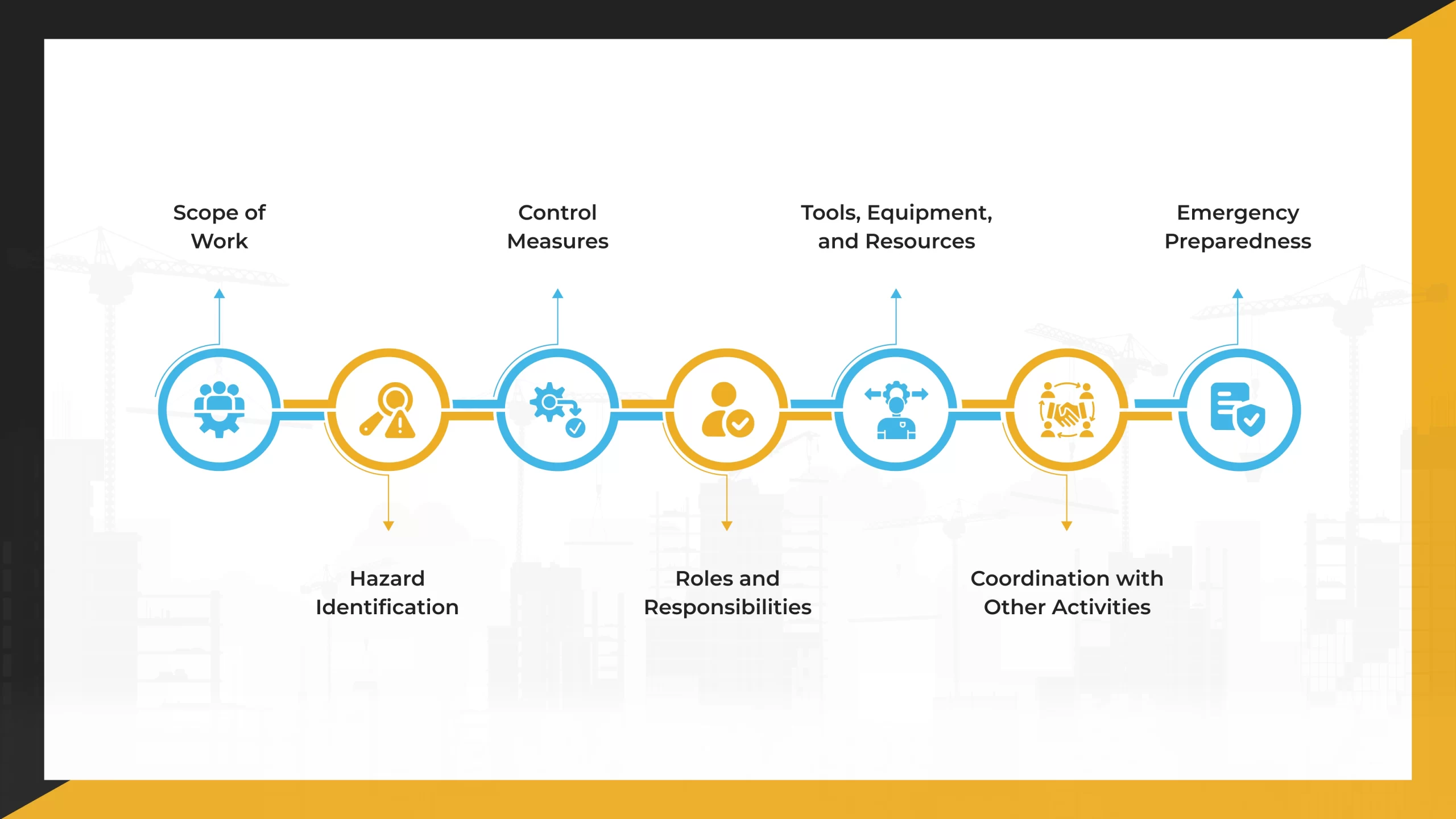
A PTP should give your team a clear, practical understanding of the work before it begins. It should reflect the actual task, current conditions, and specific risks, not a generic checklist. When done properly, it ensures that everyone starts with the same expectations and awareness.
Scope of Work
You need to clearly define what work will be performed and how it will be carried out. This includes breaking the task into steps and confirming the sequence of activities. When the scope is unclear, teams may take different approaches, which increases variability and risk.
Hazard Identification
You should identify all task-specific hazards before work begins. This includes risks related to the environment, equipment, materials, and interaction with other crews. Conditions can change daily, so hazards must be reviewed in the context of the current situation rather than assumed from previous work.
Control Measures
Each identified hazard should have a defined control. These controls should be specific and practical, covering engineering safeguards, administrative steps, and required PPE. It should be clear how each control reduces or prevents the risk.
Roles and Responsibilities
You need to establish who is responsible for each part of the task. This includes both execution and safety-related actions. When responsibilities are clearly defined, accountability improves, and confusion during the task is reduced.
Tools, Equipment, and Resources
Confirm that the correct tools and equipment are available and suitable for the task. Equipment should also be checked to ensure it is safe to use. Using faulty equipment can introduce unnecessary risk.
Coordination with Other Activities
You should consider how your work interacts with other ongoing tasks. Nearby operations, shared spaces, or simultaneous activities can introduce additional hazards that need to be managed.
Emergency Preparedness
Your team should understand what to do if something goes wrong. This includes knowing emergency procedures, response steps, and who to contact. Clear preparation helps ensure a quicker and more effective response.
A well-structured PTP ensures that work begins with clarity, alignment, and control, reducing the chances of gaps that can lead to incidents.
When Should a PTP Be Completed?
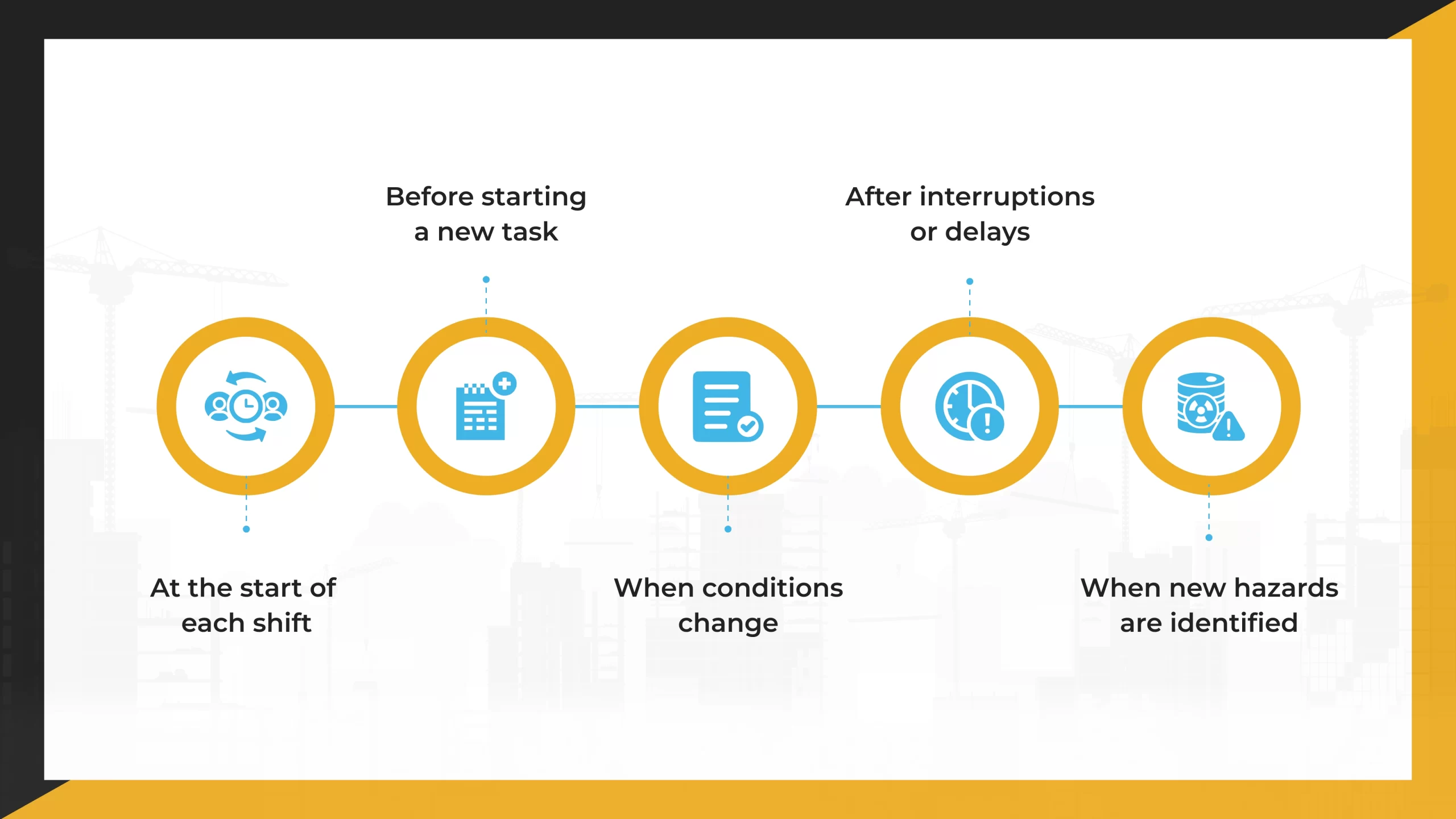
A PTP should be completed before any work begins. It serves as a starting point to align your team, review the task, and confirm that risks are understood and controlled before execution.
You should complete a PTP:
- At the start of each shift: Before work begins, review the tasks planned for the day along with the current site conditions.
- Before starting a new task: Even within the same shift, a new activity may introduce different hazards that need to be assessed.
- When conditions change: Changes in weather, equipment, environment, or crew can introduce new risks that require reassessment.
- After interruptions or delays: If work stops and restarts, conditions may no longer be the same. A quick review helps ensure risks are still controlled.
- When new hazards are identified: If something unexpected is noticed, the plan should be updated before work continues.
Pre-task planning is not a one-time activity. It should be treated as a continuous process that adapts to changing conditions, helping you maintain control and reduce risk throughout the workday.
Who Is Responsible for Creating a PTP?
Responsibility for a PTP typically starts with the supervisor or foreman, but an effective PTP is not created by one person alone. It works best when it involves the entire team responsible for the task.
The supervisor or foreman usually leads the process. They are responsible for organizing the discussion, defining the scope of work, and ensuring that hazards and controls are clearly identified. They also make sure the plan is completed before work begins and that expectations are communicated.
At the same time, the team plays a critical role. Workers bring practical, field-level insight that may not be captured in procedures. Their input helps identify real hazards, especially those related to equipment, environment, and task execution. Involving them in the process improves accuracy and increases ownership.
Safety personnel may also support the process by providing guidance, reviewing plans, or helping address higher-risk activities. Their role is to strengthen the quality of the plan, not replace field involvement.
A PTP is most effective when it is a shared responsibility. When everyone participates, you create better awareness, stronger alignment, and more reliable control over how the work is carried out.
How a PTP Works in Practice
A PTP becomes effective when it is built into how work actually starts on-site. Instead of relying on assumptions or past experience, it creates a clear moment where your team aligns on the task and current conditions before moving forward.
- Review the planned work steps and objectives.
- Identify hazards specific to those steps and site conditions.
- Define appropriate controls to address each hazard.
- Communicate the plan clearly to the crew.
- Confirm understanding so every worker knows their task and safety responsibilities.
This brief, structured conversation creates a powerful pause between planning and action. That pause often makes the difference between routine work and a costly incident.
Common Failures in Pre-Task Planning
A PTP adds value only when treated as a meaningful discussion, not a checklist to satisfy a procedure. Common breakdowns include:
- Using the PTP as paperwork instead of a real conversation.
- Rushing the review or skipping the discussion entirely.
- Reusing old plans without verifying current hazards.
- Leaving out part of the crew, especially new personnel or subcontractors.
These mistakes create a false sense of security and leave hidden risks unaddressed.
Benefits of Effective Pre-Task Planning
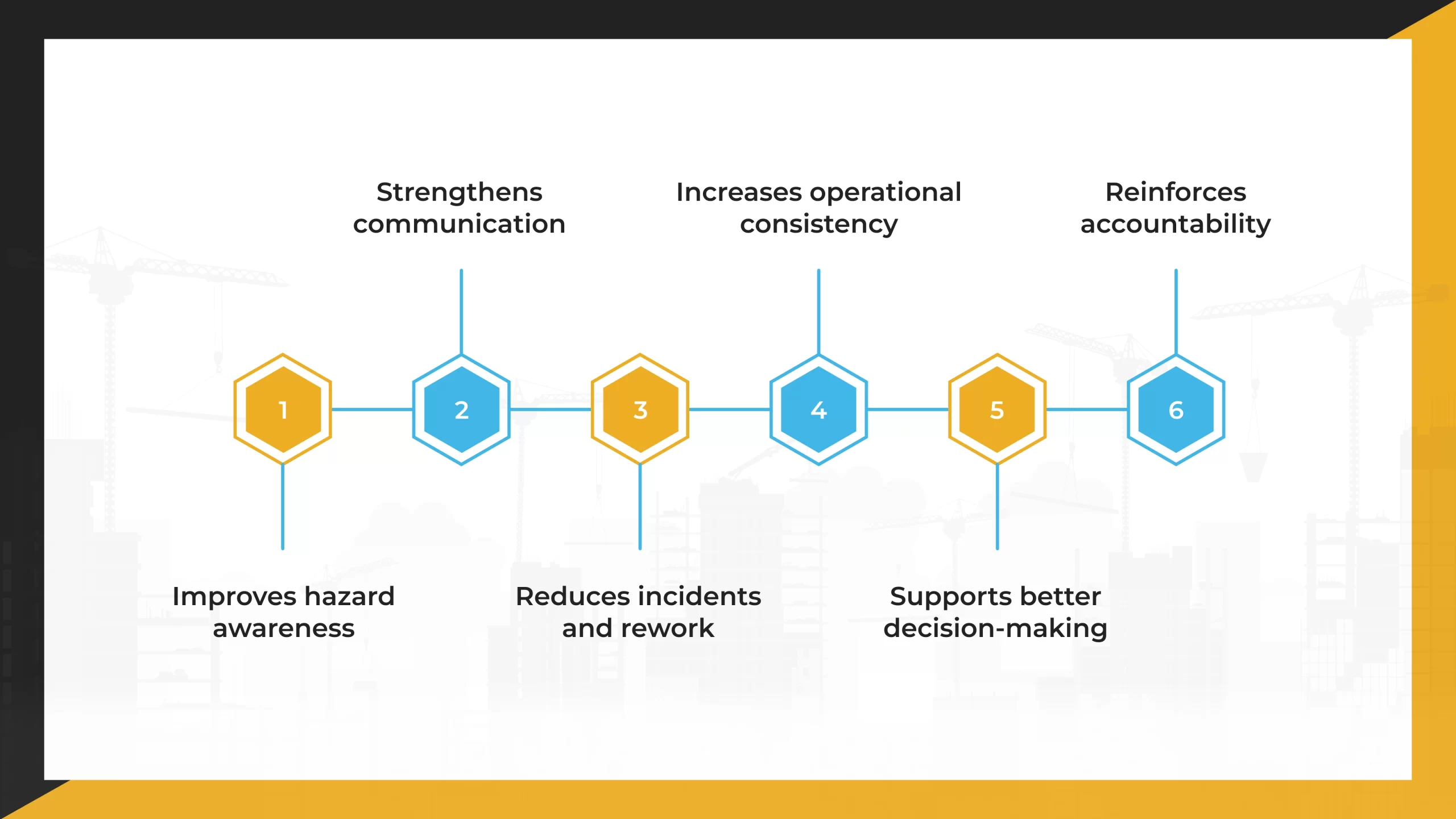
When applied with care, PTPs deliver measurable safety and performance gains:
- Improves hazard awareness: Reviewing the task helps you and your team recognize risks specific to the current conditions
- Strengthens communication: Everyone starts with a shared understanding of the work, reducing confusion and misalignment during execution.
- Reduces incidents and rework: Identifying risks early helps prevent mistakes that can lead to injuries, delays, or rework.
- Increases operational consistency: Each task begins with the same level of planning and review, reducing variability across teams and shifts.
- Supports better decision-making: A clear understanding of the risks and controls allows you to respond more effectively when conditions change.
- Reinforces accountability: Defined roles and open discussion make it clear who is responsible for each part of the task.
Effective pre-task planning is a small step that has a direct impact on safety, efficiency, and overall control of your operations.
How to Implement an Effective PTP Process
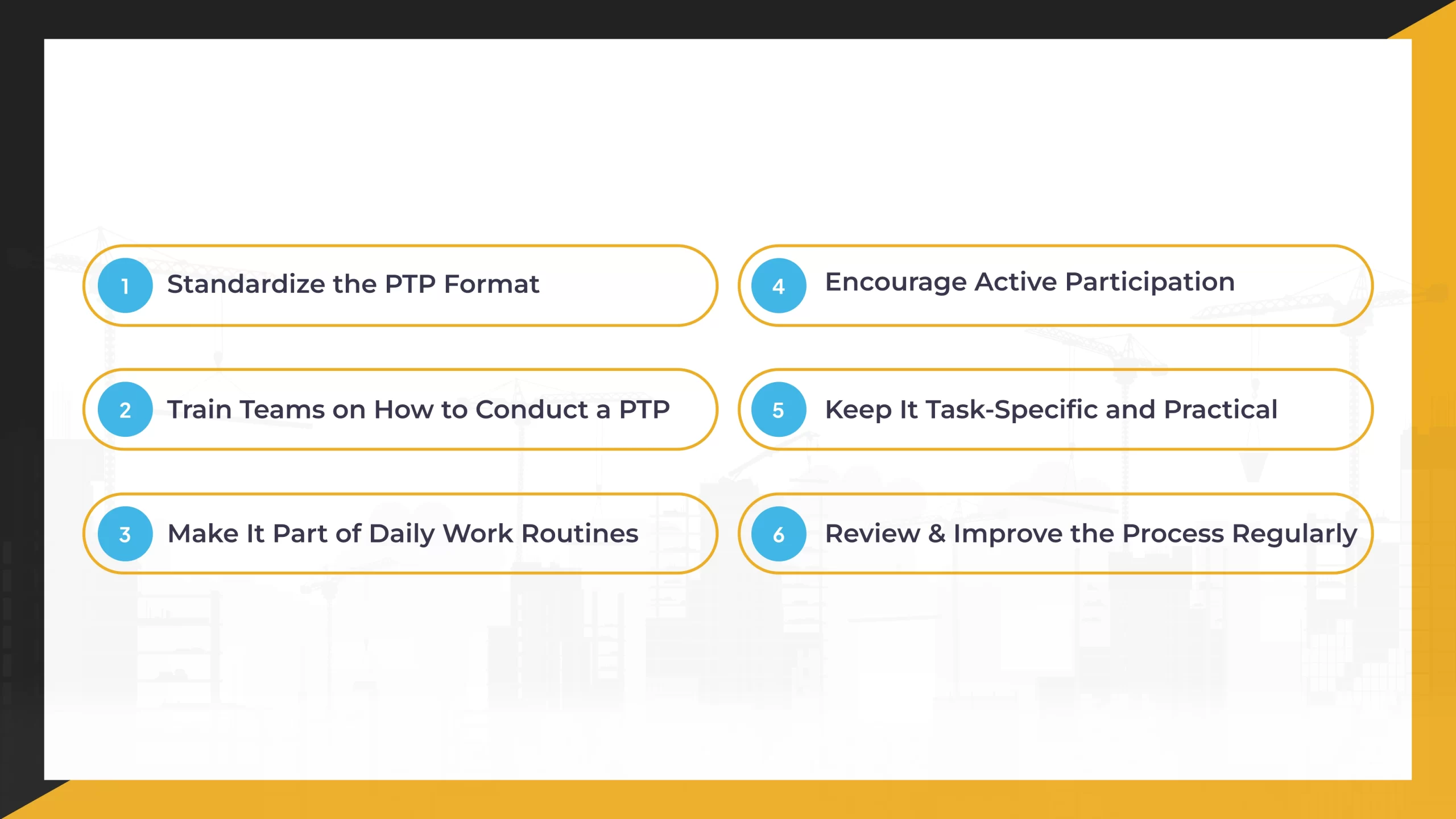
An effective PTP process should fit naturally into your daily operations. If it feels like an extra step or slows work down, it will likely be rushed or skipped. The goal is to make pre-task planning a consistent, practical part of how work begins, not just a form to complete.
Standardize the PTP Format
Use a clear and consistent format across your site. A standardized structure helps ensure that all key elements, such as task steps, hazards, and controls, are always covered. It also makes the process easier to follow for different teams.
Train Teams on How to Conduct a PTP
Your team needs to understand how to identify hazards, define controls, and communicate effectively during a PTP. Training should focus on real scenarios so that the process is applied correctly in the field.
Make It Part of Daily Work Routines
A PTP should be completed at the start of each shift or before each task. When it becomes a routine part of starting work, consistency improves, and fewer steps are missed.
Encourage Active Participation
A strong PTP is not led by one person. Involve your team in discussions so they can share insights based on their experience. This improves hazard identification and strengthens ownership.
Keep It Task-Specific and Practical
Avoid copying previous plans or using generic information. Each PTP should reflect the actual task and current conditions to remain effective.
Review and Improve the Process Regularly
Monitor how PTPs are conducted in practice. Identify gaps, gather feedback, and make improvements to ensure the process remains effective and relevant.
When implemented properly, a PTP process becomes a reliable way to start work with clarity, alignment, and control, reducing risks while supporting efficient operations.
Pre-Task Planning and Operational Discipline
A PTP is evidence of operational discipline. Consistent execution shows three hallmarks of a strong safety culture:
- Consistency: The process is performed every day without exception.
- Engagement: Teams actively discuss hazards and solutions.
- Verification: Supervisors confirm that the talk occurred and that controls are inplace.
With that alignment, safety becomes part of the workflow rather than an afterthought.
Build Safer Operations with Practical Support from Safe T Professionals

Effective pre-task planning depends on communication, preparation, and accountability at every level. Templates help, but culture makes it stick.
Enhance Your Safety Standards with Expert Support from Gallagher Bassett
We’re dedicated to elevating safety standards through expert consulting and staffing services. By proactively addressing and preventing safety issues and equipping your workforce with the necessary knowledge and tools, we help create a safer work environment.
Partner with us to enhance your company’s safety protocols and ensure compliance with industry standards. Whether you’re looking to fill safety-specific roles or need expert consultation to mitigate workplace hazards, we’re here to help. Connect with us today!