
Combustible dust often hides in plain sight.
A fine coating on rafters or ductwork may not look alarming until that dust cloud ignites and an ordinary workday turns into a devastating explosion.
OSHA recognizes combustible dust as a “known hazard,” meaning you can face citations under the General Duty Clause, even without a specific standard in place.
The consequences reach far beyond compliance. A single ignition can destroy property, injure or kill workers, trigger investigations by multiple agencies, and halt operations for months.
Missteps usually stem not from ignorance but from gaps in consistency. You might have a collection system and written procedures, yet if inspections, maintenance, or housekeeping don’t keep pace with production, hazards quickly reappear.
The result is a dangerous mismatch between how your program looks on paper and what’s actually happening in the plant.
This blog breaks down how to recognize, control, and continually verify combustible dust risks so your program stands up to OSHA and NFPA review and protects your people in the process.
What Combustible Dust Is and Why It Matters
Combustible dust refers to fine particles, generally under 420 microns, that can ignite or explode when suspended in air and exposed to heat, flame, or sparks. Common materials include food products, paper, coal, metals, resins, and plastics. The danger increases when dust accumulates in enclosed spaces, ducts, rafters, conveyors, or ceilings, where a small ignition can trigger a powerful chain reaction.
The most common mistake is assuming that “nonflammable” bulk materials are harmless in dust form. Even aluminum, sugar, and rubber can become explosively reactive when dispersed as fine particles. OSHA and NFPA 652 (Standard on the Fundamentals of Combustible Dust) require you to formally evaluate this risk.
If you lack a structured process safety approach, dust hazards often remain invisible until a near miss or explosion forces attention.
Why Combustible Dust Hazards Demand Special Attention
Combustible dust control requires more precision than typical fire prevention because the hazard behaves differently. Dust settles gradually, often far above eye level, creating danger you can’t easily see. NFPA research shows that layers as thin as 1/32 inch, about the thickness of a paper clip, can trigger an explosion when spread across a large surface.
Common pitfalls noted in OSHA investigations include:
- Dust collecting on overhead beams, light fixtures, or ductwork
- Inconsistent housekeeping or inspection programs
- Vacuum systems not rated for combustible dust or improperly maintained
- Missing or outdated hazard assessments
When explosions occur, secondary fires and pressure waves magnify the damage, leading OSHA to consider them “catastrophic” events under Process Safety Management (PSM) or General Duty Clause provisions. A structured, well-documented program built on verified competencies is essential to defend your facility and workforce.
The Science Behind Dust Explosions
A combustible dust explosion occurs when five elements are present simultaneously. This is known as the dust explosion pentagon:
| Element | Description |
| Fuel (Dust) | Fine, dry particles such as flour, wood dust, metal powders, or chemicals that can burn |
| Oxygen | Present in the air and supports combustion |
| Ignition Source | Heat, sparks, open flames, hot surfaces, or static electricity |
| Dispersion | Dust particles suspended in the air at a sufficient concentration |
| Confinement | An enclosed or semi-enclosed space that allows pressure to build |
If any one of these elements is removed, an explosion cannot occur. These can be primary or secondary explosions.
- Primary Explosion: The initial event is usually small and localized (e.g., inside a piece of equipment or duct). It may go unnoticed, but it can disturb accumulated dust.
- Secondary Explosion: This occurs when the primary explosion disperses settled dust into the air, creating a much larger dust cloud that ignites.
Secondary explosions are more destructive because they involve a larger volume of dust and can spread rapidly across a facility.
What OSHA Requires for Combustible Dust Safety in the Workplace
OSHA does not have a single standalone standard dedicated entirely to combustible dust. Instead, it enforces safety through a combination of existing regulations, the General Duty Clause, and targeted inspection programs. Employers are expected to proactively identify combustible dust hazards and implement appropriate controls in accordance with recognized industry practices.
1. OSHA General Duty Clause (Section 5[a][1])
The General Duty Clause requires employers to provide a workplace free from recognized hazards that are likely to cause death or serious physical harm. This clause is commonly applied in combustible dust cases, especially where specific standards do not exist.
If a facility is aware, or should reasonably be aware, of dust-related risks and fails to address them, OSHA can issue citations under this provision.
2. 29 CFR 1910.22 (Housekeeping)
This standard emphasizes maintaining clean and orderly workspaces to reduce safety risks. In the context of combustible dust, it requires that dust accumulation on surfaces such as floors, beams, ducts, and equipment be kept to a minimum.
Regular cleaning schedules must be implemented, and unsafe practices such as dry sweeping or the use of compressed air should be avoided unless proper controls are in place to prevent dust dispersion.
3. 29 CFR 1910.94 (Ventilation)
This regulation covers the design and operation of ventilation systems used to control airborne contaminants, including dust.
Facilities must ensure that dust collection and exhaust systems are properly designed, installed, and maintained to prevent dust from escaping into the workplace. Effective ventilation plays a critical role in preventing the buildup of combustible dust concentrations in the air.
4. 29 CFR 1910.307 (Hazardous Locations)
This standard applies to environments in which combustible dust poses a fire or explosion hazard. It requires that electrical equipment installed in such areas be suitable for classified (Class II) locations.
This includes proper enclosure, wiring, and installation practices to ensure that electrical components do not act as ignition sources.
5. 29 CFR 1910.119 (PSM)
The PSM standard applies to facilities handling highly hazardous chemicals and becomes relevant when combustible dust is part of a broader chemical process risk.
It requires a structured approach to safety, including process hazard analysis, documented operating procedures, employee training, and equipment maintenance programs. These measures help control complex risks that could lead to fires or explosions.
OSHA Combustible Dust National Emphasis Program
OSHA’s National Emphasis Program (NEP) on combustible dust is an enforcement initiative targeting industries with known dust hazards. Through this program, OSHA conducts inspections to identify unsafe conditions, such as excessive dust accumulation, poor housekeeping, inadequate ventilation, and a lack of ignition source control. The NEP reinforces compliance expectations, often triggering citations when preventive measures are insufficient.
NFPA Standards Every Facility Handling Combustible Dust Should Know
OSHA frequently references NFPA standards to establish recognized safe practices under the General Duty Clause. These standards provide detailed technical guidance for hazard identification, prevention, and mitigation.
1. NFPA 652: Fundamentals of Combustible Dust
This standard serves as the baseline for all industries handling combustible dust. It requires facilities to complete a dust hazard analysis to:
- Identify locations where combustible dust is present.
- Evaluate fire and explosion risk.
- Determine appropriate safeguards.
It also mandates the implementation of engineering controls (venting, suppression, isolation), administrative controls (procedures, training), and ongoing review and updates of hazard assessments.
2. Industry-Specific NFPA Standards
These standards provide sector-specific requirements aligned with NFPA 652:
- NFPA 61: Agriculture and Food Processing: It covers grain handling, milling, and food production and focuses on explosion prevention in silos, conveyors, and processing equipment.
- NFPA 484: Combustible Metals: It applies to metals such as aluminum, magnesium, and titanium. The standard addresses high-reactivity risk mitigation, including special handling, storage, and fire suppression methods.
- NFPA 664: Wood Processing: It covers sawmills, woodworking shops, and panel manufacturing operations and emphasizes dust collection, spark detection, and fire prevention systems.
- NFPA 654: General Manufacturing: It is a broad standard for industries not covered by specific codes and includes requirements for:
- Dust control
- Explosion protection systems
- Equipment design and housekeeping
Foundational Controls That Support Safe Dust Handling Operations
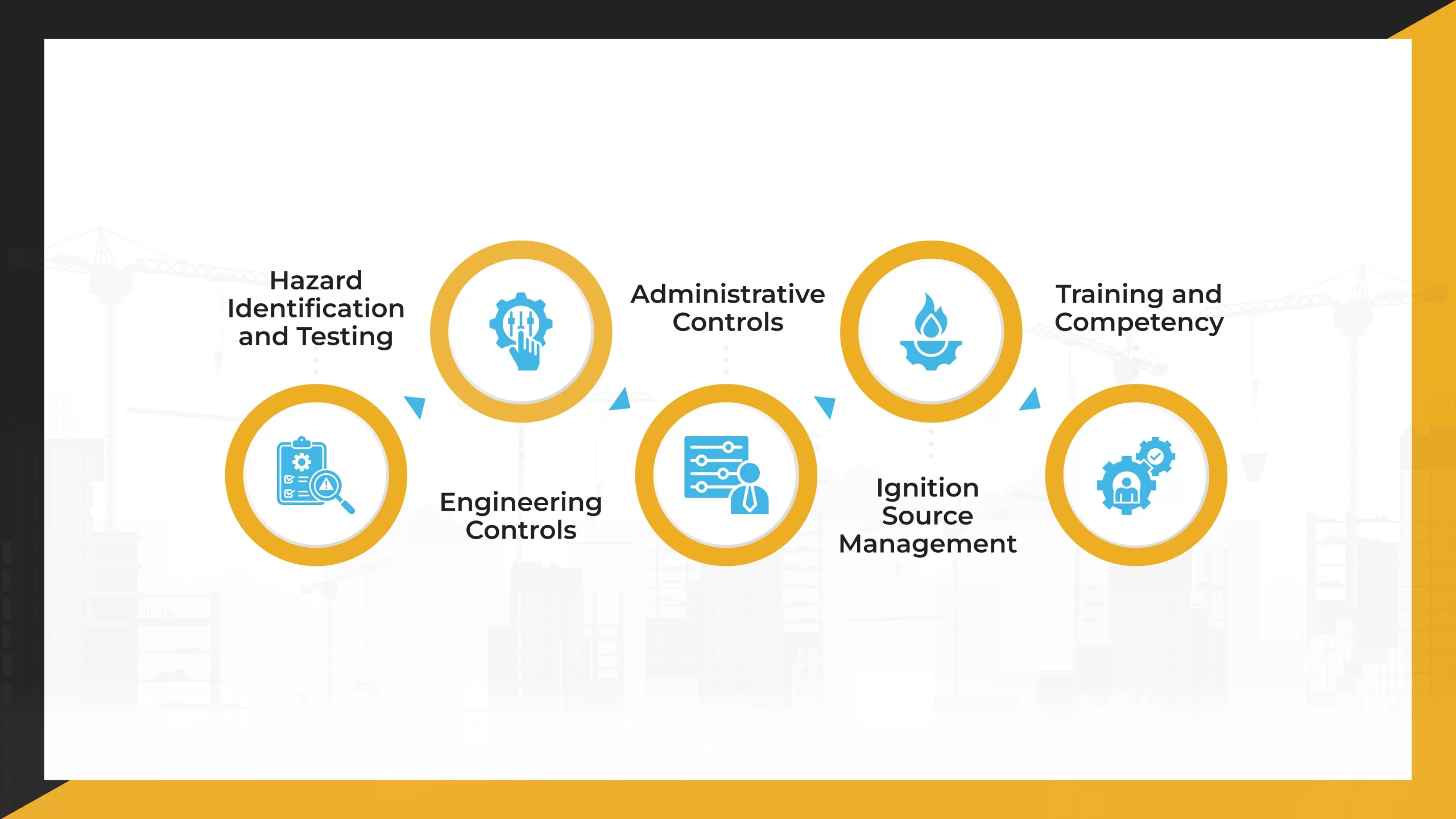
The following are the core controls that support safe dust handling operations.
1. Hazard Identification and Testing
Start with a thorough combustible dust analysis. Send representative samples to a qualified lab for testing in accordance with ASTM or NFPA 652 protocols. Many materials assumed to be inert, such as sugar, aluminum, or flour, have unexpectedly high explosibility indices.
2. Engineering Controls
Design dust collection systems that match your material properties and process flow. Ground and bond ductwork to eliminate static buildup and install isolation valves to prevent flames from spreading to connected units. Regularly inspect filters, housings, and explosion vents for wear or corrosion.
3.Administrative Controls
Housekeeping programs work only when schedules, accountabilities, and inspection criteria are crystal clear. Avoid sweeping or using compressed air unless power is isolated and methods are verified as safe for your materials. Establish escalation procedures when accumulations exceed set thresholds.
4. Ignition Source Management
Static discharge, overheated bearings, and open flames are common triggers. Apply strict hot work permitting, verify equipment grounding, and inspect tools used in dusty zones to ensure they’re rated as non-sparking where required.
5. Training and Competency
Training means little without proof of capability. Workers should demonstrate procedures such as vacuum operation, lockout for cleaning, and grounding methods. Safe T Professionals focuses on competency-based training, where each worker’s skill application is observed and validated on the job.
Best Practices for Preventing Combustible Dust Explosions
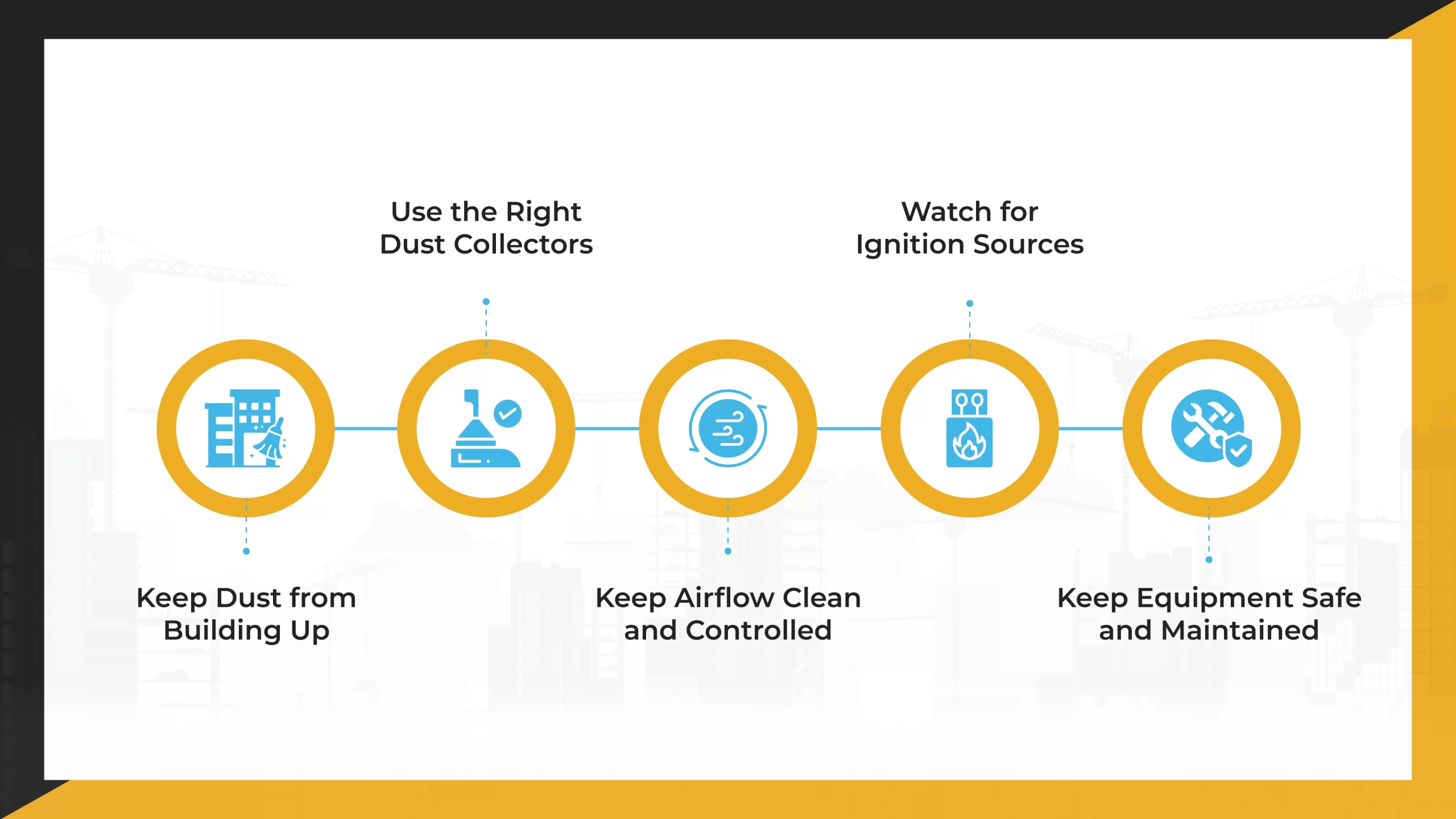
The following best practices help reduce combustible dust hazards and minimize fire and explosion risks in industrial environments.
1. Keep Dust from Building Up
Effective housekeeping is one of the most critical controls for combustible dust. Dust should not be allowed to accumulate on floors, overhead beams, equipment, or hidden surfaces, as even thin layers can fuel secondary explosions.
Cleaning must follow a defined schedule based on the rate of dust generation. Methods matter; dry sweeping or using compressed air can disperse dust into the air, increasing explosion risk. Instead, facilities should use approved industrial or explosion-proof vacuum systems that safely capture fine particles without creating airborne clouds.
2. Use the Right Dust Collectors
Dust collection systems should be designed to capture dust at the source before it spreads into the work environment. This includes properly sized collectors, correct ducting design, and adequate airflow to handle the volume of dust generated.
Systems should also include explosion protection measures, such as venting and isolation, to prevent pressure buildup and flame propagation. Regular inspection and maintenance are essential to ensure filters, ducts, and collectors are functioning effectively and not becoming sources of ignition or blockage.
3. Keep Airflow Clean and Controlled
Proper ventilation helps control airborne dust concentration and reduces the likelihood of explosive conditions. Local exhaust ventilation systems should be installed near dust-generating processes to remove particles directly at the source.
Airflow must be balanced and consistent to prevent dust from settling in ducts or recirculating into work areas. Duct systems should be routinely checked for buildup, as accumulated dust inside ducts can act as fuel if disturbed.
4. Watch for Ignition Sources
Controlling ignition sources is essential because even well-managed dust can ignite if exposed to heat or sparks. Static electricity should be managed through proper grounding and bonding of equipment.
Electrical and mechanical equipment used in dust-prone areas should be intrinsically safe or rated for hazardous locations. Continuous monitoring of equipment temperature helps detect overheating components early, reducing the risk of ignition from hot surfaces or friction.
5. Keep Equipment Safe and Maintained
Equipment should be designed to minimize dust escape and accumulation, using enclosed systems wherever possible. Open handling increases the chances of dust dispersion and buildup in surrounding areas.
Regular inspections should focus on wear and tear, misalignment, or damaged components that could generate sparks or heat. Preventive maintenance programs should ensure that machinery operates within safe temperature limits and that any potential ignition sources are identified and addressed before they become hazards.
Build a Safer Workplace with the Right Expertise from Safe T Professionals

At Safe T Professionals, we are dedicated to elevating safety standards through our expert consulting and staffing services. By proactively addressing and preventing safety issues and equipping your workforce with the necessary knowledge and tools, we help create a safer work environment.
Partner with Safe T Professionals to enhance your company’s safety protocols and ensure compliance with industry standards. Whether you are looking to fill safety-specific roles or need expert consultation to mitigate workplace hazards, we are here to help.
Connect with us today!