
In construction, there are no second chances.
A single missed step, a split-second distraction, or an overlooked hazard can change everything. The dangers on a job site are real, and every crew member is aware of them. But accepting risk as “part of the job” is a mindset that puts lives at stake. That thinking has to go.
An authentic safety-first culture isn’t just about hard hats and warning signs. It’s about how people think, communicate, and act every day on every site. It’s the belief that everyone, from top leaders to the newest apprentices, has a role in protecting each other and that injuries, incidents, and near-misses are not inevitable—they’re preventable.
When safety becomes part of how the work is done rather than an afterthought, everything changes. Morale improves. Teams work smarter. And people go home safe.
This blog explores the importance of establishing a safety-first culture in construction, its key components, the reasons behind its significance, and how to implement it on every construction site.
Beyond Compliance: What It Really Means to Build a Safety-First Culture
Building a safety-first culture in construction means shaping how your team thinks, communicates, and acts around risk on every shift. This section outlines the foundational mindset you need to establish before any safety program can be effective.
There’s More to Safety Than Just Compliance
Compliance ensures you meet legal and regulatory standards. But a strong safety culture requires more. It’s about building habits that prevent incidents. It means your team prioritizes safety even when deadlines are tight or pressure is high.
It’s a shared belief that safety matters at every level, from project managers to apprentices. If safety becomes a priority only after an injury or inspection, the culture needs improvement.
Make Safety Everyone’s Responsibility
A top-down approach doesn’t work if workers don’t feel responsible for their own safety. Every person on site should be expected and encouraged to identify and report hazards.
Team members should feel confident pausing work if something seems unsafe. Leaders must support this by listening attentively, responding promptly, and reinforcing positive actions. Ownership leads to accountability, and accountability builds consistency.
Be Proactive, Not Reactive
Waiting for an accident to happen to improve processes is costly in time, money, and lives. A proactive approach includes regular hazard assessments conducted before commencing work, open discussions about near-misses and lessons learned, and safety planning at every stage of the job, not just the kickoff. Prevention needs to be built into your day-to-day operations, not treated as a separate checklist.
What Makes a Safety-First Culture Essential on Every Job Site?
According to the Bureau of Labor Statistics, the fatal injury rate across all industries fell to 3.5 deaths per 100,000 full‑time equivalent workers in 2023 from 3.7 in 2022. Furthermore, construction workers comprised nearly 20% of all on‑the‑job deaths in the private sector while making up only about 7.5 % of total employment, a fatal injury rate 2.5 times higher than all industries combined (9.6 versus 3.9 per 100,000 full‑time equivalents).
From a regulatory and management standpoint, the Occupational Safety and Health Administration highlights the enforcement gap: with only roughly 1,850 federal inspectors overseeing 130 million workers across 8 million worksites, that’s about one inspector per 70,000 workers.
In other words, you can’t rely solely on regulatory enforcement to keep your site safe; your culture must actively drive safety every day.
The numbers show that construction undoubtedly remains one of the highest‑risk industries in the U.S. Building and maintaining a safety‑first culture isn’t just “nice to have”; it is foundational to preventing fatalities, reducing risk exposure, and closing the gap that inspections alone cannot fill.
The 5 Core Elements of a Strong Safety Culture
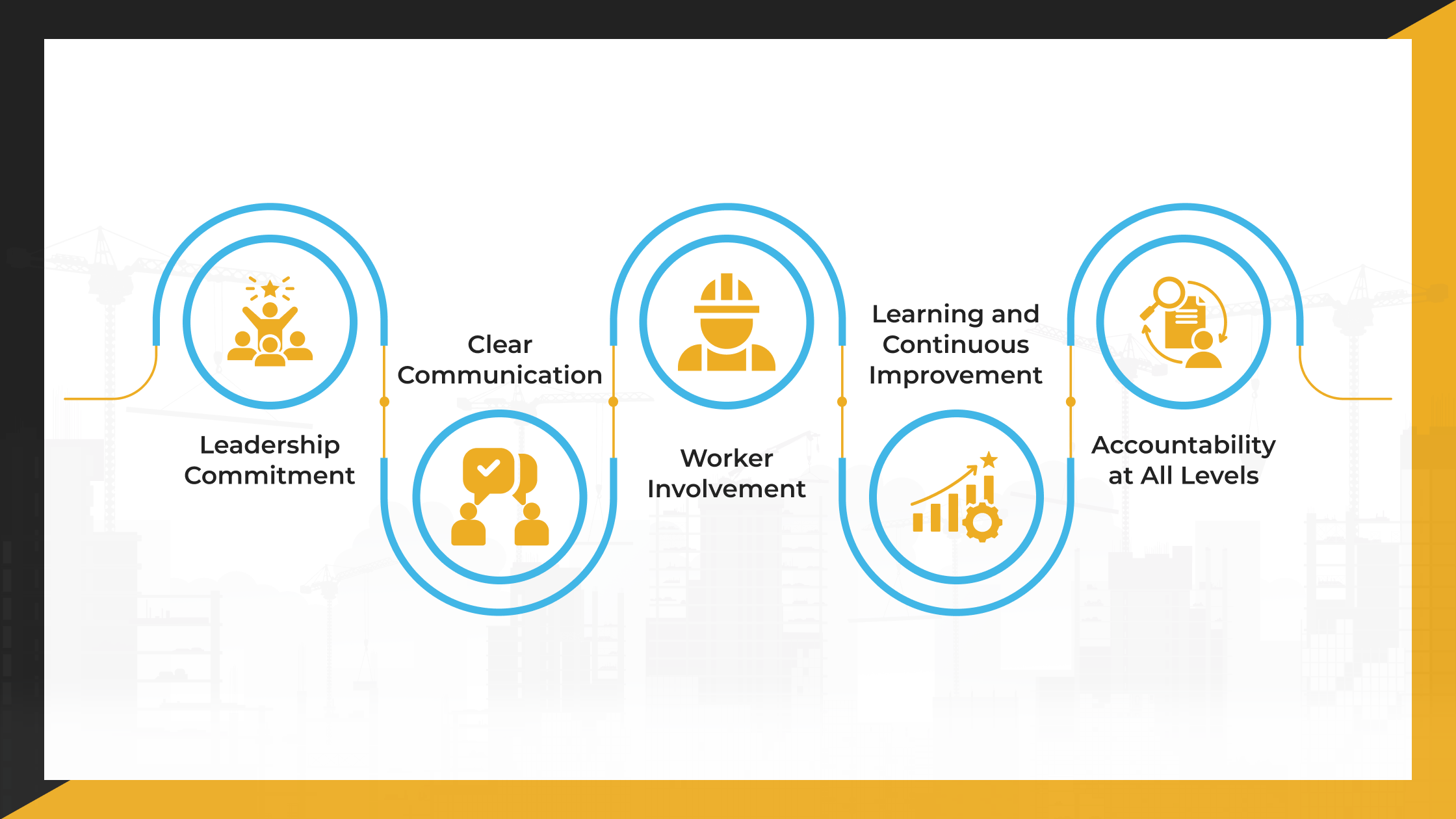
Building a safety culture takes more than posters and policies. It requires systems, consistency, and leadership that backs up what it says with action. Below are the five essential elements that shape and sustain an authentic safety-first culture on your construction site.
1. Leadership Commitment
Culture starts at the top. If leadership prioritizes safety, the rest of the team follows suit.
This means more than talking about safety; it means investing time, money, and attention in it.
When site managers walk the job with their personal protective equipment (PPE) on, stop work to correct a hazard, or ask for feedback after a near-miss, it sends a message: safety matters here. That consistency builds trust and sets expectations across the board. Without visible leadership commitment, safety becomes optional, and that’s when problems start.
2. Clear Communication
On a construction site, mixed messages or unclear instructions can lead to serious risk. A strong safety culture relies on clear, consistent communication, from daily pre-task briefings to site signage and incident reporting.
Everyone on the crew should know what’s expected of them, what hazards are present, and how to speak up if something’s wrong. This includes ensuring that all languages spoken on site are accounted for. Open lines of communication are crucial, especially when it comes to reporting concerns without fear of retribution or backlash.
3. Worker Involvement
Top-down safety programs often fail because they overlook one key factor: the people doing the work. When workers are actively involved in safety planning, audits, and problem-solving, they’re more likely to take ownership.
This involves encouraging feedback, engaging crew leads in safety discussions, and recognizing those who demonstrate safe behavior. It also helps uncover real risks more quickly, as those closest to the job are often the first to notice the problems.
4. Learning and Continuous Improvement
Even well-run sites face incidents or near-misses. What matters is what you do next.
A strong safety culture views every event as a learning opportunity rather than a chance to assign blame.
Teams should be trained to conduct root cause analyses, share lessons learned across projects, and adjust procedures as needed. Regular training refreshers, scenario-based drills, and updated protocols show your team that safety isn’t static; it evolves with the work.
5. Accountability at All Levels
Without accountability, safety efforts quickly break down. Everyone on site, from laborers to project managers, must be held to the same safety standards.
This means recognizing safe work, correcting unsafe behavior, and consistently following through. Accountability doesn’t mean punishment; it means expectations are clear, fair, and enforced.
How to Build a Safety-First Culture on Your Construction Site
Construction sites are among the most hazardous workplaces globally. The truth is, no matter how skilled the crew or how well-planned the project, one distracted driver or overlooked hazard can change everything in seconds.
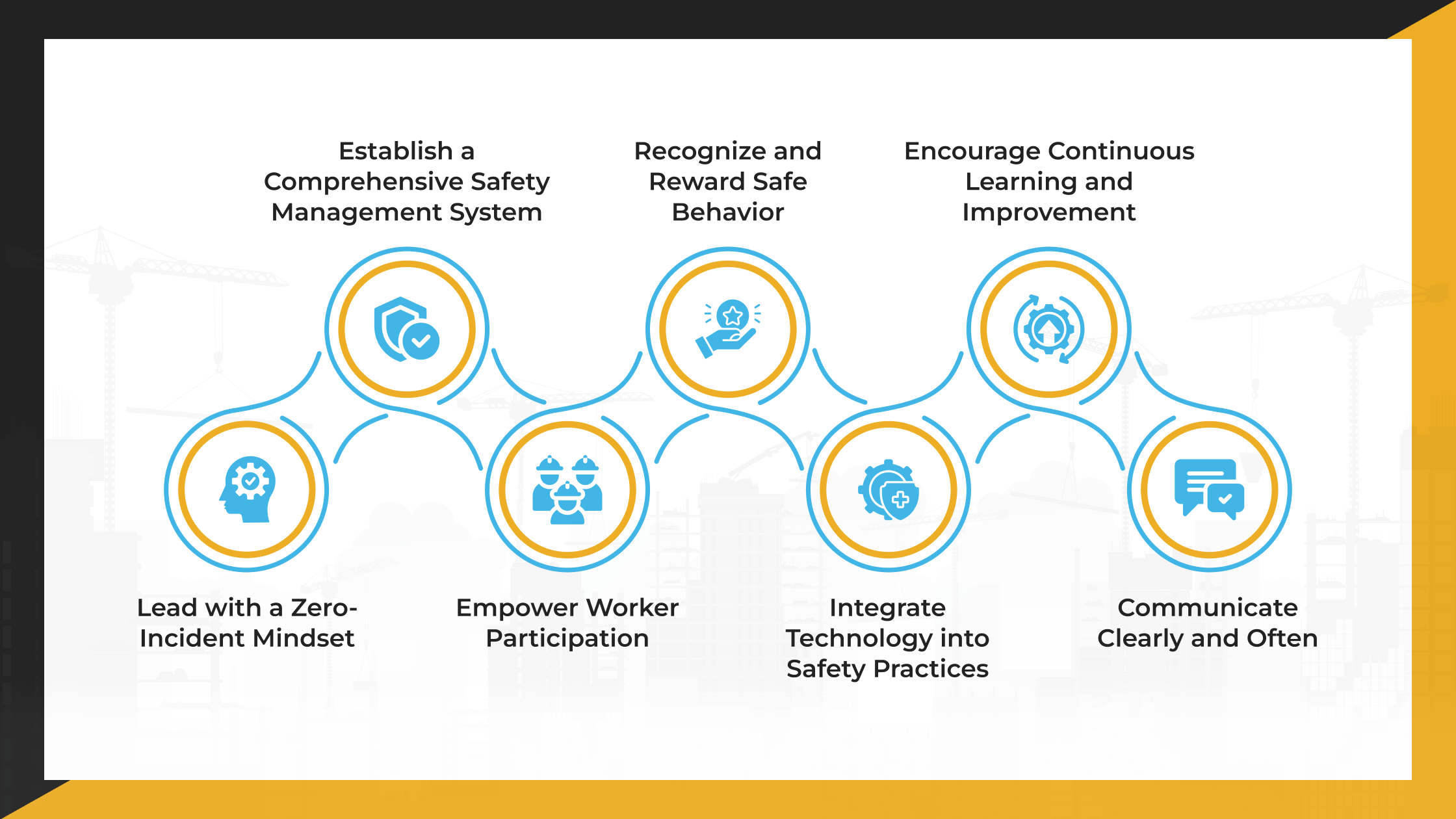
Below are the core practices that define a strong, lasting safety culture, along with guidance on how to implement them on your site.
1. Lead with a Zero-Incident Mindset
A safety-first culture starts with leadership. When management truly believes that all accidents can be prevented, that conviction is reflected in every worker. Set the tone early and make it clear that “accidents are part of the job” is no longer an acceptable mindset.
Leaders should demonstrate safety through their actions: wearing PPE properly, stopping unsafe work, and consistently prioritizing safety over speed. When workers see leadership walk the talk, they follow suit.
2. Establish a Comprehensive Safety Management System
A safety culture needs structure. A Safety Management System (SMS) provides the framework, linking people, processes, and accountability.
Your SMS should include:
- Safety planning before each significant activity
- Defined safe work practices for recurring tasks
- Qualified safety professionals on site
- Subcontractor safety oversight
- Regular audits and worker feedback
This system ensures safety isn’t left to chance; it’s built into your daily operations.
3. Empower Worker Participation
Safety isn’t adequate when it’s top-down only. Engage your crew directly in safety planning, hazard reporting, and rule development.
Encourage open communication without fear of retaliation. Reward workers who speak up about risks or suggest improvements. When employees feel heard and valued, they take ownership of safety outcomes, and that makes a significant difference.
4. Recognize and Reward Safe Behavior
Positive reinforcement works. Whether it’s verbal praise, safety awards, or small incentives, recognition builds momentum around safe habits.
Highlight crews or individuals who demonstrate exceptional safety awareness. Use those stories to motivate others. A recognition-driven approach turns safety from an obligation into a shared point of pride.
5. Integrate Technology into Safety Practices
Technology is now one of the most potent tools in construction safety. From wearable sensors that detect fatigue to digital alert systems that warn drivers of work zones, these tools save lives in real time. Consider implementing:
- Dynamic lane merge systems to manage traffic flow near sites
- Incident management software for tracking near-misses and hazards
- Speed safety cameras and variable speed limit systems to control vehicle risk
- Wearable tech that monitors worker health and movement
- Environmental monitoring systems to manage air, heat, and noise levels
These technologies help you predict risks before they become incidents, and they build trust among your workers that their safety truly matters.
6. Encourage Continuous Learning and Improvement
A safety-first culture isn’t static; it evolves. After every incident or near-miss, conduct a root-cause analysis and share the findings with all relevant teams. Regular safety meetings and refresher training ensure lessons are learned and applied.
When teams see that mistakes lead to improvement, not blame, they become more proactive in identifying and addressing risks.
7. Communicate Clearly and Often
Poor communication is one of the most significant safety risks on any job site. Maintain clear, consistent communication through:
- Daily safety briefings
- Real-time alerts and digital notifications
- Multilingual signage and materials
Clarity saves lives. Whether it’s a hazard warning or a new procedure, make sure every message is understood by every person on site.
Build a Safer Workplace with Expert Support from Safe T Professionals
At Safe T Professionals, we are dedicated to elevating safety standards through our expert consulting and staffing services. By proactively addressing and preventing safety issues and equipping your workforce with the necessary knowledge and tools, we help create a safer work environment.
Partner with Safe T Professionals to enhance your company’s safety protocols and ensure compliance with industry standards. Whether you are looking to fill safety-specific roles or need expert consultation to mitigate workplace hazards, we are here to help.
Connect with us today!