
Every day, nearly 2,000 U.S. workers suffer a workplace eye injury that requires medical attention, and about 90% of these injuries could be prevented with proper eye protection.
These statistics represent real people who face the risk of losing their sight simply by not using the proper safety eyewear.
In high-risk environments, such as construction, manufacturing, and laboratories, protecting your eyes from hazards such as flying debris, chemical splashes, and harmful radiation is a necessity.
While many workers wear safety eyewear, not all eyewear provides the same level of protection. The crucial factor in ensuring safety lies in understanding and selecting eyewear that meets the correct standards. That’s where ANSI Z87.1 comes into play.
This standard sets the minimum requirements for protective eyewear and includes specific markings that indicate the level of protection each pair offers. Choosing the proper eyewear can be the difference between safety and injury.
This blog will guide you through interpreting those crucial lens markings, selecting eyewear based on the hazards in your environment, and maintaining your gear to ensure your eyes remain safe and protected on the job.
Understanding the ANSI Z87.1 Standard and Why It Is Critical for Worker Protection
The ANSI Z87.1 standard is the American National Standards Institute’s regulation for eye and face protection in the workplace. It defines the minimum requirements for personal protective eyewear used to shield workers from various hazards.
Compliance with this standard ensures that the eyewear meets the necessary safety criteria to protect against common workplace risks, such as flying debris, chemicals, and UV radiation. Here is why ANSI Z87.1 matters.
1. Ensuring Safety and Compliance
ANSI Z87.1 ensures that safety eyewear meets strict performance requirements. The standard includes tests for impact resistance, optical clarity, and protection against specific hazards, such as chemicals and UV radiation.
Eyewear that complies with ANSI Z87.1 is developed to withstand the types of risks that workers face daily in hazardous environments. Without this standard, there would be no guarantee that the eyewear offers the necessary protection.
2. Role of Markings in Verifying Compliance
The markings on safety eyewear (e.g., Z87, Z87+, D3) indicate that the eyewear has passed the required tests. These markings are not just for show; they confirm that the product has been tested for specific hazards and meets the ANSI Z87.1 standard.
By checking these markings, you can quickly verify that your eyewear is compliant with safety regulations and suitable for the risks in your workplace.
Core Features of the ANSI Z87.1 Standard for Eye Protection
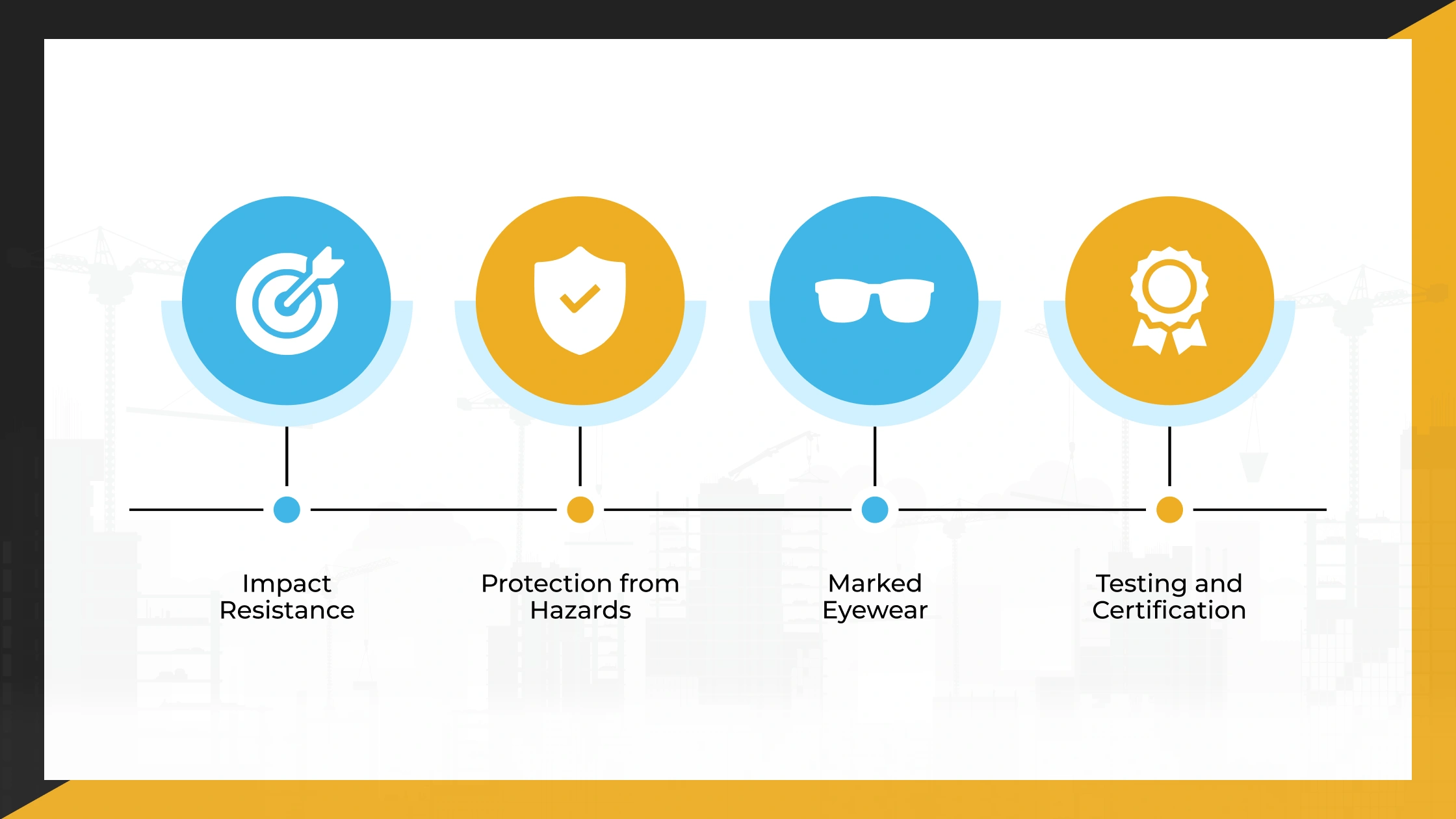
Below is a set of key features that define the ANSI Z87.1 standard, ensuring that eyewear meets the necessary safety requirements to protect against workplace hazards.
1. Impact Resistance
The lenses are tested to ensure they can withstand a high-velocity impact, such as flying debris or particles. Impact resistance is crucial in industries such as construction, manufacturing, and automotive, where these hazards are common.
If eyewear meets this requirement, it’s marked with Z87. If it passes additional high-impact tests, it’s marked Z87+.
2. Protection from Hazards
ANSI Z87.1 also addresses protection from various hazards:
- Dust Protection: Eyewear must protect against airborne dust particles. Markings such as D3 or D4 indicate that the eyewear meets the standard for dust resistance.
- Chemical Protection: The eyewear should guard against chemical splashes. Specific lenses are rated with markings such as D3 or D4, which denote different levels of protection.
- UV Radiation: For tasks involving exposure to UV light, such as welding or outdoor work, lenses are tested to ensure they block harmful ultraviolet rays. Lenses that meet these requirements are marked with U6 or similar codes.
- Infrared Radiation: Eyewear used in welding or laser work may be designed to filter out infrared radiation, thereby protecting workers’ eyes from intense heat.
3.Marked Eyewear
To verify compliance, ANSI Z87.1 requires that all approved eyewear must be clearly marked. This marking, often found on the lens or frame, serves as an identifier that the eyewear has been tested and meets the standard.
The most common marking is Z87, but additional markings, such as Z87+ or U6, indicate higher levels of protection for specific risks.
4. Testing and Certification
The eyewear is tested in various conditions to assess its ability to withstand real-world hazards. This includes tests for impact, optical clarity, and resistance to certain chemicals or radiation.
Eyewear that meets the ANSI Z87.1 standard undergoes rigorous testing to confirm its durability and reliability. Manufacturers are responsible for ensuring their products meet these requirements and must provide certifications to prove compliance.
What Lens Markings Indicate About Your Eyewear
Understanding lens markings is important for selecting eyewear that meets the specific protection needs of your work environment, ensuring safety against various hazards.
1. Z87 and Z87+ Markings
The Z87 marking on eyewear indicates that the lens has passed the basic impact test. This means it can withstand low-velocity impacts, such as small flying debris.
If the eyewear is marked Z87+, it has passed a higher level of impact testing. This includes resistance to high-velocity impacts, such as those caused by faster-moving particles. Z87+ lenses offer better protection, making them suitable for more hazardous environments.
2. Additional Markings for Specific Protection
Certain work environments require protection against specific hazards. Additional markings on the eyewear indicate these hazards. For example:
| Marking | Description |
| D3 | Protection against droplets, such as liquid splashes |
| U6 | Protection against ultraviolet light that can cause eye damage over time |
| W | Protection against intense light and radiation produced by welding |
| D4 | Protection against dust and fine airborne particles |
Interpreting Lens Markings for Proper Eye Protection
Understanding the markings on your safety eyewear is simple once you know what to look for.
|
By reading these markings, you can easily determine if the eyewear provides the right level of protection for the hazards in your workplace. Always match the markings to the risks you’re exposed to.
Practical Uses of ANSI Z87.1 Safety Eyewear Across Industries
Here is a list of sectors where ANSI Z87.1-compliant eyewear is crucial for protecting workers from specific hazards.
1. Construction Sites
On construction sites, workers face constant risks from flying debris, falling objects, and dust. ANSI Z87.1-rated eyewear is vital in these environments.
Whether it’s basic impact protection (Z87) or higher impact protection (Z87+), the eyewear needs to withstand high-velocity impacts and dust exposure to prevent eye injuries. Construction workers are often in situations where sudden incidents could cause serious harm, making compliant eyewear critical.
2. Manufacturing and Industrial Settings
In manufacturing, heavy machinery and high-speed operations often generate flying debris or sparks. ANSI Z87.1-compliant eyewear protects against these hazards. Specialized eyewear with additional markings, such as D4 (for dust protection) or W (for welding protection), is necessary in certain areas where fine particles or intense light from welding processes are prevalent.
3. Laboratories
In laboratory settings, workers are exposed to chemical splashes, UV light, and sometimes, hazardous gases. ANSI Z87.1 eyewear ensures protection from these risks.
Glasses with markings such as D3 for droplet protection or U6 for UV protection are necessary for lab workers handling chemicals or working with UV light sources. The eyewear helps prevent burns, eye damage, and long-term vision problems from exposure to harmful substances.
How to Read Lens Markings and Choose the Right Eyewear for Safety
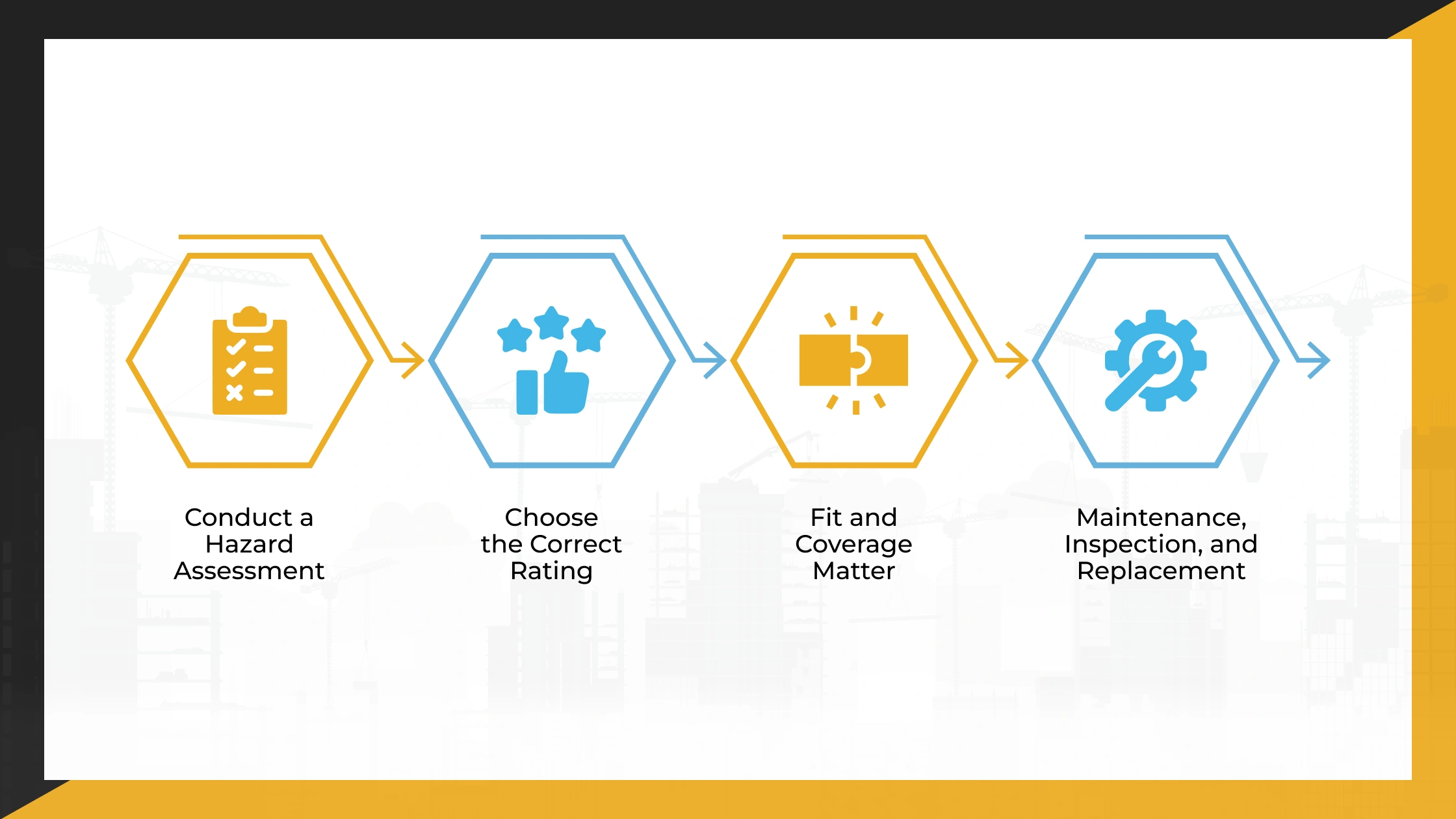
Here is how you can effectively interpret lens markings and select the proper safety eyewear to ensure maximum protection in your work environment.
1. Conduct a Hazard Assessment
The first step in selecting the proper safety eyewear is to assess the specific hazards in your work environment. Common hazards include airborne particles, flying debris, chemical splashes, welding arcs, and UV/IR radiation.
Identifying these risks will help you select eyewear that provides the necessary protection. Once you know the hazards, match them to the corresponding lens markings (Z87, D3, U6, etc.) to ensure the eyewear meets the required safety standards for those risks.
2. Choose the Correct Rating
Once the hazards are identified, choose the appropriate eyewear rating:
- High-Risk Environments: If you’re exposed to high-velocity debris or significant impact risks, choose eyewear marked Z87+ for high-impact protection.
- Lower Risk (e.g., dust or small particles): For lower-impact environments, Z87 (basic impact resistance) may be sufficient, with additional markings such as D4 for dust protection.
- Chemical Splash or Fine Dust: If your environment involves chemical splashes or fine dust particles, look for eyewear with D3, D4, or D5 markings to ensure adequate protection.
- UV or IR Radiation: For tasks involving UV exposure (e.g., welding or outdoor work), choose eyewear with U, W, or R markings to protect against UV and infrared radiation.
3.Fit and Coverage Matter
Even the highest-rated eyewear will not provide complete protection if it doesn’t fit properly. The eyewear should cover the entire eye area, including the sides, to block particles and debris from all directions.
Look for eyewear that includes side shields or wraparound styles to maximize coverage and protection. Comfort is equally important; if the eyewear is uncomfortable, workers may not wear it consistently. Ensuring a proper fit and comfort encourages compliance and enhances safety.
4. Maintenance, Inspection, and Replacement
Regular maintenance and inspection are crucial to maintaining the effectiveness of safety eyewear. Inspect the lenses and frames for scratches, cracks, or loose components, as these can affect visibility and protection.
If the markings are worn or illegible, the eyewear may no longer meet safety standards, and it should be replaced. Clean the eyewear as recommended by the manufacturer, especially if it has anti-fog or other coatings, to maintain clarity and prevent damage. Regular maintenance ensures eyewear remains functional and safe over time.
Build a Safer Workplace with Expert Solutions from Safe T Professionals

At Safe T Professionals, we are dedicated to elevating safety standards through our expert consulting and staffing services. By proactively addressing and preventing safety issues and equipping your workforce with the necessary knowledge and tools, we help create a safer work environment.
Partner with Safe T Professionals to enhance your company’s safety protocols and ensure compliance with industry standards. Whether you are looking to fill safety-specific roles or need expert consultation to mitigate workplace hazards, we are here to help.
Connect with us today!