
In construction, manufacturing, and energy operations, some of the most serious incidents occur during maintenance, repair, or shutdown activities, jobs that fall outside everyday routines. These tasks often involve unpredictable hazards, from confined space entry to electrical isolation, where conditions can shift in moments.
Contractors are especially exposed to these evolving risks. They may not fully understand your site’s specific hazards, culture, or emergency procedures. When multiple contractors perform overlapping tasks, such as welding near live electrical work, coordination failures can have serious, even fatal, consequences.
To control this complexity, many organizations depend on permit-to-work (PTW) systems. These systems are structured, documented processes that confirm hazardous work is identified, authorized, and continuously monitored. When properly applied, a PTW system creates clear accountability and coordination before, during, and after each job, significantly reducing the chance of injuries, fires, or process disruptions.
This blog walks you through what a PTW system is, how it functions, and why it’s essential to protecting contractors on high-risk sites.
Understanding the PTW System and the Core Elements That Make It Effective
A PTW system is a formal safety authorization process used to manage high-risk or nonroutine activities on a worksite. Before work begins, you must confirm that:
- The task has been reviewed and approved.
- All potential hazards have been identified.
- The required safety controls are in place.
- Every person involved understands the scope, risks, and safety precautions.
This process helps prevent miscommunication, overlooked hazards, and unsafe work conditions, especially when contractors or multiple teams are involved. Here are the elements of an effective PTW system:
1. Written Authorization Before Work Begins
You must obtain documented approval before any high-risk task starts. This ensures that responsible personnel review the work and verify that safety requirements are met.
2. Clear Hazard Identification
You need to assess hazards related to both the specific activity and the surrounding environment. This may include fire risks, toxic gases, electrical hazards, or structural dangers.
3. Defined Risk Control Measures
Appropriate safety precautions must be documented before work starts. These may include:
- Personal protective equipment (PPE)
- Equipment isolation
- Gas testing
- Fire watches
- Barricades or restricted access zones
- Defined Work Scope and Schedule
The permit should clearly state what work will be done, where it will occur, and how long it is authorized to continue.
4. Cross-Team Communication
Operations and maintenance teams, contractors, and safety personnel must all share the same information. The permit ensures that no team begins work without understanding the broader site conditions.
5. Verification by Qualified Personnel
Before issuing the permit, trained supervisors or safety professionals must verify that the worksite conditions are safe and that all required controls are in place.
What Makes a PTW System Different
You may already use standard safe work procedures. However, a PTW system serves a different purpose. A PTW system is specifically designed for:
- High-risk or nonroutine work
- Formal authorization before work begins
- Integrated risk assessment and control validation
- Coordination of simultaneous operations, preventing multiple tasks from creating unexpected hazards
This structured approval process ensures that potentially dangerous work is carefully reviewed rather than treated as routine activity.
Common Work Activities That Require Permit Authorization on Your Site
Certain activities almost always require a PTW because of their potential risks. These commonly include:
1. Hot Work
Tasks such as welding, cutting, soldering, or grinding that can generate sparks or heat capable of causing fires or explosions.
2. Confined Space Entry
Work is performed in enclosed areas, such as tanks, vessels, pits, or reactors, where oxygen levels, toxic gases, or restricted access pose hazards.
3. Electrical Work
Maintenance or repairs involving energized equipment, electrical panels, or circuits that could expose workers to the risk of electrical shock or arc flash.
4. Work at Height
Tasks carried out on scaffolds, rooftops, towers, or elevated platforms, where fall protection and structural safety must be verified.
5. Isolation or Lockout/Tagout
Procedures used to ensure that machinery or equipment is fully de-energized and cannot be accidentally started while maintenance or servicing is underway.
Why PTW Systems Are Critical for Contractor Safety
Contractors face higher safety risks on your site. They are often responsible for specialized and high-risk tasks, such as shutdown maintenance, equipment installations, or technical inspections. These jobs usually involve tight deadlines and unfamiliar environments.
Because contractors may not fully understand your site’s specific hazards, safety procedures, or emergency response plans, the risk of incidents increases. The situation becomes even more complex when multiple teams are working in the same area simultaneously.
A PTW system helps you control these risks:
- It ensures that contractors clearly understand the task, the hazards involved, and the safety measures required before work begins.
- This structured process reduces miscommunication, improves coordination across teams, and helps you maintain consistent safety standards across your site.
Common Safety Challenges Contractors Face
When contractors work on your site, several safety challenges can emerge if the work is not tightly controlled. These challenges often stem from differences in site familiarity, communication gaps, and overlapping activities.
1. Limited Awareness of Site Conditions
Contractors may be experts in their trade, but they may not fully understand your facility’s layout, restricted zones, hazardous materials, or equipment risks. Without proper briefing, they can unknowingly enter dangerous areas.
2. Communication Gaps Between Internal Teams and External Workers
Contractors often coordinate with multiple departments, operations, maintenance, and safety teams. If communication is unclear or incomplete, critical safety information can be missed.
3. Inconsistent Safety Standards Across Contractors
Different contractors may follow different safety practices depending on their organization’s policies. Without a structured system in place, this inconsistency can create unsafe working conditions.
4. Concurrent Activities Create Hidden Risks
Multiple teams may work in the same area at the same time. Without coordination, one activity, such as welding or electrical work, can inadvertently create hazards for nearby teams.
Components of an Effective PTW System
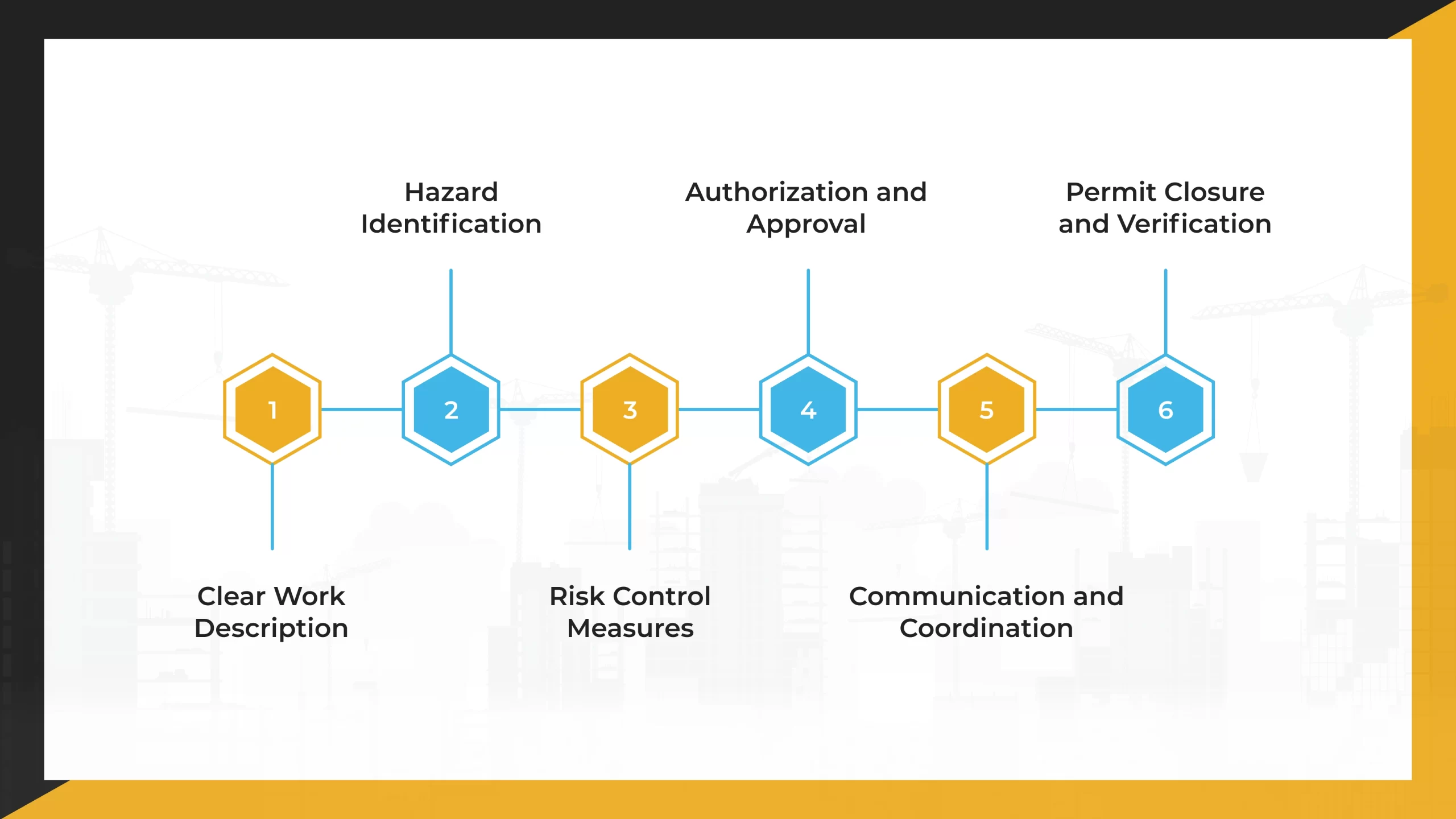
A PTW system gives you a structured way to manage these challenges before work begins. It ensures that contractors receive clear guidance, proper authorization, and consistent safety expectations.
1. Clear Work Description
Each permit should specify the task, exact location, and expected duration to avoid misunderstandings and ensure workers stick to the approved scope.
2. Hazard Identification
Before a permit is issued, you need a full assessment of potential hazards, including chemical, electrical, mechanical, and atmospheric hazards. Many teams use job safety analysis (JSAs) to reinforce this step.
3. Risk Control Measures
Permits outline all required safety controls, including:
- PPE requirements
- Energy isolation procedures
- Ventilation and gas testing details
- Fire watch responsibilities
- Emergency readiness verification
4. Authorization and Approval
Only trained and authorized personnel, often a site supervisor or safety officer, can issue or sign off on a permit. Their approval confirms that the protective measures have been tested and that the area is safe to work in.
5. Communication and Coordination
A good PTW process ensures that all involved parties understand the work timeline, scope, and boundaries. Coordinating schedules minimizes overlap between high-risk activities and improves visibility across teams.
6. Permit Closure and Verification
After the job is completed, you must inspect the area, restore normal operations, and officially close the permit. This step verifies that no residual hazards remain.
The Shift Toward Digital PTW Systems
If you still rely on paper permits to manage high-risk work, you may already face delays, missing information, and limited visibility into what is happening across your site. Paper-based permits can slow down approvals, make tracking difficult, and increase the chances of miscommunication between teams.
A digital PTW system helps you manage these challenges more efficiently. By moving the permit process to a centralized digital platform, you gain better control over approvals, clearer communication with contractors, and real-time visibility into active work permits across your facility.
Digital systems allow you to standardize safety processes while making it easier for supervisors, safety officers, and contractors to stay aligned throughout the job. Here is a list of some of the benefits of digital PTW systems:
1. Faster Approvals
Digital workflows automatically route permits through the required approval chain. Instead of waiting for physical signatures or manual handoffs, you can quickly review and authorize permits, reducing delays in critical work.
2. Simplified Compliance Tracking
All permit records are stored digitally, making it easier for you to track safety documentation, demonstrate compliance, and prepare for audits or regulatory inspections.
3. Real-Time Oversight of Ongoing Work
Supervisors and safety personnel can instantly view the status of active permits, approved tasks, and work locations. This visibility helps you identify potential conflicts or risks before they escalate.
4. Better Coordination with Contractors
Digital dashboards, alerts, and notifications keep contractors and internal teams informed about permit approvals, safety requirements, and work timelines. This improves communication and reduces confusion on-site.
5. Reduced Human Error
Built-in checklists and validation steps guide users through the permit process. This helps ensure that critical safety steps, such as hazard assessments, equipment isolation, or gas testing, are not overlooked.
Best Practices for Implementing an Effective PTW System
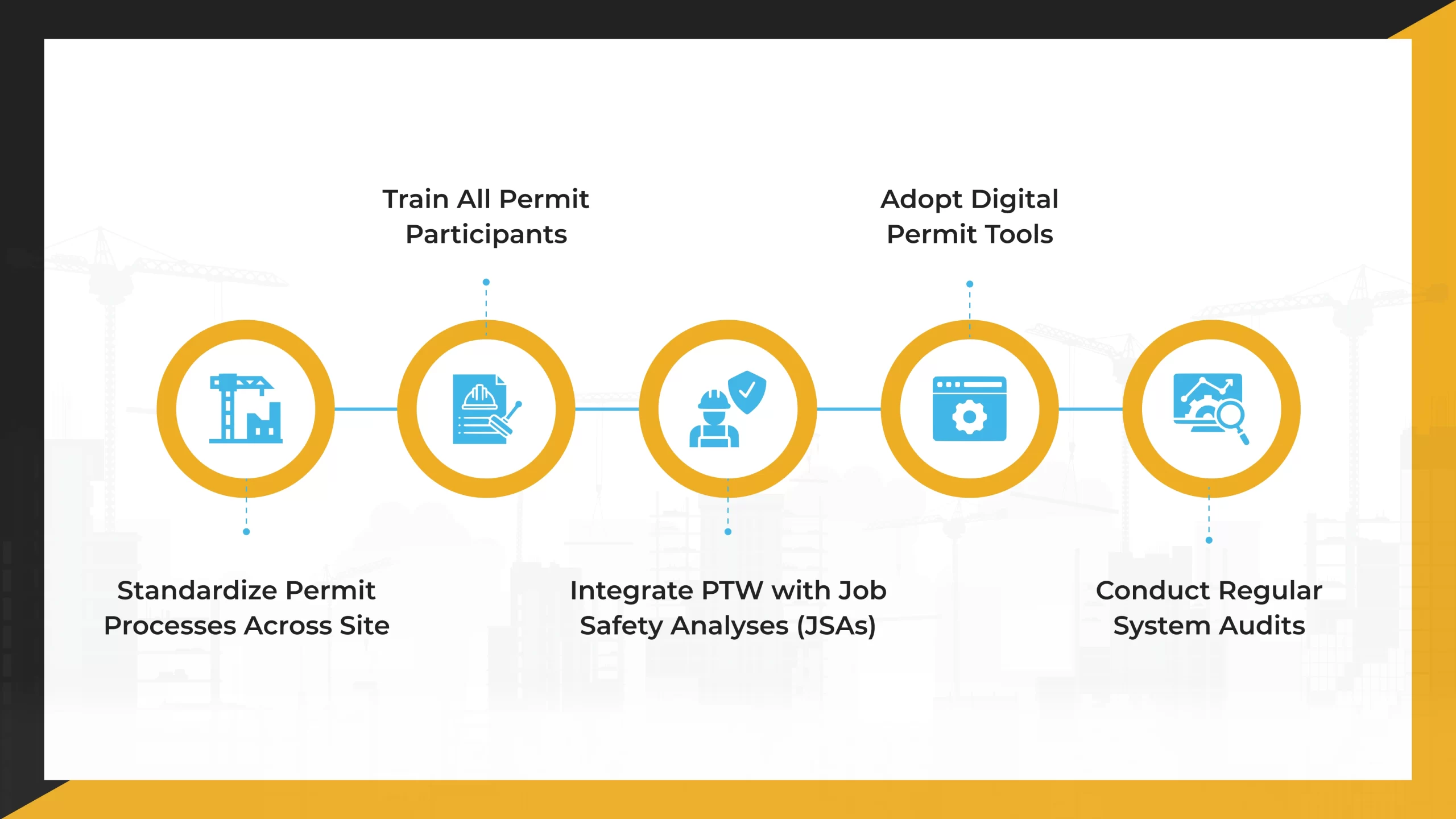
To make your PTW system truly effective, you need more than just documentation; you need a consistent process that is clearly understood and actively followed across your site. The following practices help you strengthen safety controls while keeping the permit process efficient and reliable:
1. Standardize Permit Processes Across a Site
Use the same permit formats, approval steps, and terminology for every department and contractor. Standardization prevents confusion, ensures consistent hazard documentation, and helps workers quickly understand the requirements for different types of permits, such as hot work, confined space entry, or electrical work.
2. Train All Permit Participants
Make sure every participant understands their role in the PTW system. Requesters should know how to properly define the work scope and hazards, issuers must verify safety controls, and supervisors should confirm that work conditions remain safe during execution. Regular training keeps the process consistent and reduces mistakes.
3. Integrate PTW with JSAs
Link your permit system with task-based risk assessments. A JSA helps you identify hazards step by step for a specific job, while a permit ensures those safety measures are formally approved and implemented before work begins.
4. Adopt Digital Permit Tools
Digital PTW systems improve visibility and coordination across teams. Automated workflows, real-time permit tracking, and centralized records allow supervisors and safety officers to monitor work activities more effectively and respond quickly if conditions change.
5. Conduct Regular System Audits
Conduct periodic reviews of issued permits, safety controls, and compliance practices. Audits help you identify process gaps, verify that procedures are being followed correctly, and highlight opportunities to strengthen safety performance across your site.
Partner with Experts to Strengthen Your Safety Programs

At Safe T Professionals, we are dedicated to elevating safety standards through our expert consulting and staffing services. By proactively addressing and preventing safety issues and equipping your workforce with the necessary knowledge and tools, we help create a safer work environment.
Partner with Safe T Professionals to enhance your company’s safety protocols and ensure compliance with industry standards. Whether you are looking to fill safety-specific roles or need expert consultation to mitigate workplace hazards, we are here to help.
Connect with us today!