

In high-hazard operations, a single lapse can trigger devastating consequences, including fires, toxic releases, equipment damage, or loss of life.
Despite heavy investments in training and policy development, many facilities still experience near misses or Occupational Safety and Health Administration (OSHA) citations because their process safety programs exist in binders rather than in practice.
The problem usually isn’t a lack of awareness, but gaps in execution. Written procedures alone don’t guarantee consistent control of hazardous processes. OSHA’s Process Safety Management (PSM) standard (29 CFR 1910.119) requires you to move beyond written compliance and prove your systems work, day in and day out, to manage hazardous chemicals safely. Compliance is demonstrated not by possession of a manual but by real, verifiable performance in identifying, controlling, and documenting process hazards.
This blog explains PSM and its 14 essential elements, compliance expectations, and actionable guidance for building a living, defensible system that meets OSHA’s performance-based standard while supporting productivity.
What PSM Really Means
PSM is OSHA’s structured approach to preventing catastrophic chemical releases through sound design, safe operation, and disciplined maintenance. At its core, PSM ensures that technology, people, and procedures work in concert to contain high-hazard energy.
Unlike general workplace safety, which focuses on slips, trips, or ergonomic risks, PSM addresses low-frequency but high-impact events. It’s a systematic way to anticipate process deviations, understand how failures could escalate, and verify that every protective layer functions as intended.
A compliant program defines each critical process step, documents the potential consequences of failure, and enforces reliable controls through clear procedures and verified training. Effective PSM isn’t a compliance project; it’s a management system that evolves as your facility, equipment, and workforce change.
Why PSM Matters in 2026
With automation, new materials, and integrated process technologies reshaping the industry, system complexity, and therefore potential risk, is at a high. Regulators and insurers increasingly evaluate not just what’s written in your PSM plan but also how consistently it’s executed and verified.
Here’s why your PSM program must be strong and current:
- Human and operational risks are closely connected: A missed inspection or outdated procedure can render expensive safeguards useless.
- Regulators require proof, not promises: OSHA expects evidence that each element, training, procedure, and mechanical integrity is active, measured, and effective.
- Prevention protects business continuity: A single failure affects production output, community confidence, and liability exposure far beyond the costs of citations.
When properly implemented, PSM turns compliance into resilience. It strengthens operational reliability and embeds risk control into your organization’s culture.
Regulatory Framework and Safety Standards for PSM
Below are the primary regulatory frameworks and industry standards that guide modern PSM programs.
OSHA’s PSM Standard
The OSHA PSM standard (29 CFR 1910.119) is the primary U.S. regulation governing facilities that handle highly hazardous chemicals. It focuses on preventing catastrophic releases that could endanger workers, infrastructure, and surrounding operations.
Important requirements under the OSHA PSM standard include:
- Process Safety Information: Facilities must maintain accurate technical documentation related to chemicals, process technology, and equipment design. This information forms the foundation for hazard analysis and safe operating procedures.|
- Process Hazard Analysis: Organizations are required to systematically evaluate process hazards using structured methodologies to identify potential failure scenarios and implement appropriate safeguards.
- Operating Procedures and Training: Clear procedures must be established for normal operations, startup, shutdown, and emergency conditions. Employees must receive training that enables them to follow these procedures safely and consistently.
- Emergency Planning: Facilities must develop response procedures that allow personnel to manage chemical releases, fires, or process failures effectively while minimizing harm to workers and the surrounding environment.
Compliance with this regulation requires ongoing documentation, periodic audits, and continuous updates whenever equipment, processes, or operating conditions change.
Environmental Protection Agency Risk Management Program
The Environmental Protection Agency (EPA) Risk Management Program (RMP) complements OSHA’s workplace-focused regulation by addressing the potential impact of chemical accidents on the public and the environment.
Facilities that store or process regulated substances above defined thresholds must implement a risk management framework to evaluate and control the risk of accidental releases.
Components of the RMP include:
- Hazard Assessment: Facilities must evaluate potential release scenarios and determine how chemical incidents could affect nearby communities or ecosystems.
- Accident Prevention Programs: Organizations are required to implement operational and engineering controls designed to reduce the likelihood of chemical releases.
- Emergency Response Planning: Facilities must establish response procedures and coordinate with local emergency authorities to ensure an effective response in case of an incident.
Risk management plans must be periodically reviewed and submitted to regulatory authorities to demonstrate that facilities are actively managing chemical risks beyond the plant boundary.
International Process Safety and Management Standards
In addition to regulatory compliance, many organizations adopt globally recognized standards to strengthen their safety management systems and improve operational consistency.
Common international frameworks include:
- ISO 45001 (Occupational Health and Safety Management Systems) provides a structured approach for identifying workplace hazards, controlling safety risks, and improving worker participation in safety programs.
- ISO 14001 (Environmental Management Systems) focuses on managing environmental impact through systematic monitoring, risk reduction, and responsible resource management.
- CCPS Process Safety Guidelines are developed by the Center for Chemical Process Safety under the American Institute of Chemical Engineers. These guidelines provide industry best practices for hazard analysis, risk management, and process safety leadership.
Organizations often use these frameworks to strengthen their internal safety culture, enhance regulatory compliance, and establish standardized risk management practices across global operations.
14 Fundamental Elements of OSHA’s PSM
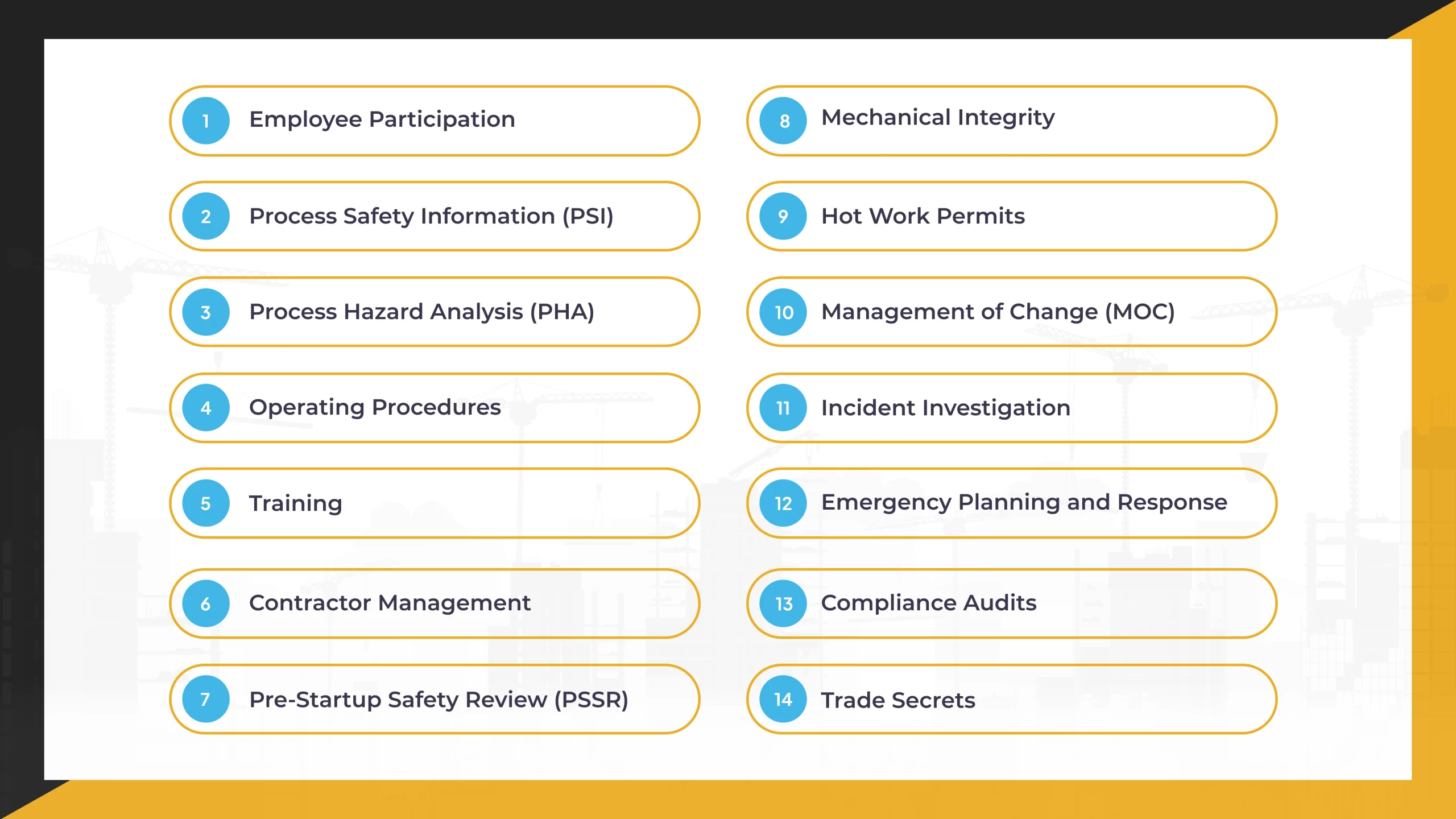
An effective PSM program relies on 14 interconnected elements defined by OSHA. Below is a concise explanation of each element and its role in strengthening process safety.
1. Employee Participation
Active employee involvement strengthens the effectiveness of a PSM program.
- Encourage workers to participate in hazard identification, procedure development, and safety reviews.
- Ensure employees have access to PSM documentation and process safety information.
- Create formal channels for employees to report safety concerns and recommend improvements.
Employee participation helps organizations capture practical insights from personnel who operate and maintain the process day to day.
2. Process Safety Information (PSI)
Accurate technical information forms the foundation of all PSM activities.
- Maintain documentation related to chemical hazards, process technology, and equipment design.
- Include process flow diagrams, piping and instrumentation diagrams, and material safety data.
- Ensure information remains current and accessible for engineering teams and safety reviews.
Reliable PSI enables teams to understand how the process operates and what risks must be controlled.
3. Process Hazard Analysis (PHA)
A PHA systematically identifies potential hazards within a process.
- Use structured methodologies, such as a hazard and operability study, what-if analysis, or fault tree analysis.
- Evaluate potential failure scenarios, consequences, and existing safeguards.
- Review and update PHAs periodically or when significant process changes occur.
A well-executed PHA helps organizations detect vulnerabilities before they lead to incidents.
4. Operating Procedures
Clear operating procedures guide personnel in safely managing process systems.
- Document procedures for startup, normal operation, shutdown, and emergencies.
- Define safe operating limits and response actions for deviations.
- Ensure procedures are reviewed regularly and aligned with current plant conditions.
Effective procedures reduce operational errors and provide consistency across shifts.
5. Training
Training ensures employees have the knowledge and skills to operate processes safely.
- Provide initial training for new employees and contractors working in PSM-covered areas.
- Conduct refresher training to reinforce safe practices and address updates in procedures.
- Verify training effectiveness through competency assessments or performance evaluations.
Competency-based training ensures workers understand both the process and the associated hazards.
6. Contractor Management
Contractors often perform maintenance or specialized work in high-risk areas.
- Evaluate contractor qualifications, safety performance history, and training records.
- Provide contractors with site-specific hazard information and safety procedures.
- Monitor contractor activities to ensure compliance with facility safety requirements.
Proper contractor oversight reduces the risk of incidents caused by unfamiliarity with plant processes.
7. Pre-Startup Safety Review (PSSR)
Before starting new or modified processes, organizations must verify that safety systems are ready.
- Confirm that equipment installation matches design specifications.
- Ensure operating procedures and training are completed before startup.
- Validate that all required safety measures and controls are functioning properly.
A PSSR acts as a final verification step to prevent unsafe conditions before operations begin.
8. Mechanical Integrity
Maintaining the reliability of process equipment is critical for preventing failures.
- Implement inspection and testing programs for pressure vessels, piping systems, pumps, and safety devices.
- Schedule preventive maintenance and calibration of critical instruments.
- Document inspection results and corrective actions to maintain equipment integrity.
A strong mechanical integrity program helps detect degradation before it leads to equipment failure.
9. Hot Work Permits
Hot work activities can introduce ignition sources in hazardous environments.
- Establish a permit system for welding, cutting, grinding, or other spark-producing activities.
- Verify that the surrounding areas are free from flammable materials or vapors.
- Ensure fire protection equipment and trained personnel are available during the work.
Hot work controls reduce the likelihood of fires or explosions in process areas.
10. Management of Change (MOC)
Changes to equipment, procedures, or materials can introduce new hazards.
- Evaluate safety implications before implementing design, process, or procedural changes.
- Update documentation, procedures, and training following approved changes.
- Ensure modifications undergo proper review and authorization.
A disciplined MOC process prevents unintended safety risks caused by uncontrolled changes.
11. Incident Investigation
Investigating incidents and near misses helps organizations prevent recurrence.
- Analyze events to determine root causes rather than just immediate causes.
- Document findings and implement corrective and preventive actions.
- Share lessons learned across relevant teams and operations.
Incident investigations transform operational failures into opportunities for improvement.
12. Emergency Planning and Response
Facilities must be prepared to respond effectively in the event of a process incident.
- Develop procedures for chemical releases, fires, explosions, or equipment failures.
- Conduct regular emergency drills and training exercises.
- Coordinate response plans with local emergency responders and authorities.
Effective emergency planning reduces potential harm to employees, the public, and the environment.
13. Compliance Audits
Periodic audits evaluate whether the PSM program is functioning as intended.
- Conduct formal PSM audits at least once every three years.
- Identify gaps in implementation or documentation.
- Track corrective actions until issues are fully resolved.
Audits help organizations maintain regulatory compliance and improve program performance.
14 .Trade Secrets
While protecting proprietary information, organizations must still ensure transparency in safety.
- Provide employees and contractors with access to safety-critical information related to hazardous processes.
- Balance confidentiality requirements with the need to protect worker safety and operational integrity.
This element ensures that safety knowledge is shared with those responsible for managing process risks.
Practical Steps to Boost Your PSM Program
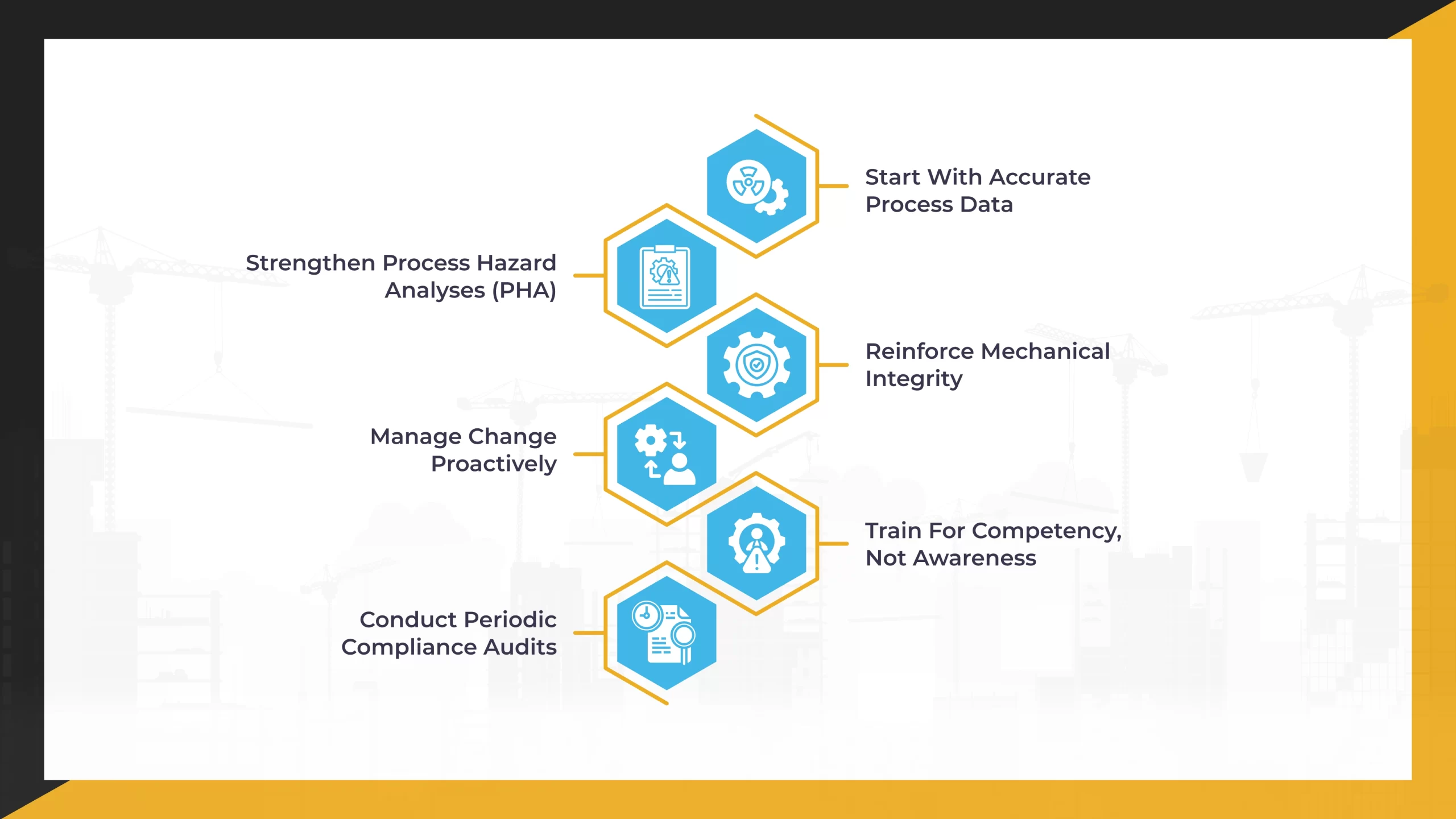
Success in PSM comes from performance you can demonstrate, not from the weight of your documentation.
1. Strengthen Process Hazard Analyses (PHAs)
Use a structured, team-based approach and update each PHA after any process changes. Track corrective actions to verified closure.
2. Reinforce Mechanical Integrity
Equipment reliability directly affects process safety. Rely on preventive inspection schedules, calibrated testing, and digital monitoring to verify asset condition.
3. Manage Change Proactively
Even a small design or procedural adjustment can shift risk. Approve and document changes before implementation through disciplined MOC reviews.
4. Train for Competency, not Awareness
Go beyond classroom training. Require operators and contractors to demonstrate safe performance and retain records as proof of capability.
5. Conduct Periodic Compliance Audits
Confirm that each element is not just present, but functioning. Assign clear accountability for correcting deficiencies.
6. Start with Accurate Process Data
Outdated P&IDs or missing PSI cripple hazard analysis. Keep information current, verified, and easy to access.
When you treat PSM as a daily practice instead of a periodic check, compliance naturally follows, and your operation becomes inherently more stable.
Common PSM Challenges and How to Resolve Them
Below are several recurring PSM challenges and the practical actions organizations can take to resolve them.
1. Documentation Gaps
PSI, PHAs, or procedures developed years ago often fall out of sync with actual plant conditions. Schedule PSI and MOC reviews that trigger documentation updates automatically. Sync document control with your change management process.
2. Contractor Integration
External workers may lack familiarity with your process-specific hazards. Integrate contractors into your PSM system through site-specific onboarding and verify competency before field assignment.
3. Training Effectiveness
Traditional training measures memory, not performance. Shift to competency-based verification, observe task execution, and require demonstrated proficiency before authorization.
4. Audit Fatigue
Recurring audit findings show systemic weaknesses, not isolated errors. Assign responsible owners, set closure timelines, and review the effectiveness of corrective actions, not just completion status.
Enhance Workplace Safety with Expert Support from Safe T Professionals

At Safe T Professionals, we are dedicated to elevating safety standards through our expert consulting and staffing services. By proactively addressing and preventing safety issues and equipping your workforce with the necessary knowledge and tools, we help create a safer work environment.
Partner with Safe T Professionals to enhance your company’s safety protocols and ensure compliance with industry standards. Whether you are looking to fill safety-specific roles or need expert consultation to mitigate workplace hazards, we are here to help.
Connect wit us today!