
In high-risk industries, disasters rarely come from big, obvious mistakes. They come from small deviations, a blocked valve, a missed alarm, a wrong setting, or a delayed response. One overlooked detail can trigger fires, toxic releases, explosions, production shutdowns, or even loss of life.
According to global industrial safety reports, over 70% of major process safety incidents are linked to design flaws, process deviations, or weak risk identification, not equipment failure alone. Even more concerning, most of these risks were technically “visible” before the incident, but never properly analyzed.
This is where HAZOP (Hazard and Operability Analysis) becomes critical. HAZOP is not just a safety study. It is a structured way of thinking about failure before it happens.
Instead of reacting to accidents, HAZOP forces organizations to ask, what can go wrong, how can it go wrong, what happens if it does, and are our controls actually enough.
By systematically examining how real-world operations can deviate from design intent, HAZOP exposes hidden risks that traditional audits, checklists, and inspections often miss.
This blog will explore what HAZOP analysis t is, why it is critical for high-risk industries, and how organizations can build an effective, practical HAZOP program that drives real risk reduction.
What Is HAZOP Analysis?
HAZOP, short for Hazard and Operability, is a systematic technique to uncover process risks by exploring how operational deviations could lead to dangerous outcomes. Originally developed in the chemical manufacturing sector, HAZOP is now widely used across oil and gas, pharmaceuticals, food processing, and other high-risk industries.
HAZOP combines engineering detail with scenario-based thinking. A multidisciplinary team evaluates a specific part of a process, known as a node, by asking, “What if?” for every important parameter: flow, pressure, temperature, level, and composition.
The study uses guide words like “No,” “More,” “Less,” “Reverse,” or “As Well As” to generate deviations (e.g., “No Flow,” “High Pressure”). Each deviation becomes the trigger for a structured investigation into:
- The Potential Causes
- Possible Consequences
- What Controls Are in Place
- Whether Those Controls are Sufficient
Unlike hazard checklists or standard audits, HAZOP forces deeper thinking. It builds a process-wide risk profile not on assumptions, but by scrutinizing design intent against how the system could actually behave under varying conditions.
It’s not just another exercise; it’s a mindset shift that transforms how your team perceives and manages risk.
The Importance of HAZOP in High-Risk Industrial Environments
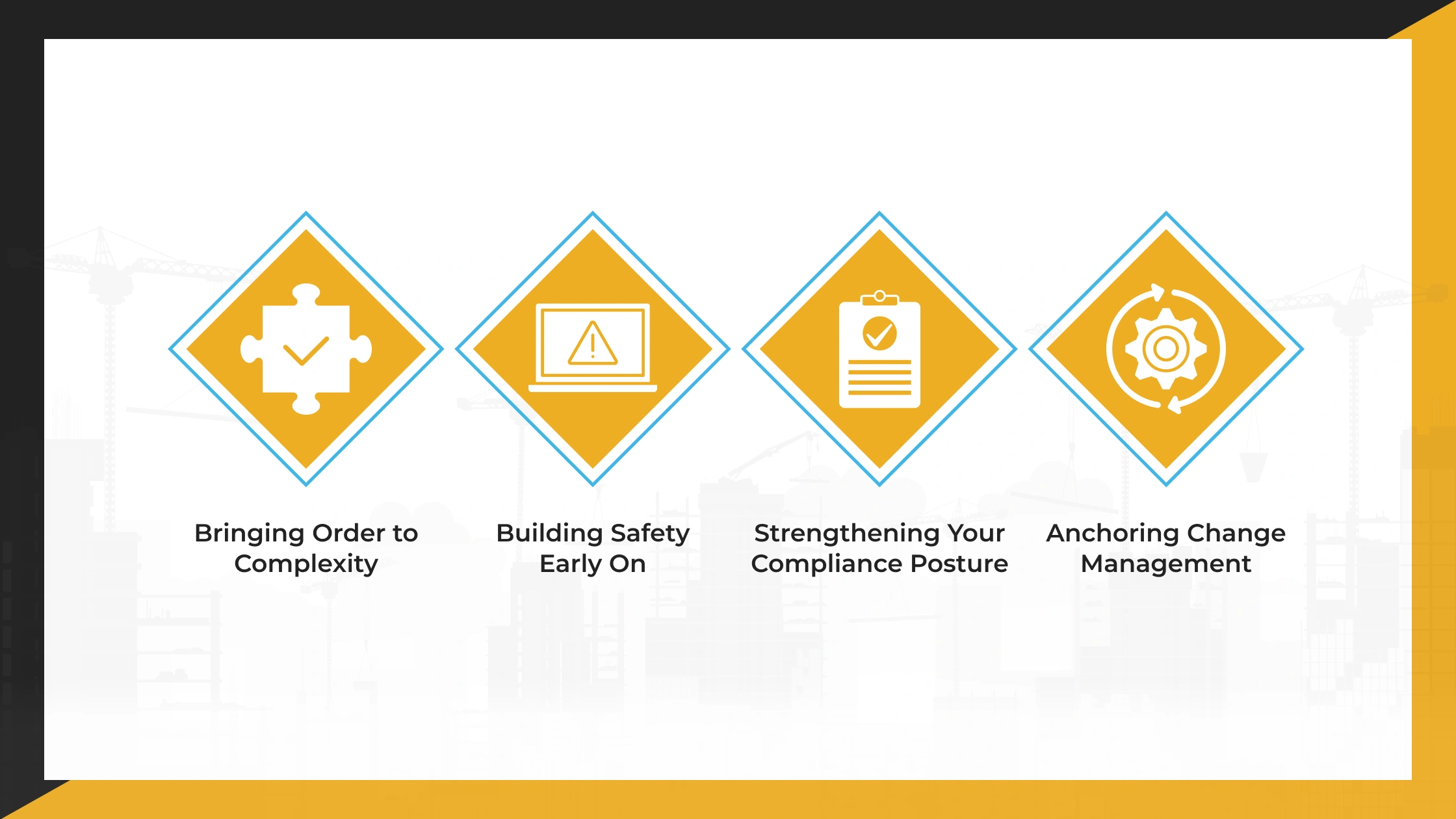
If your operations involve volatile materials, complex control systems, or tightly sequenced processes, even a small failure can escalate quickly. Here’s why HAZOP is essential in these high-risk environments:
1. Bringing Order to Complexity
As systems become more automated and decentralized, relying solely on intuition or experience is no longer enough.
HAZOP introduces structure and repeatability by breaking complex systems into manageable parts. This structured approach allows you to systematically evaluate each component for potential risks, ensuring nothing is overlooked.
2. Building Safety Early On
In capital projects, conducting a HAZOP during the design or pre-startup phase is vital. Identifying and addressing hazards early helps you eliminate risks before they’re built into the system.
By catching issues at this stage, you avoid costly retrofits and prevent delays, ultimately saving you time and money as the project progresses.
3. Strengthening Your Compliance Posture
Regulatory agencies don’t just want to hear about your intentions; they want proof that you’ve identified and addressed risks. A properly documented HAZOP demonstrates that your facility is proactive about safety.
This documentation becomes invaluable during audits or after an incident, showing that your team has been thorough in managing risks.
4. Anchoring Change Management
Changes to process conditions, equipment, or materials can introduce new risks. HAZOP acts as the verification tool within your Management of Change (MOC) program.
This ensures that every modification, no matter how small, is thoroughly assessed for potential safety concerns, helping maintain safe, reliable operations as you adapt and evolve.
How the HAZOP Study Framework Improves Industrial Risk Control?
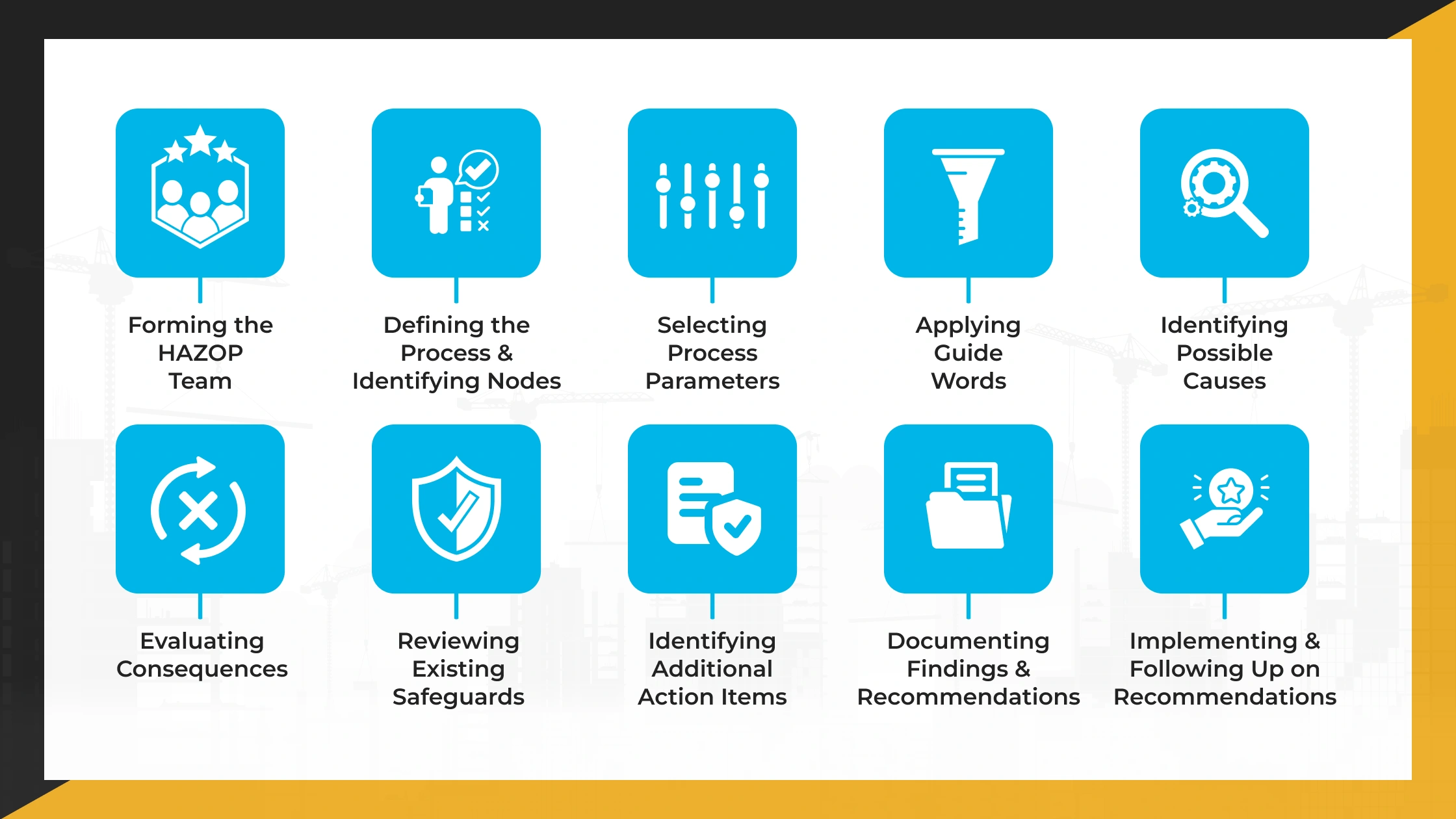
A Hazard and Operability Study (HAZOP) is a systematic method for identifying and assessing potential hazards and operability issues in complex systems. Here’s an overview of the HAZOP study process:
1. Forming the HAZOP Team
The HAZOP process begins by assembling a diverse team of experts, including engineers, operators, safety professionals, and maintenance personnel.
Each team member brings a unique perspective on the system being analyzed. A trained facilitator leads the team, ensuring that the process is structured and focused.
2. Defining the Process & Identifying Nodes
The next step is to define the process to be evaluated. The team identifies “nodes,” which are individual parts of the process, such as specific pieces of equipment or process steps.
For example, a reactor feed line or a mixing tank could be considered nodes. Each node will be assessed for potential hazards and operability concerns.
3. Selecting Process Parameters
For each node, the team selects key process parameters to evaluate. These parameters could include pressure, flow rate, temperature, or chemical concentration.
By selecting relevant parameters, the team can focus on the aspects of the process that are most critical to safety and performance.
4. Applying Guide Words
Guide words prompt the team to consider potential deviations in the process. These guide words suggest how the process parameter could deviate from normal conditions.
Common guide words include “More,” “Less,” “None,” and “As Well As.” For example, “More Flow” would suggest an increase in flow rate beyond normal levels.
5. Identifying Possible Causes
For each identified deviation, the team seeks possible causes. These causes could include equipment failure, human error, system malfunction, or environmental factors.
Understanding the root causes of deviations helps assess the likelihood of these hazards and how they might be mitigated.
6. Evaluating Consequences
Once causes are identified, the team assesses the potential consequences of each deviation. This includes considering the impact on safety, the environment, and the system’s operability. The team examines both immediate and long-term consequences to ensure a comprehensive risk assessment.
7. Reviewing Existing Safeguards
The team then reviews the existing safety measures and controls. This could include automated systems, safety instrumentation, operating procedures (SOPs), or training programs.
The goal is to determine whether these safeguards are adequate to mitigate the risks associated with the identified hazards.
8. Identifying Additional Action Items
If the existing safeguards are deemed insufficient, the team develops action items to improve safety. These may include adding new engineering controls, updating procedures, or implementing additional training. Each action item is assigned an owner and a completion timeline.
9. Documenting Findings & Recommendations
At the conclusion of the HAZOP study, the team documents the findings, including identified hazards, causes, consequences, existing safeguards, and proposed action items.
Each recommendation is assigned a risk rating based on its potential impact and likelihood. This documentation is critical for tracking progress and ensuring accountability.
10. Implementing & Following Up on Recommendations
The final step in the HAZOP process is implementing the recommended action items. Once the recommendations are addressed, the team conducts follow-up reviews to ensure the actions have effectively mitigated the risks.
These follow-ups also ensure that the system continues to operate safely and efficiently over time.
How HAZOP Supports Compliance and OSHA Requirements?
For PSM-covered processes, OSHA 1910.119 specifically mandates Process Hazard Analysis (PHA) at least every five years. HAZOP not only meets this requirement but is also preferred for its depth.
A compliant HAZOP study documents that you’ve:
- Anticipated and assessed the range of possible process failures.
- Evaluated safeguards and recommended new ones where needed.
- Assigned responsibility for corrective actions.
- Resolved recommendations in a timely and systematic way.
HAZOP is also part of EPA RMP expectations and aligns with layer-of-protection analysis (LOPA) when deeper consequence modeling is required.
Even if you’re outside of strict PSM scope, OSHA’s General Duty Clause obliges you to control known hazards. If your site handles flammables, toxic materials, or high-energy systems, a well-executed HAZOP is a strong foundation for demonstrating that you’ve taken reasonable steps to prevent harm.
In inspections or investigations, your documentation can make the difference between showing due diligence and showing up unprepared.
Proven Practices to Implement HAZOP Effectively
Whether you’re starting from scratch or rebooting a legacy program, building a successful HAZOP process doesn’t have to be overwhelming. Focus on the fundamentals:
- Identify which units carry the highest risk. Use past incident data or a risk matrix to target high-consequence, high-likelihood processes.
- Ensure documentation is up to date. Accurate piping and instrumentation diagrams (P&IDs), control narratives, and SOPs are essential.
- Clarify regulatory applicability. Determine whether OSHA PSM or EPA RMP standards apply, and confirm your documentation requirements.
- Engage the right facilitator. Use trained internal resources or engage experts like Safe T Professionals with proven experience in your industry.
- Build a strong, cross-functional team. Involve people who know the system in practice, not just on paper.
- Track actions with clarity and accountability. Each recommendation should include a clear owner, priority level, due date, and closure method.
- Follow through and close out. Don’t let recommendations linger. Risk reduction comes through action, not intention.
When you treat HAZOP not as a compliance checkbox but as a continuous improvement tool, you gain a detailed map of where your process is vulnerable and how to fix it.
Strengthen Your Workplace Safety Standards With Safe T Professionals

At Safe T Professionals, we are dedicated to elevating safety standards through our expert consulting and staffing services. By proactively addressing and preventing safety issues and equipping your workforce with the necessary knowledge and tools, we help create a safer work environment.
Partner with Safe T Professionals to enhance your company’s safety protocols and ensure compliance with industry standards. Whether you are looking to fill safety-specific roles or need expert consultation to mitigate workplace hazards, we are here to help.
Connect with us today!