
Industrial hygiene is no longer a support function. In 2026, it will become a core business discipline.
For EHS leaders, safety managers, operations heads, and compliance teams, the expectations have fundamentally changed. It is no longer enough to document exposures after the fact or to rely solely on periodic sampling. Today’s workplaces demand continuous risk visibility, faster intervention, and measurable prevention outcomes.
At the same time, the risk landscape is expanding. Climate-driven heat stress, wildfire smoke, emerging chemicals, evolving exposure limits, and increasingly complex work environments are placing unprecedented pressure on prevalent industrial hygiene models.
Organizations that continue to operate with legacy approaches, delayed sampling, static exposure plans, and fragmented data will struggle to keep pace with both regulatory expectations and workforce demands.
Moreover, leaders are responding differently. They are adopting real-time exposure monitoring, applying predictive analytics, strengthening emergency readiness, and embedding industrial hygiene directly into business and operational decision-making.
This blog examines the most important industrial hygiene trends shaping worker safety in 2026 and outlines how organizations can modernize their programs to stay ahead of risk, protect their workforce, and build long-term operational resilience.
How Industrial Hygiene Shifts Are Redefining Workplace Safety in 2026
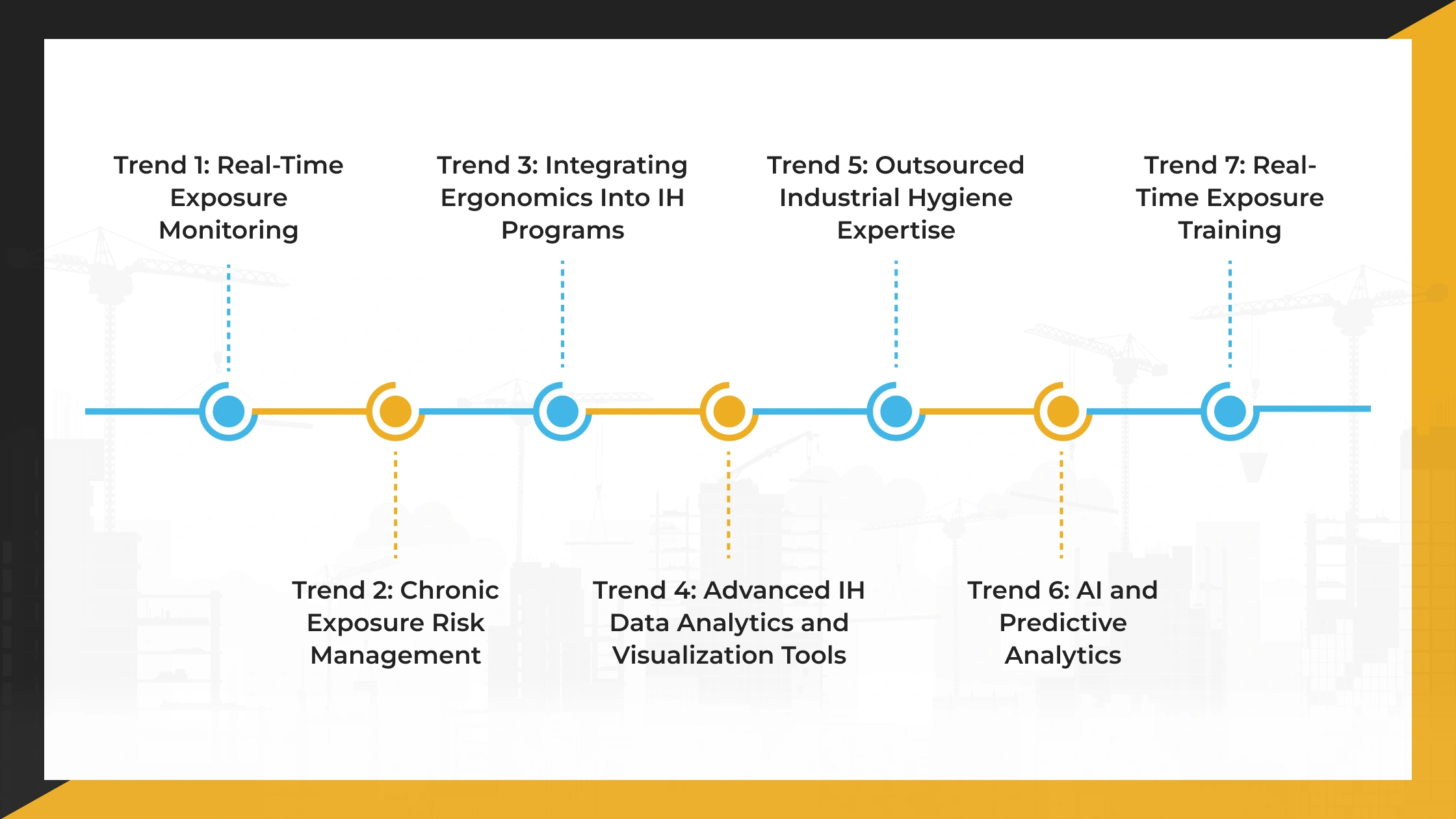
Below are the industrial hygiene trends that will most strongly influence how organizations protect their workforce, manage exposure risks, and maintain compliance.
Trend 1: Real-Time Exposure Monitoring
Conventional IH programs rely too heavily on snapshots and sampling that may occur weeks apart, thereby missing critical risks. That’s a problem on dynamic job sites where crews rotate frequently, tasks shift by the hour, and ambient conditions can turn hazardous quickly.
That’s why real-time exposure monitoring is rapidly becoming the new standard in high-risk industries.
Today’s wearable sensors and network-connected systems allow continuous tracking of:
- Particulates like silica dust and welding fumes.
- Hazardous VOCs from solvents or adhesives.
- Ambient noise is linked to hearing loss.
- Heat stress and physiological markers in outdoor or confined work.
These systems deliver instant, actionable data, letting you intervene before exposures become dangerous or noncompliant. They also support traceable records that prove due diligence to inspectors and internal stakeholders.
When managing variable crews or contractors, prioritize wearable tech that logs exposure by worker profile, not just by location, so you can assign accountability and adjust protections on the fly.
Trend 2: Chronic Exposure Risk Management
OSHA’s enforcement activity is shifting from acute hazards to long-term exposure threats, especially where indoor air quality, chemical buildup, and noise are involved. Expect continued movement on:
- Revised PELs for known carcinogens and respiratory toxins, including silica, benzene, and formaldehyde.
- Stricter air quality expectations in life sciences, semiconductor, and tech manufacturing, where ventilation and off-gassing risks are complex.
- Increased heat stress enforcement and targeted inspections focused on noise-induced hearing loss.
Outdated exposure plans don’t meet current inspection standards. Many facilities still operate with stale assessments that miss evolving risk routes, leaving them exposed to citations and avoidable health incidents.
Use gap analyses to evaluate whether your written IH programs reflect actual site conditions. Partner with a certified industrial hygienist (CIH) to reassess exposure potential, update air monitoring strategies, and align with current OSHA guidance.
Trend 3: Integrating Ergonomics Into IH Programs
Exposure isn’t just chemical or airborne anymore. Ergonomic strain, like repetitive motions, awkward postures, and vibration, has emerged as a top driver of OSHA recordables in physical work environments. And in 2026, it’s playing a bigger role within IH programs.
The sectors feeling this most include:
- Warehousing and fulfillment centers.
- Automotive and equipment manufacturing.
- Utility and municipal field services.
- Health care, particularly labs and imaging areas.
Separating ergonomics from IH creates blind spots in risk assessment. Integrated ergonomic analysis enables safety pros to proactively manage strain injury, rather than react after reports pile up.
Use job hazard analyses to flag high-strain tasks, then embed ergonomic controls, such as lift-assist devices, task redesign, or team rotation, into your EHS program. An experienced IH consultant can help tailor solutions to your operations.
Trend 4: Advanced IH Data Analytics and Visualization Tools
Data is no longer just for documentation; it’s a decision-making tool. In 2026, more EHS programs are using advanced IH software platforms to drive faster, smarter actions where exposure risks exist.
Key capabilities now include:
- Aggregating air sampling, sensor, and noise data across multiple locations.
- Visual heat maps showing where and when exposure spikes occur.
- Real-time alerts for crossing regulatory thresholds.
- Forecasting exposure patterns tied to scheduled work or seasonal changes.
These tools translate raw data into insight. Instead of waiting for analysis at the end of a quarter, you can pinpoint exposure hot spots as they emerge and adjust processes immediately.
Use your platform to spot recurring exposure triggers, such as specific tasks or shifts, and apply targeted controls. Build baseline analytics now so you’re better prepared for audits and inspections later.
Trend 5: Outsourced Industrial Hygiene Expertise
Hiring and keeping certified IH professionals is a resource challenge for many companies. That’s why more organizations are turning to flexible outsourcing, especially for specialized assessments or compliance-critical work.
Common support models include:
- IH staffing contracts that embed CIHs into your in-house EHS team.
- Short-term support for project commissioning, monitoring, testing, or post-OSHA incident response.
- Third-party program reviews to benchmark IH effectiveness and shore up gaps.
By bringing in IH experts as needed, you ensure accuracy, neutrality, and deep field knowledge, without the overhead of building a program from scratch. It’s also a smart way to validate internal assumptions in complex areas, such as mixed exposures or respirator fit protocols.
After an OSHA citation or during a complex retrofit project, third-party IH support helps teams quickly adapt controls, reassure stakeholders, and avoid repeat findings.
Trend 6: AI and Predictive Analytics
Industrial hygiene is shifting from reactive reporting to proactive risk prevention. Instead of relying on dashboards that summarize past exposures, organizations are now applying AI models that analyze multiple operational and environmental data sources in real time to predict where exposure risks are likely to increase next.
This allows safety teams to intervene earlier, often before workers experience harmful conditions, transforming industrial hygiene into a forward-looking risk management system.
Key applications include:
- Predicting exposure hotspots by combining production schedules, ventilation performance, weather and temperature data, shift patterns, and historical incident records.
- Generate smart alerts when rising exposure levels coincide with worsening conditions.
- Triggering automated responses such as supervisor notifications, task pauses, or ventilation adjustments.
- Supporting faster, more consistent decision-making across worksites.
Use AI as a decision-support tool, not a decision-maker. Maintain a human-in-the-loop approach where industrial hygienists review predictions, validate exposure risks, and approve control actions. Establish governance policies for model transparency, documentation, and bias checks to ensure trust, accountability, and regulatory defensibility.
Trend 7: Real-Time Exposure Training
Even the best IH tech can’t replace frontline awareness. In 2026, leading firms are embedding IH know-how into daily routines, so decisions to prevent exposure start at the source.
This includes:
- Building IH topics into safety talks and shift briefings.
- Role-specific training that helps workers recognize hazardous exposures and apply appropriate controls.
- Exposure reporting systems that let teams log close calls and near misses without delay.
- Scenario-based drills that reinforce chemical response, heat stress mitigation, or fume hood failures.
Training that builds real comprehension empowers your team to spot and solve problems before EHS needs to step in. That’s a major upstream win.
Make it site-specific. Use photos, real scenarios, and familiar PPE to walk workers through exposure indicators and response actions. The more tailored your training, the more likely it’ll stick.
Best Practices for Building a Future-Ready Industrial Hygiene Program
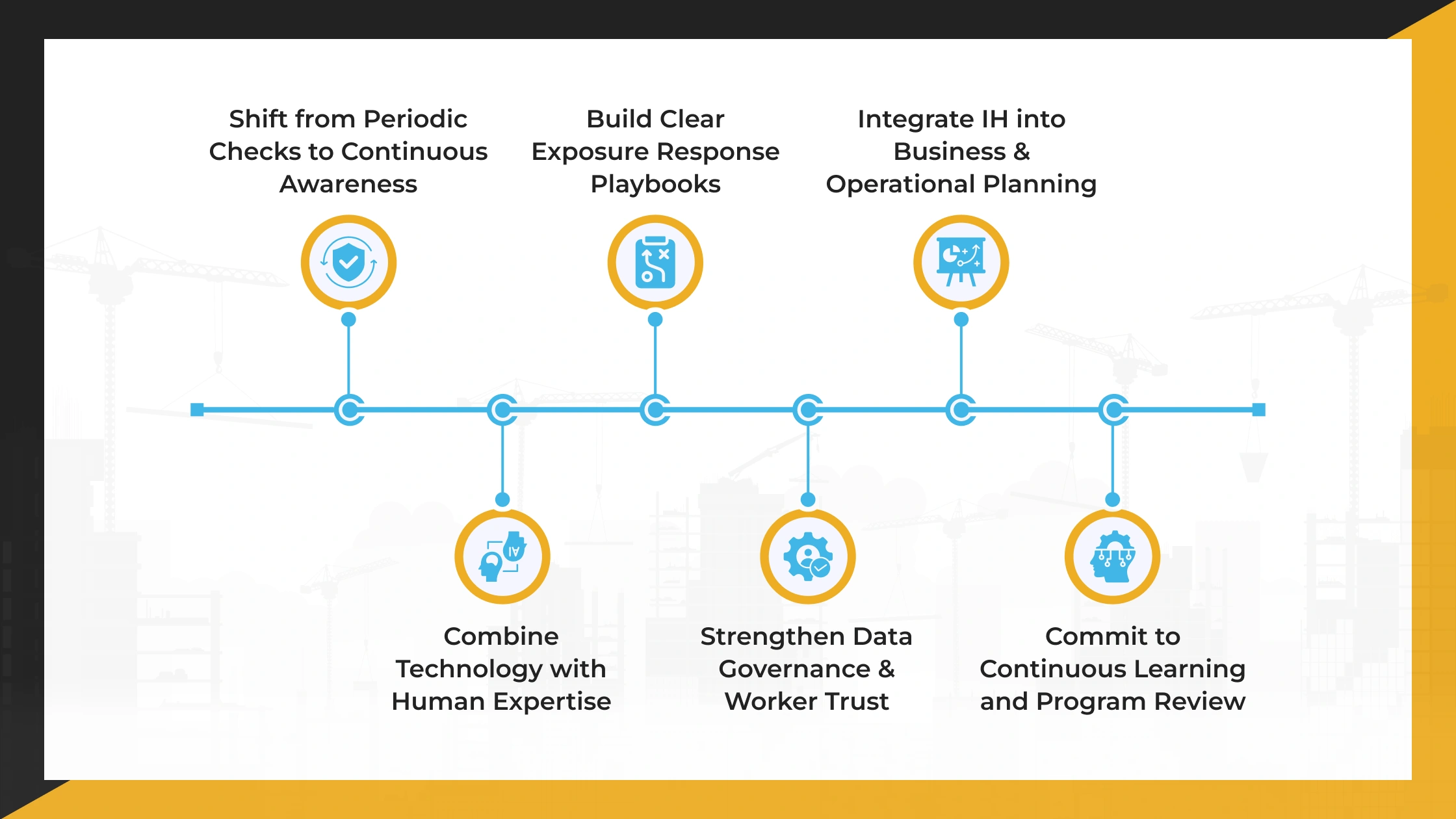
As industrial hygiene evolves, organizations that lead in 2026 will be those that move beyond compliance and build systems designed for anticipation, speed, and continuous improvement. The following best practices help translate emerging trends into daily operations.
1. Shift from Periodic Checks to Continuous Awareness
Relying only on scheduled sampling leaves gaps in risk visibility. Integrate real-time or near-real-time monitoring when exposure levels fluctuate, and establish clear response thresholds so supervisors and IH professionals can act immediately when conditions change.
2. Combine Technology with Human Expertise
Advanced sensors, AI models, and wearables enhance decision-making, but they do not replace professional judgment. Maintain human-in-the-loop review for exposure interpretation, incident response, and control validation to ensure reliability and accountability.
3. Build Clear Exposure Response Playbooks
For major hazards, heat, chemicals, noise, particulates, and biological agents document:
- Exposure limits and trigger levels
- Immediate response actions
- Engineering and administrative controls
- PPE requirements
- Communication responsibilities
These playbooks reduce reaction time and ensure consistent decisions across teams and locations.
4. Strengthen Data Governance & Worker Trust
As monitoring becomes more detailed, organizations must protect employee privacy. Define:
- Who can access exposure data
- How long is the data stored?
- How data is used (safety only, not discipline)
Transparent communication builds workforce confidence and improves participation in safety programs.
5. Integrate IH into Business & Operational Planning
Industrial hygiene should inform:
- Production scheduling
- Facility design and ventilation planning
- Procurement of chemicals and materials
- Workforce deployment during extreme weather or emergency events
When IH data influences operational decisions, risk is controlled earlier and more effectively.
6. Commit to Continuous Learning and Program Review
Update exposure limits, hazard assessments, and control strategies annually. Track leading indicators such as near-misses, high-exposure events, and response times, not just injury or illness rates, to drive proactive improvement.
Transform Safety Challenges into Confident Solutions with Safe T Professionals

At Safe T Professionals, we are dedicated to elevating safety standards through our expert consulting and staffing services. By proactively addressing and preventing safety issues and equipping your workforce with the necessary knowledge and tools, we help create a safer work environment.
Partner with Safe T Professionals to enhance your company’s safety protocols and ensure compliance with industry standards. Whether you are looking to fill safety-specific roles or need expert consultation to mitigate workplace hazards, we are here to help.
Connect with us today!