
Every year, thousands of businesses face the harsh consequences of ignoring EHS compliance, but what happens when your company becomes one of them?
In 2023, over 5,300 workers died from preventable workplace accidents in the U.S. alone, with manufacturing, construction, and transportation industries seeing the highest rates of fatalities. The immediate impact was devastating, not only for the employees and their families but also for companies. A serious accident or violation of environmental regulations can lead to massive fines, legal battles, and the loss of business continuity.
But the risks don’t end there. With penalties reaching $16,550 per violation, the cost of noncompliance can destroy a company’s bottom line, damage its reputation, and disrupt its operations for months or even years.
When businesses fail to address EHS compliance effectively, they face not only regulatory fines but also employee distrust, higher turnover, and increased insurance premiums.
In 2026, EHS compliance is necessary. With increasing regulations and higher expectations from stakeholders, now is the time to ensure your business is fully aligned with EHS standards. In this blog, we will explore why EHS compliance matters more than ever, the pitfalls to avoid, and actionable steps to build a culture of safety that protects your workforce and your business.
The Core Components of EHS Compliance and Why They Matter
EHS compliance refers to adhering to a set of regulations and standards developed to protect the environment, ensure worker health and safety, and maintain a secure workplace. This compliance framework is built around three core pillars: environmental protection, workplace safety, and employee health. Each of these elements plays a critical role in safeguarding not just the workforce but also the wider community and the environment.
1. Environmental Protection
This pillar focuses on minimizing the environmental impacts of business operations. Businesses are required to manage waste, reduce emissions, and prevent pollution. This ensures that natural resources are being used responsibly and that companies are working toward sustainability goals.
2. Workplace Safety
This point refers to creating safe working environments free of risks, including accidents, injuries, and hazards. This involves conducting regular inspections, maintaining equipment properly, and ensuring that employees are trained to handle dangerous situations appropriately.
3. Employee Health
This aspect ensures that workers are protected from harmful working conditions and health risks. This can involve managing exposure to toxic substances, providing appropriate personal protective equipment (PPE), and promoting overall worker well-being.
EHS compliance isn’t optional. It is a legal and ethical duty for businesses, regardless of their size or industry. Noncompliance can result in significant consequences, including hefty fines, legal action, and even the suspension of business operations.
Why Does Your Business Need EHS Compliance in 2026?
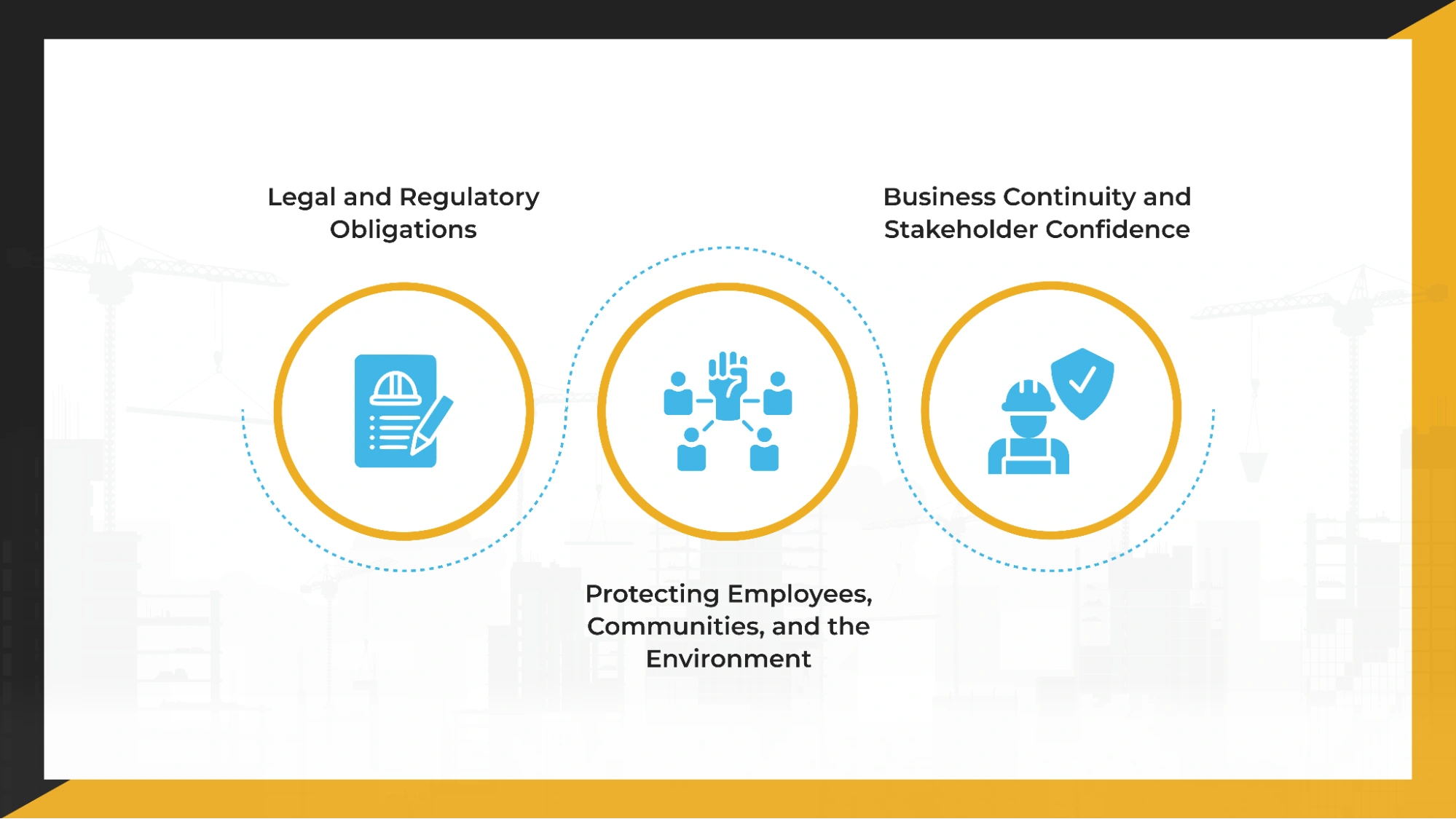
In 2026, the risks of noncompliance with EHS regulations are higher than ever. Here is why EHS compliance is essential for your business:
1. Legal and Regulatory Obligations
As a business, compliance means adhering to laws and regulations set by government authorities. These include environmental laws, occupational health and safety regulations, and industry-specific standards. EHS compliance ensures your business meets these legal requirements created to protect workers, the environment, and public health.
Failure to comply can result in severe consequences. Noncompliance can lead to fines, legal action, and even the shutdown of operations or the suspension of permits. With stricter regulations in 2026, it’s essential to ensure that your company meets all relevant standards to avoid costly penalties and disruptions to business operations.
2. Protecting Employees, Communities, and the Environment
EHS compliance is also critical for reducing workplace risks. It helps minimize the likelihood of accidents, exposure to hazardous materials, and occupational illnesses. By ensuring a safe and healthy work environment, you protect your employees from harm, which directly impacts their productivity and well-being.
Managing waste, emissions, and hazardous materials responsibly helps reduce your company’s environmental impact. You’ll also contribute to improved air and water quality, which is beneficial not only for the environment but also for the community in which your business operates.
3. Business Continuity and Stakeholder Confidence
A strong EHS program can help your business avoid major disruptions caused by accidents, regulatory violations, or environmental damage. These issues can halt operations, damage equipment, and harm your reputation. Having a well-managed EHS program in place ensures that your business runs smoothly without unexpected interruptions.
Employer Obligations for EHS Compliance and How to Meet Them
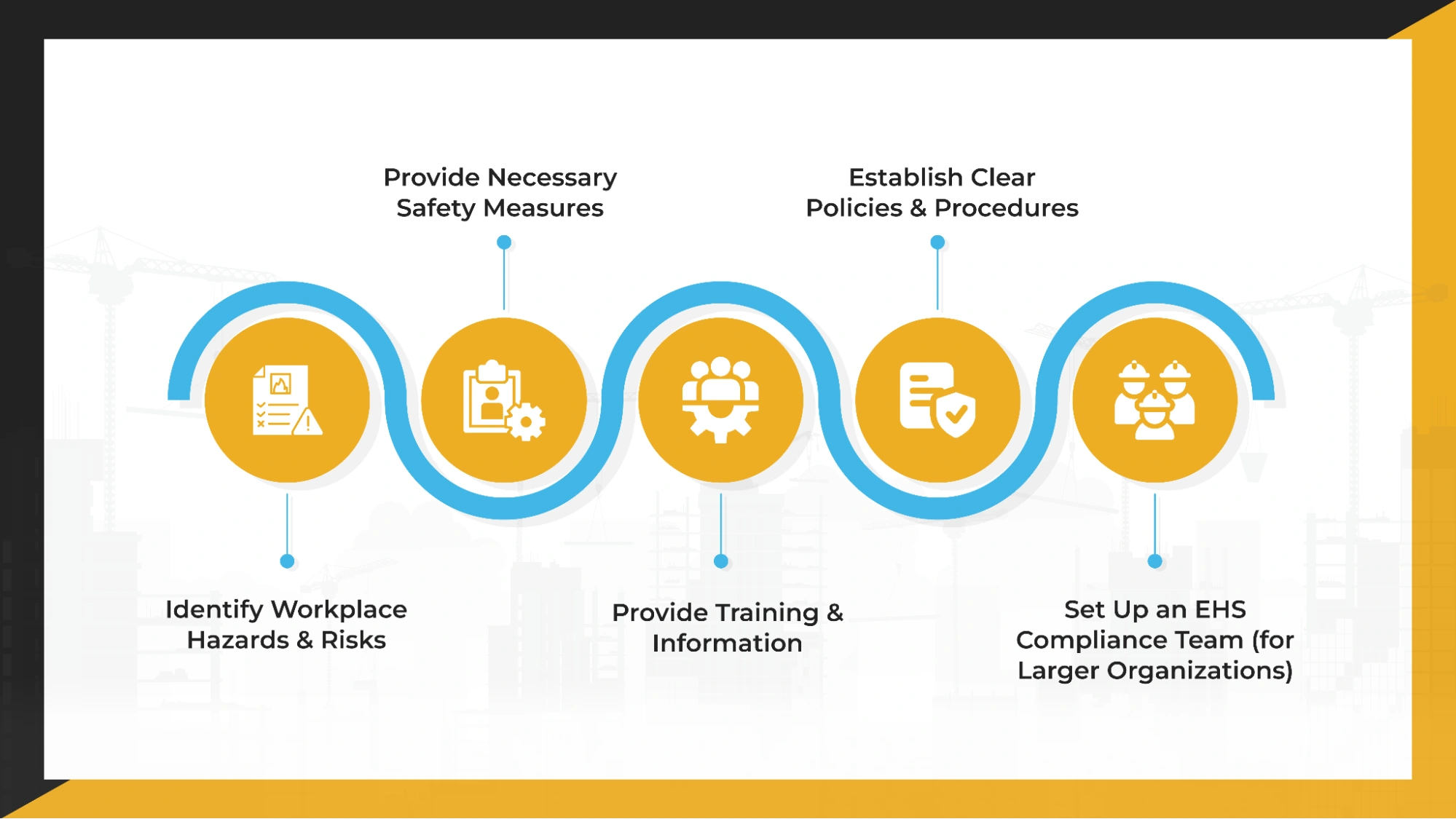
Here’s what you, as an employer, need to know about your responsibilities under EHS compliance to ensure a safe and legally sound workplace.
1. Identify Workplace Hazards & Risks
As an employer, it’s your responsibility to identify potential hazards and assess risks in your workplace. This means conducting regular risk assessments and inspections to identify environmental, health, and safety concerns. Recognizing risks early allows you to address them before they become bigger problems.
2. Provide Necessary Safety Measures
You must provide the appropriate safety measures to protect your employees. This includes:
- Ensuring the safe design and maintenance of your facilities and equipment.
- Providing PPE.
- Properly managing and handling hazardous materials.
- Maintaining clear hazard communication so employees are fully informed of potential risks related to their work.
3. Provide Training & Information
You must provide your employees with relevant training and guidance on working safely. Ensure that the training is in a language and format that everyone can understand. This will help your workers recognize risks and respond appropriately in emergencies.
4. Establish Clear Policies & Procedures
You should have written EHS policies and standard operating procedures (SOPs) in place. These policies must be reviewed regularly and updated as needed. Make sure your employees know how to report incidents, follow emergency protocols, and keep accurate records of safety and compliance actions.
5. Set Up an EHS Compliance Team (for Larger Organizations)
If your business is large or has many employees, it’s a good idea to appoint a dedicated EHS team or compliance officer. This team will monitor regulations, conduct audits, oversee training, and ensure compliance across the company. This structure ensures consistent adherence to EHS standards.
EHS Compliance Regulations and Industry Standards for 2026
EHS regulations are not one-size-fits-all. They differ by industry, region, and jurisdiction, so you must identify which rules apply to your business. Understanding your specific obligations is crucial to ensuring compliance and avoiding penalties.
Occupational Safety and Health Administration (OSHA, U.S.)
- OSHA publishes regulations that govern workplace safety and health in the U.S. These cover general industry, construction, maritime, and agriculture, among others.
- Through these standards, OSHA mandates employer obligations, including safe workplaces free from recognized hazards, appropriate protective equipment, training, hazard communication, safe machinery, and fire protection.
- OSHA also has a General Duty Clause (under the U.S. Occupational Safety and Health Act), which requires employers to provide workplaces “free from recognized hazards likely to cause death or serious harm.” This clause acts as a fallback even if no specific standard applies to a particular hazard.
Using OSHA regulations is common when you want to benchmark global best practices or when companies operate internationally, even though these standards may not directly apply in every country.
International Standard: ISO 45001 (Occupational Health and Safety [OHS] Management System)
- ISO 45001 is the international standard for OHS systems. It provides a framework for organizations to manage risks, ensure safe working conditions, and aim for continuous improvement.
- Many organizations adopt ISO 45001 even if local regulations do not strictly require it. It helps align internal safety practices with global benchmarks, especially for multinational companies, suppliers, or partners.
Adopting ISO 45001 can help you proactively manage health and safety, rather than simply reacting to compliance audits or inspections.
General & Project-Level Framework: General EHS Guidelines (and Associated Industry‑Sector EHS Guidelines)
- These guidelines (published by development institutions and international finance bodies) outline baseline standards for environmental, health, and safety concerns as well as community impact across industries. They cover ecological emissions, community health and safety, occupational health, waste management, emergency preparedness, etc.
- For any project in construction, manufacturing, or infrastructure, you can use these guidelines to assess environmental and occupational risks, design mitigation measures tailored to the local context, and document compliance with Good International Industry Practice.
These are often used by global investors, lenders, and multinational companies to ensure consistent EHS standards across different geographies.
The EHS Compliance Checklist Every Business Should Follow
Here is a practical checklist that businesses can use to assess and maintain EHS compliance, adapted according to industry and size:
1. Regulatory Awareness and Updates
Identify all EHS laws and regulations that apply to your industry and geographic location. Stay informed by subscribing to updates and scheduling periodic reviews. This ensures you are always aware of any changes and can adjust your practices accordingly.
2. Risk Assessment and Hazard Identification
Regularly conduct risk assessments to identify potential hazards, including physical, chemical, biological, ergonomic, and environmental hazards. Document all hazards found so they can be appropriately managed and mitigated, preventing accidents and ensuring safe work environments.
3. Facility and Equipment Inspection
Ensure your facilities are designed safely and your equipment is well maintained. This includes the safe storage of hazardous materials, proper ventilation, and the maintenance of building structural integrity. Regular inspections help catch any potential issues early.
4. PPE and Safety Measures
Provide appropriate PPE for all employees and ensure they are trained on the proper uses. This includes understanding hazard communication, such as labels, safety data sheets, and chemical information. Clear communication of hazards protects workers from exposure.
5. Health & Safety Training
Offer regular training on health and safety, with a special focus on high-risk tasks. Training should be relevant to your operations and be tailored to the specific needs of different roles. Keep accurate training records to ensure compliance and track progress.
6. Emergency Preparedness and Incident Reporting
Implement emergency response plans for various scenarios, including fire and natural disasters. Establish a process for reporting and investigating incidents and near misses. Document all incidents and responses to track improvements and prevent future occurrences.
7. Waste, Emission, and Environmental Controls
Properly manage waste disposal and emissions in line with environmental regulations. This includes water treatment, air and water quality monitoring, and the safe disposal of hazardous materials. Proper environmental controls minimize your company’s environmental impact.
8. Documentation and Audit Trail
Maintain detailed records of all compliance activities, including inspections, risk assessments, corrective actions, training sessions, incidents, and regulatory reports. This documentation supports internal audits and prepares you for any regulatory inspections.
9. Assign Responsibility and Governance
Appoint a dedicated EHS officer or team to oversee compliance and ensure regular reviews of EHS policies. Establish clear roles and responsibilities within the organization to ensure continuous improvement in safety practices and regulatory adherence.
Practical Steps to Implement EHS Compliance for 2026
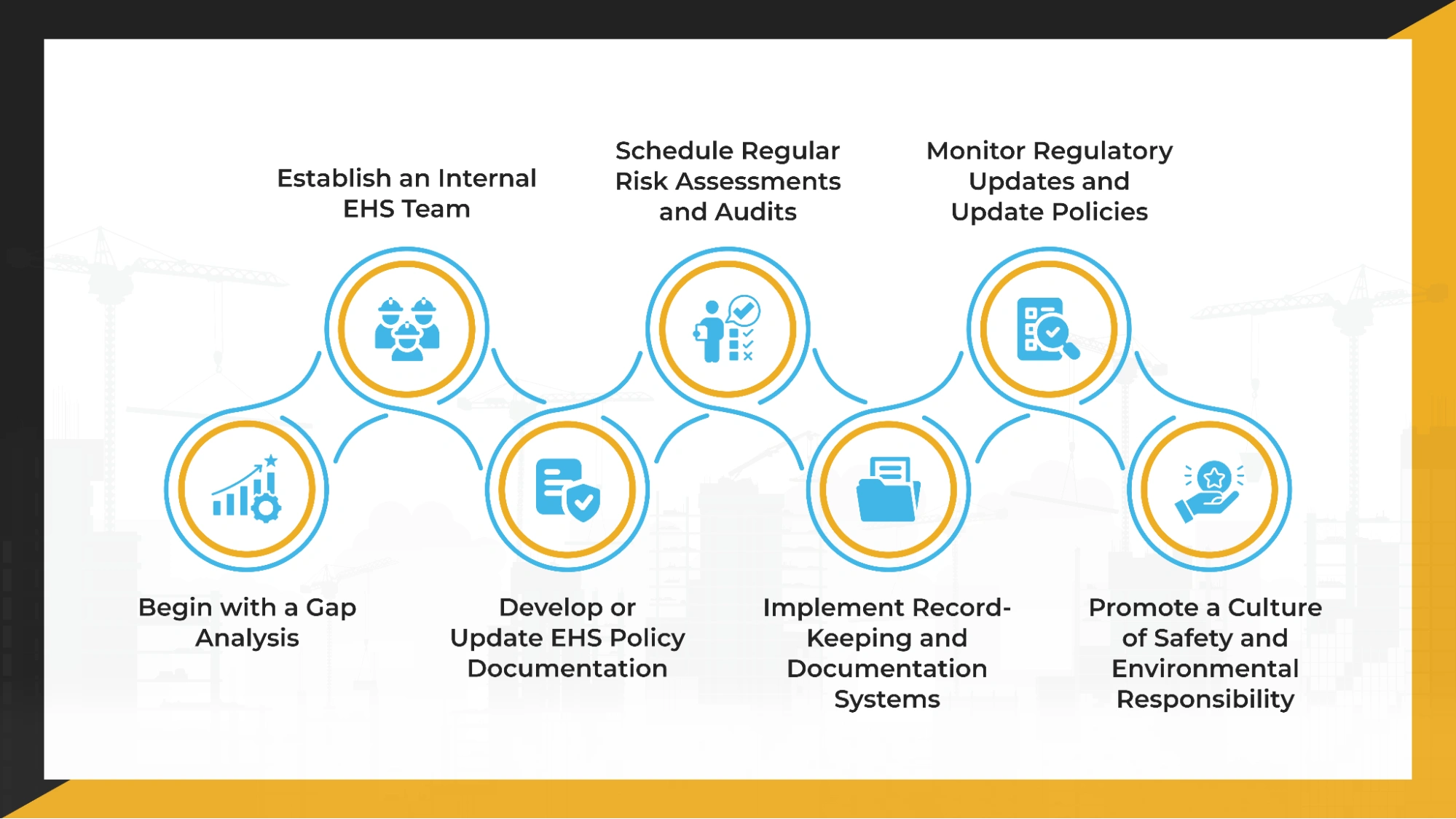
Below is the practical approach your business can take to begin implementing EHS compliance and ensure you’re ready for 2026 regulations.
1. Begin with a Gap Analysis
Start by reviewing your current policies, infrastructure, safety practices, and environmental impact. Compare these against the relevant EHS standards for your industry. This will help you identify areas where you’re falling short and highlight improvements needed to meet compliance requirements.
2. Establish an Internal EHS Team
Appoint a dedicated EHS officer or create an EHS team within your organization. This team will be responsible for overseeing compliance efforts, tracking regulations, and ensuring that everyone in the company understands and adheres to EHS standards. Clear accountability is key to driving consistent compliance.
3. Develop or Update EHS Policy Documentation
Develop or revise your EHS policy documentation to ensure it aligns with current regulations. This includes creating or updating SOPs for hazard identification, safety protocols, and emergency procedures. Clear, up-to-date documentation ensures that employees know exactly what is expected of them.
4. Schedule Regular Risk Assessments and Audits
Make risk assessments a regular part of your operations. Schedule periodic facility audits, safety training sessions, and equipment checks to identify and address any potential hazards. Regular environmental audits will help you stay compliant with environmental regulations and ensure that your business minimizes its impact.
5. Implement Recordkeeping and Documentation Systems
Set up a comprehensive documentation system to track inspections, audits, incidents, training, and corrective actions. Proper recordkeeping is essential for demonstrating compliance during internal reviews or external inspections. It also helps identify patterns that could indicate ongoing issues or areas for improvement.
6. Monitor Regulatory Updates and Update Policies
EHS regulations change over time, and it’s critical to stay up to date. Set up a system to monitor regulatory changes that apply to your industry and region. When new regulations are introduced or existing ones are updated, ensure that your policies and procedures are adjusted accordingly to maintain compliance.
7. Promote a Culture of Safety and Environmental Responsibility
Build a workplace culture that prioritizes safety and environmental responsibility. Encourage employees to report hazards and near misses and share feedback. By involving your workforce in identifying and addressing risks, you can improve safety awareness and reduce incidents. Regular communication and employee engagement are crucial to maintaining a strong safety culture.
Ensure Compliance and Safety with Safe T Professionals
At Safe T Professionals, we are dedicated to elevating safety standards through our expert consulting and staffing services. By proactively addressing and preventing safety issues and equipping your workforce with the necessary knowledge and tools, we help create a safer work environment.
Partner with Safe T Professionals to enhance your company’s safety protocols and ensure compliance with industry standards. Whether you are looking to fill safety-specific roles or need expert consultation to mitigate workplace hazards, we are here to help.
Connect with us today!