
Every workplace depends on clear safety rules to protect employees and keep operations running safely. Without proper safeguards, small hazards can quickly lead to serious injuries, costly downtime, and legal risks.
According to the U.S. Bureau of Labor Statistics, 5,070 fatal work injuries were recorded in the United States in 2024, with a worker dying every 104 minutes from a work-related injury. This shows why stronger workplace injury prevention and better incident prevention strategies remain critical across industries.
Effective workplace safety requires more than basic rules. Strong occupational safety standards, clear mandatory safety protocols, and consistent safe work practices (SWP) help reduce risks before incidents happen.
This blog covers the 10 crucial safety rules every workplace should implement to strengthen compliance, improve employee safety, and support safer daily operations.
What Is Workplace Safety?
| Workplace safety refers to the policies, procedures, and protective measures used to create a work environment free from hazards that could cause injury, illness, or operational disruption. It focuses on preventing incidents before they happen through stronger planning, training, and daily safety practices.
Core components of workplace safety
|
Common Types of Workplace Hazards
| Hazard Type | Description | Examples |
| Physical | Hazards that cause bodily injury through external forces or actions. | Slips, trips, falls, and machinery accidents. |
| Chemical | Hazards originate from chemicals in the form of solids, liquids, or gases. | Exposure to toxic substances and chemical spills. |
| Biological | Hazards that come from organisms that can cause adverse health impacts. | Exposure to infectious diseases, mold, and bodily fluids. |
| Ergonomic | Hazards related to the design of a workplace or the performance of tasks. | Improper workstation setup and repetitive strain injuries. |
| Psychosocial | Hazards that affect employees’ psychological well-being. | Workplace stress, harassment, and bullying. |
Employers must also follow OSHA compliance guidelines, regulatory safety requirements, and applicable General Industry Safety Orders to maintain safer operations and meet legal responsibilities. Strong workplace safety also supports duty of care obligations by protecting employees through proactive leadership and reliable prevention systems.
How to Develop an Effective Safety Plan? 
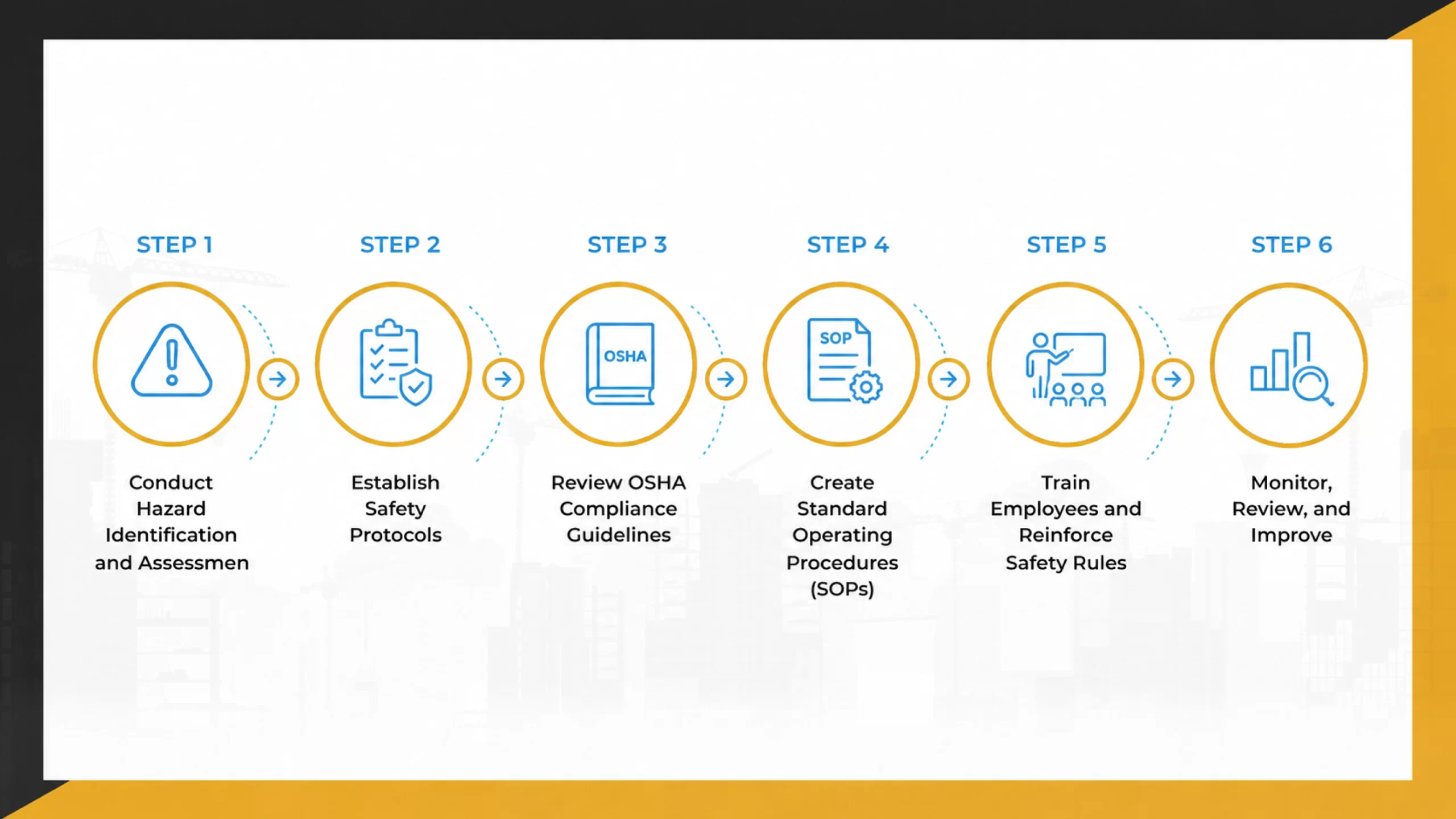
Developing an effective safety plan minimizes risks and ensures a safe working environment. Here is how you can create a safe workplace by following these steps:
Step 1: Conduct Hazard Identification and Assessment
Start with a proper workplace hazard assessment by identifying hazards, reviewing daily tasks, inspecting equipment, and evaluating employee exposure levels before work begins. A risk matrix helps prioritize which hazards require immediate action.
Step 2: Establish Safety Protocols
Once risks are identified, create clear mandatory safety protocols for each high-risk task. These should include practical instructions for safely completing work and reducing preventable incidents.
Protocols are especially important when a task is:
- Complex or involves multiple steps
- Routine but requires strict compliance
- High-risk if performed incorrectly
- Recently updated or modified
Step 3: Review OSHA Compliance Guidelines
Understand the OSHA compliance guidelines, industry-specific regulations, and General Industry Safety Orders that apply to your workplace. Strong compliance helps businesses meet legal responsibilities and improve overall safety performance.
Step 4: Create Standard Operating Procedures (SOPs)
Develop clear Standard Operating Procedures (SOPs) that explain:
- What the task is
- Where and when it should be performed
- Who is responsible
- The exact steps to complete it safely
- How incidents or concerns should be reported
Step 5: Train Employees and Reinforce Safety Rules
Provide strong employee safety orientation, regular safety compliance training, and refresher sessions to ensure employees understand workplace expectations and safe work practices.
Step 6: Monitor, Review, and Improve
Safety plans should be reviewed regularly through inspections, audits, employee feedback, and incident reports. Continuous updates support stronger risk mitigation measures and long-term safety culture development.
10 Important Safety Rules Every Workplace Should Implement
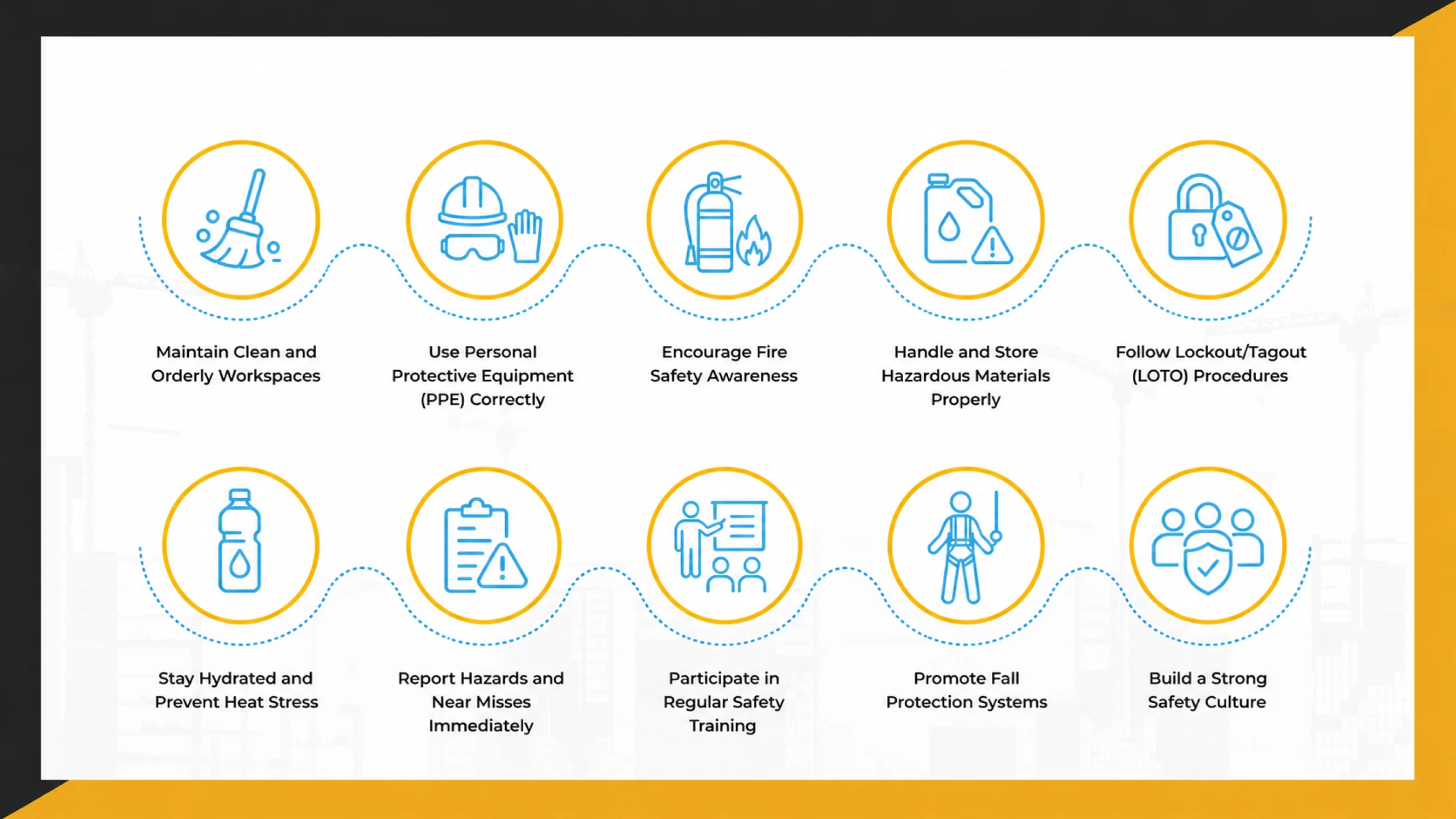
Creating a safe workplace is crucial for protecting employees and ensuring the smooth operation of construction activities. Here is the list of 10 important safety rules that every workplace should implement:
1. Maintain Clean and Orderly Workspaces
Keep work areas free of clutter, spills, and unnecessary obstacles to prevent slips, trips, and workplace falls. A cluttered workspace is often the first sign of a safety process breaking down. Catching it early is far cheaper than responding to an injury.
Regular inspections help identify hazards early and ensure work areas continue to meet safety standards.
2.Use Personal Protective Equipment (PPE) Correctly
Always wear the required PPE for your tasks, including safety glasses, gloves, helmets, respirators, and protective footwear. PPE should fit properly, remain in good condition, and be used exactly as required.
Regular inspections and training help ensure compliance and improve protection.
3. Encourage Fire Safety Awareness
Employees should know the location of fire exits, fire extinguishers, alarms, and evacuation routes. OSHA requires most workplaces to maintain at least two exit routes to allow prompt evacuation during an emergency, depending on building size and occupancy.
Regular fire drills and a clearly documented Emergency Action Plan (EAP) help reduce confusion, improve response time, and support safer evacuations. Exit routes should always remain clear, unobstructed, and easily accessible.
4. Handle and Store Hazardous Materials Properly
Follow proper Hazard Communication (HazCom) procedures for chemicals, flammable substances, and dangerous materials. All containers should be clearly labeled, stored safely, and handled according to workplace protocols.
Proper storage reduces accidental exposure and improves regulatory compliance.
5. Follow Lockout/Tagout (LOTO) Procedures
Strict Lockout/Tagout (LOTO) procedures prevent accidental machine start-up during maintenance, cleaning, or repairs. Only authorized personnel should handle LOTO systems to reduce serious injury risks.
Lockout/Tagout remains one of OSHA’s most frequently cited standards, with 2,443 violations reported in 2024. This shows how critical proper hazardous energy control remains across industrial workplaces.
This is one of the most important mandatory safety protocols in high-risk environments where unexpected equipment activation can cause severe injuries or fatalities.
6. Stay Hydrated and Prevent Heat Stress
Workers in physically demanding or high-temperature environments should stay hydrated and take regular breaks to prevent heat-related illness. Following the updated OSHA heat safety rule guidance also helps employers reduce heat stress risks and improve daily worker protection.
According to the CDC and NIOSH, workers exposed to extreme heat face a higher risk of heat stress, which can lead to illnesses, injuries, and reduced productivity. Providing easy access to drinking water, shaded rest areas, and scheduled cooling breaks helps reduce these risks and supports stronger workplace safety.
Preventing heat stress is an important part of daily safety planning and one of the most practical incident prevention strategies for high-risk work environments.
7. Report Hazards and Near Misses Immediately
Hazard reporting is one of the most practical strategies for workplace injury prevention, especially in high-risk environments where small issues can quickly become serious incidents.
A near miss reported today could prevent a serious injury tomorrow. For example, reporting a loose handrail, exposed wire, or leaking chemical container early allows corrective action before someone gets hurt.
Clear reporting procedures, quick supervisor response, and a workplace culture that encourages open communication all help strengthen incident prevention strategies and improve long-term workplace safety.
8. Participate in Regular Safety Training
Ongoing safety compliance training, refresher sessions, and regular toolbox talk topics help employees stay updated on workplace hazards, changing regulations, and daily safety expectations. Training improves awareness, strengthens accountability, and reinforces safe work practices across every department.
Examples of practical safety training include:
- Fire evacuation drills to practice emergency exits and response time
- Emergency response mock drills for injuries, chemical spills, or equipment failures
- Fall protection demonstrations for harness use and ladder safety
- Lockout/Tagout (LOTO) procedures training for safe equipment shutdown
- First aid and incident reporting sessions to improve immediate response actions
Regular hands-on training is what separates employees who freeze during an emergency from those who respond correctly.
9. Promote Fall Protection Systems
Workers exposed to heights should follow proper fall protection systems, including harnesses, guardrails, anchor points, safety nets, and ladder safety practices. Preventing falls remains one of the most important safety priorities across construction, warehousing, maintenance, and industrial operations.
Safe vs Unsafe Fall Protection Practices
| Safe Practices | Unsafe Practices |
| Using approved full-body harnesses with secure anchor points | Working at heights without fall arrest equipment |
| Inspecting ladders before every use | Using damaged, unstable, or unsecured ladders |
| Installing guardrails and safety nets where required | Leaving open edges or elevated platforms unprotected |
| Following proper ladder angle and placement guidelines | Placing ladders on uneven or slippery surfaces |
| Ensuring a competent person reviews fall hazards regularly | Allowing untrained workers to perform elevated tasks |
| Using designated access points and safe climbing methods | Climbing on unstable structures or makeshift platforms |
10. Build a Strong Safety Culture
Safety improves when employees work together, communicate openly, and treat prevention as part of daily operations. Strong safety culture development supports better teamwork, stronger accountability, and long-term compliance success.
Workplaces that treat these rules as daily habits, not occasional reminders, consistently see fewer incidents and faster hazard response.
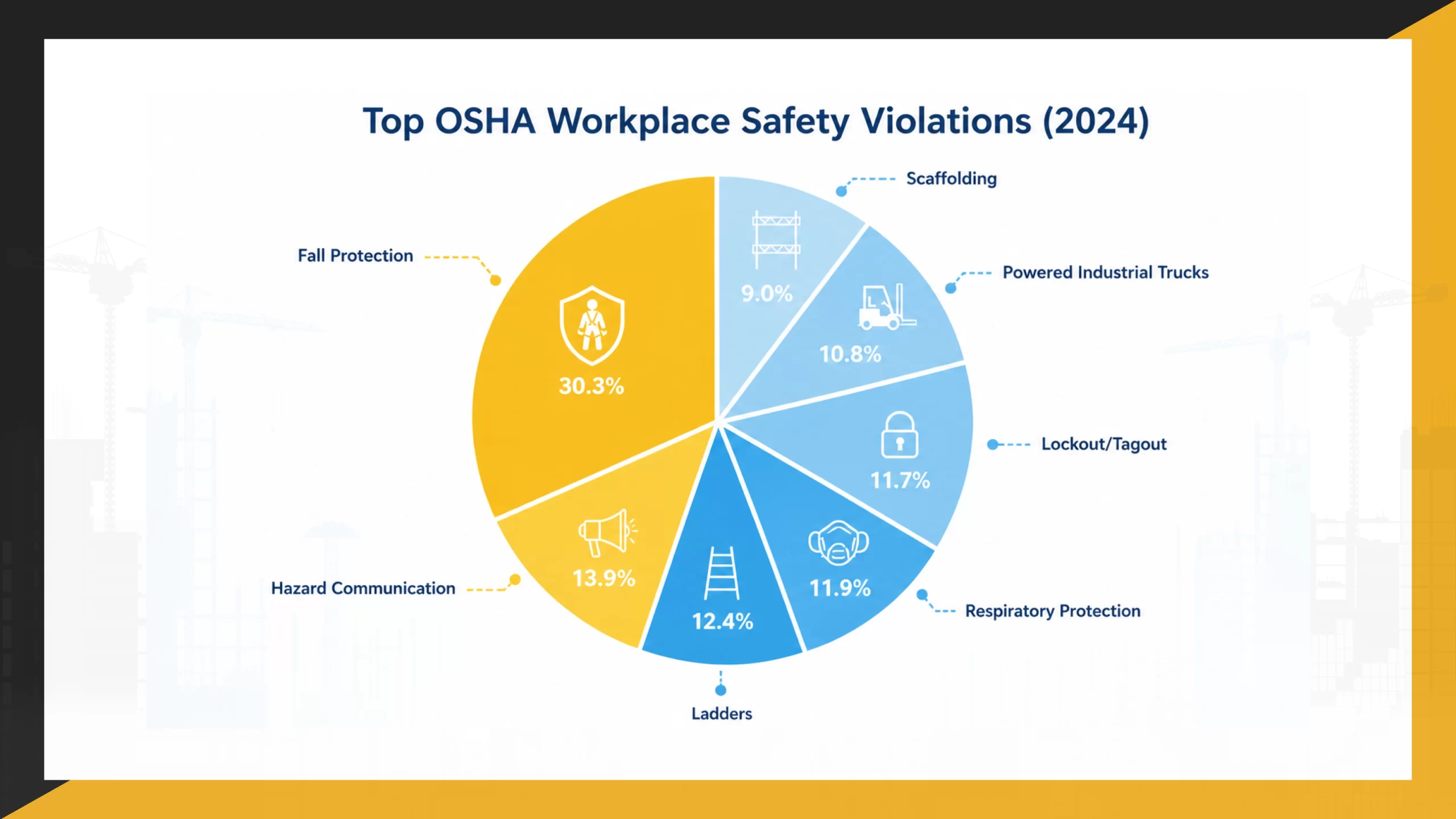
OSHA’s most frequently cited workplace safety violations show where businesses continue to face the greatest compliance challenges and where stronger safety intervention techniques are most needed.
| OSHA Safety Violation | Percentage Share |
| Fall Protection | 30.3% |
| Hazard Communication | 13.9% |
| Ladders | 12.4% |
| Respiratory Protection | 11.9% |
| Lockout/Tagout (LOTO) | 11.7% |
| Powered Industrial Trucks | 10.8% |
| Scaffolding | 9.0% |
How Can Workplaces Ensure Safety Rules Are Effectively Implemented?
Creating safety rules is only the first step. Long-term results come from consistent enforcement, regular training, and strong leadership support. Without proper follow-through, even the best safety policies can become ineffective.
One of the most effective ways to strengthen implementation is through ongoing safety compliance training, clear accountability, and a stronger incident reporting culture. Employees should understand what the rules are, why they matter, and how they apply to daily work.
Primary Ways to Improve Safety Rule Implementation
- Provide a strong employee safety orientation for all new hires
- Use regular toolbox talk topics to reinforce daily safety awareness
- Assign supervisors and competent person training leaders to monitor compliance
- Encourage early reporting of hazards, unsafe conditions, and near misses
- Conduct regular audits to improve preventative safety controls
- Review incident reports and update procedures based on findings
Organizations should also consider partnering with experienced safety professionals who provide staffing and consulting support. External specialists help businesses improve compliance, strengthen safety systems, and create more practical workplace solutions tailored to operational risks.
The gap between a workplace that looks safe on paper and one that actually is comes down to whether people follow through every single day.
Enhance Your Workplace Safety with Safe T Professionals!
At Safe T Professionals, we are dedicated to elevating safety standards through our expert consulting and staffing services. By proactively addressing and preventing safety issues and equipping your workforce with the necessary knowledge and tools, we help create a safer work environment.
Partner with Safe T Professionals to enhance your company’s safety protocols and ensure compliance with industry standards. Whether you are looking to fill safety-specific roles or need expert consultation to mitigate workplace hazards, we are here to help.
Connect with us today!
Frequently Asked Questions
How often should workplace safety rules be reviewed?
Workplace safety rules should be reviewed regularly, especially after incidents, equipment changes, new regulations, or process updates. Many organizations conduct formal reviews quarterly or annually to ensure procedures remain effective and compliant.
Who is responsible for enforcing workplace safety rules?
Workplace safety is a shared responsibility. Employers must provide safe systems, training, and compliance oversight, while supervisors monitor daily adherence and employees follow established safe work practices and report hazards promptly.
What is the difference between a safety policy and a safety procedure?
A safety policy outlines the company’s overall commitment and expectations for workplace safety, while a safety procedure provides step-by-step instructions for performing specific tasks safely. Both are necessary for strong compliance and risk reduction.
Why is incident reporting important in workplace safety?
Incident reporting helps identify hazards before they lead to serious injuries or repeated accidents. Reporting near misses, unsafe conditions, and minor incidents improves prevention planning and supports stronger long-term safety improvements.
What is a toolbox talk in workplace safety?
A toolbox talk is a short, focused safety discussion held before work begins, usually covering daily hazards, equipment risks, weather conditions, or specific job-site concerns. These talks improve awareness and reinforce safe work habits.
What is competent person training?
Competent person training prepares designated employees to identify workplace hazards, take corrective action, and ensure compliance with safety standards. This role is especially important in construction, fall protection, and high-risk environments.
Why should businesses update Standard Operating Procedures (SOPs)?
Standard Operating Procedures should be updated whenever equipment, tasks, regulations, or workplace risks change. Updated SOPs help employees follow the safest methods and reduce confusion, errors, and compliance failures.